GUIDE
Le bon SPF dépend du type de peau, de l'activité et de la zone à protéger. Dans la gamme Sunprotex de BIOSAR, le fluide matifiant convient aux peaux grasses ; la crème peaux sèches et sensibles, aux peaux réactives. La crème enfants est conçue pour la peau des enfants ; le spray couvre le corps. À renouveler toutes les 2 heures en exposition directe.
La gamme Sunprotex de BIOSAR couvre 7 formats de SPF, notamment : fluide matifiant pour peau grasse, crème pour peau sèche et sensible, crème enfants pour l'usage pédiatrique, un spray pour le corps, et une BB crème teintée qui fait office de maquillage léger. Le sélecteur ci-dessous associe chaque format au profil de peau qu'il sert le mieux.

Pourquoi ce guide
Il n'existe pas de SPF unique qui soit le meilleur. Le bon format dépend de votre type de peau, de votre activité et de la zone à protéger. Les filtres minéraux (dioxyde de titane, oxyde de zinc) présentent le meilleur dossier de sécurité ; les formats Sunprotex utilisent l'oxyde de zinc seul ou l'associent à des filtres chimiques. La répartition ci-dessous relie chaque format Sunprotex aux situations pour lesquelles il a été ajusté, afin de ne renoncer ni à la tolérance ni au fini.
Étape 1
Peau grasse et à tendance acnéique
Le fluide matifiant repose sur une base matte non comédogène et associe du niacinamide aux filtres. Il se porte proprement sous le maquillage et n'accentue pas la brillance en milieu de journée.
Étape 2
Peau sensible, réactive ou sèche
La crème peaux sèches et sensibles associe un ensemble de filtres UV, dont l'oxyde de zinc, à l'acide hyaluronique, pour une formulation qui soutient la barrière cutanée au lieu de la solliciter.
Étape 3
Enfants et grossesse
La crème enfants est légère en parfum, à base d'oxyde de zinc complété par d'autres filtres UV, et testée dermatologiquement pour la peau dès 6 mois.
Étape 4
Corps et zones étendues
Le format spray couvre rapidement les jambes, les bras et le dos — le facteur limitant pour la plupart des gens. Renouvelez toutes les 2 heures en exposition directe. La crème classique reste votre format visage et cou si votre peau est normale à mixte.
Étape 5
SPF teinté pour le quotidien
La BB crème teintée offre un SPF 50 et une teinte légère qui unifie le teint. Elle constitue une option effet peau nue avec une protection UV complète, souvent plus régulière qu'un duo base + SPF séparés.
GUIDE
Produits BIOSAR à la une
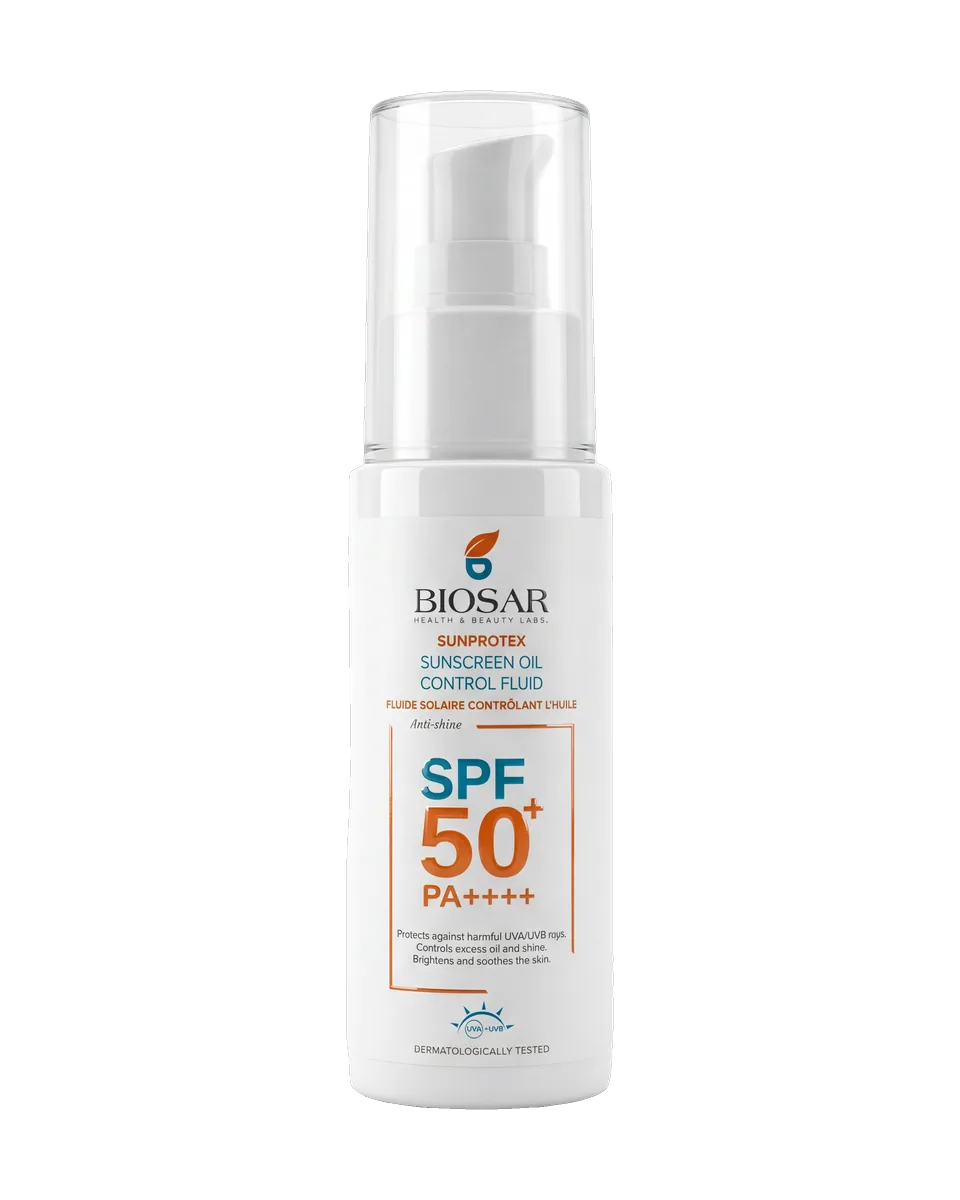
Sunprotex50 ml
Oil Control Sunscreen Anti-Shine Fluid
Zinc Oxide · Niacinamide · Green Tea Extract
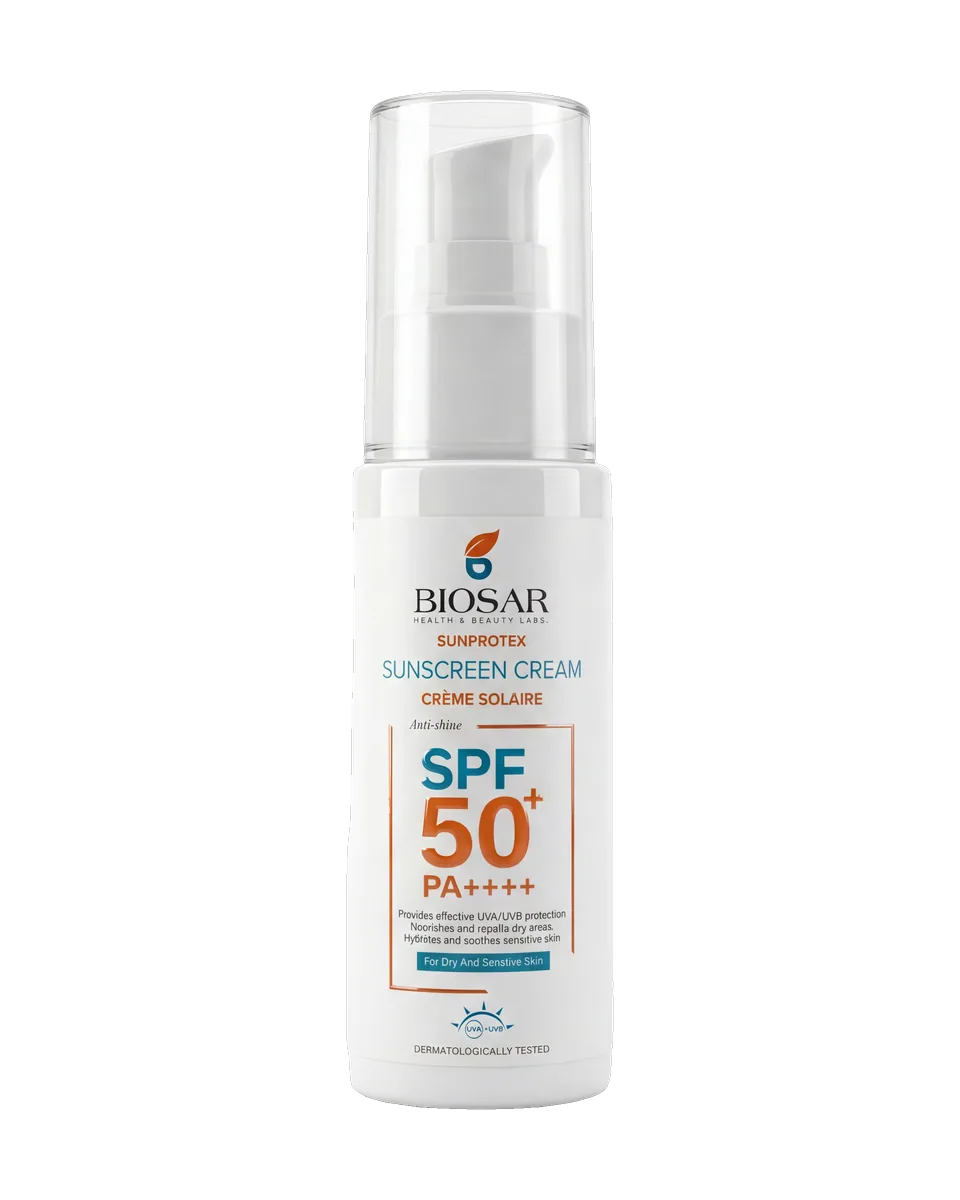
Sunprotex50 ml
Sunscreen for Dry and Sensitive Skin
Zinc Oxide · Hyaluronic Acid · Colloidal Oatmeal
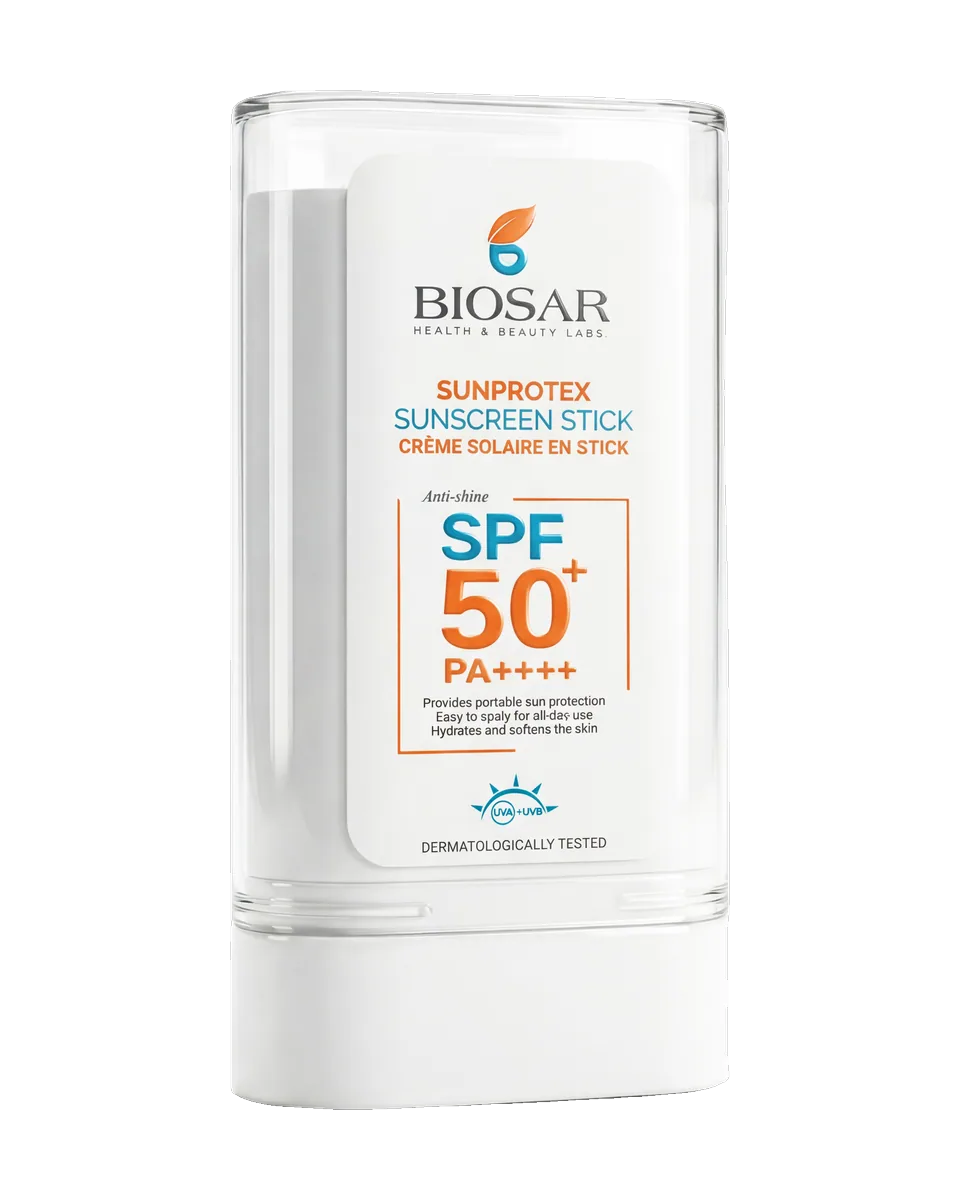
Sunprotex20 ml
Sunscreen Stick
Zinc Oxide
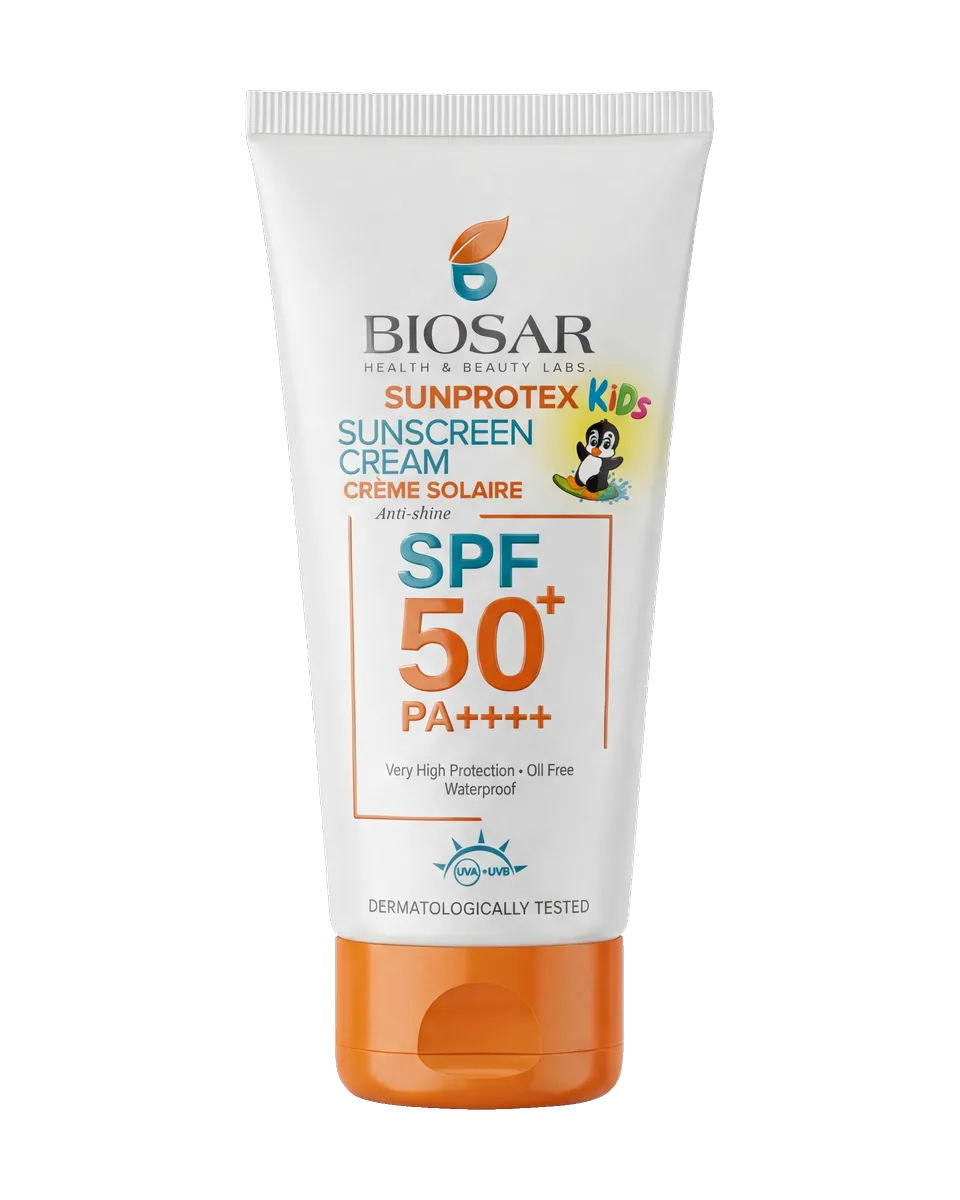
Sunprotex50 ml
Sunscreen Cream for Kids SPF50+
Panthenol · Zinc Oxide · Vitamin E
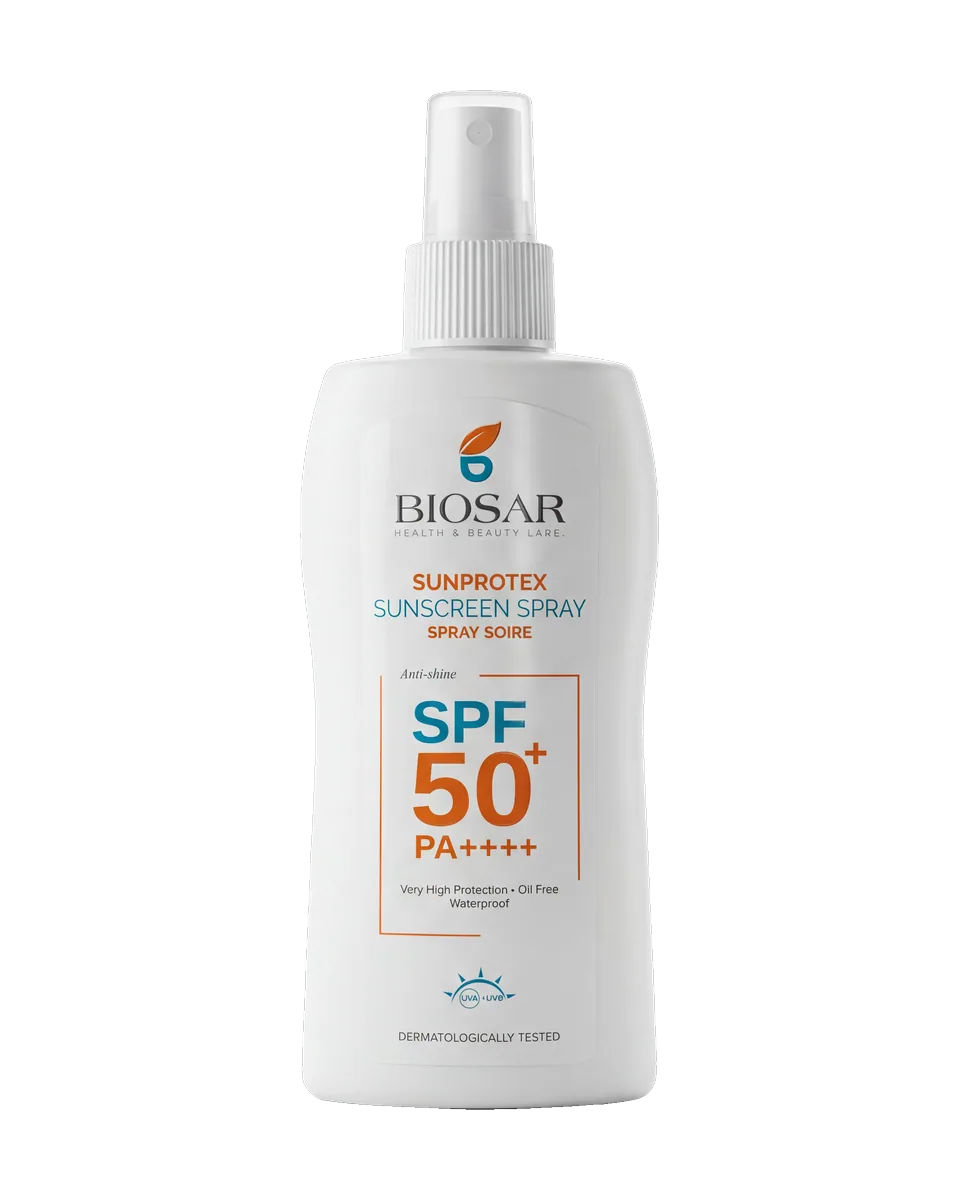
Sunprotex200 ml
Sunscreen Spray SPF50+
Panthenol · Zinc Oxide · Urea
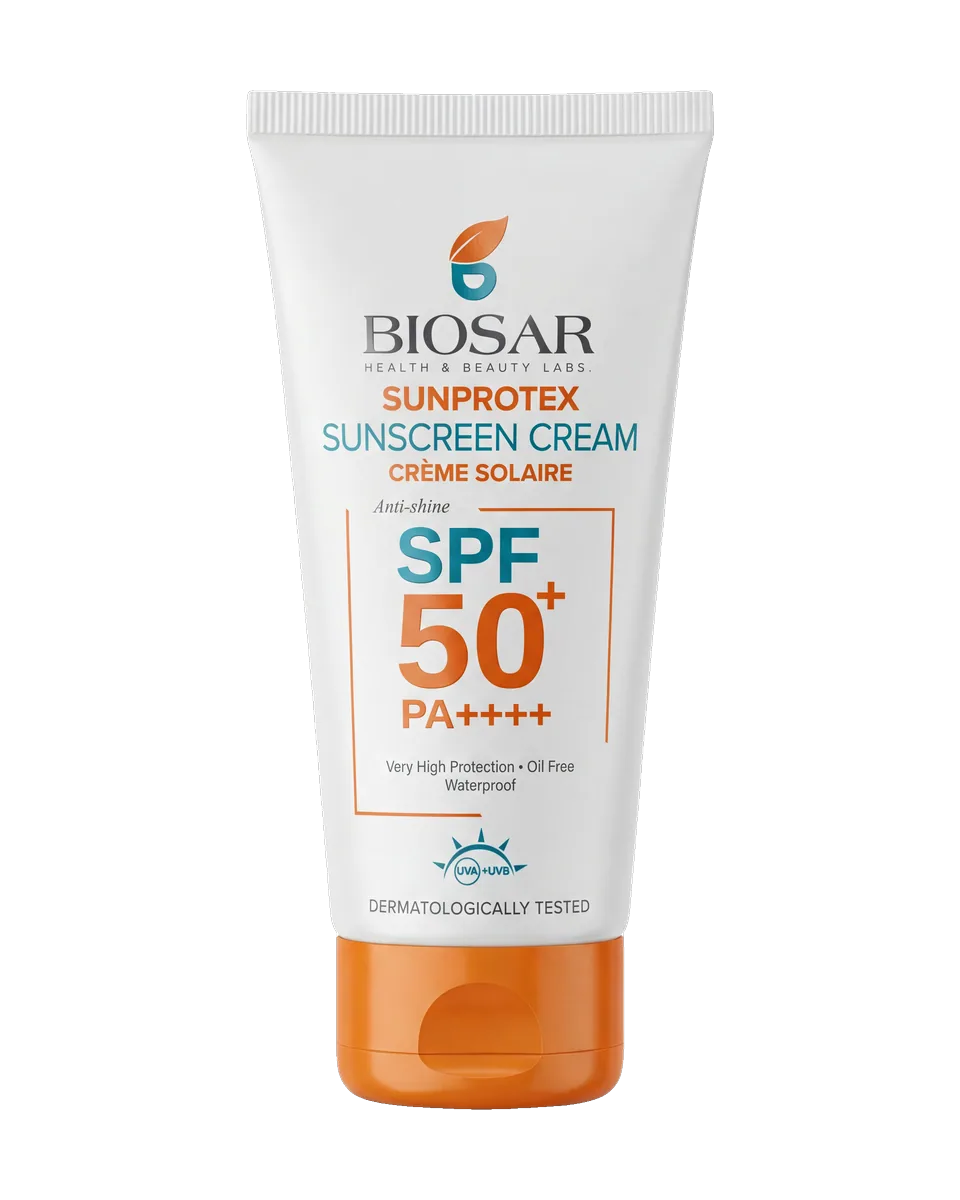
Sunprotex50 ml
Sunscreen Cream SPF50+
Panthenol · Zinc Oxide · Urea
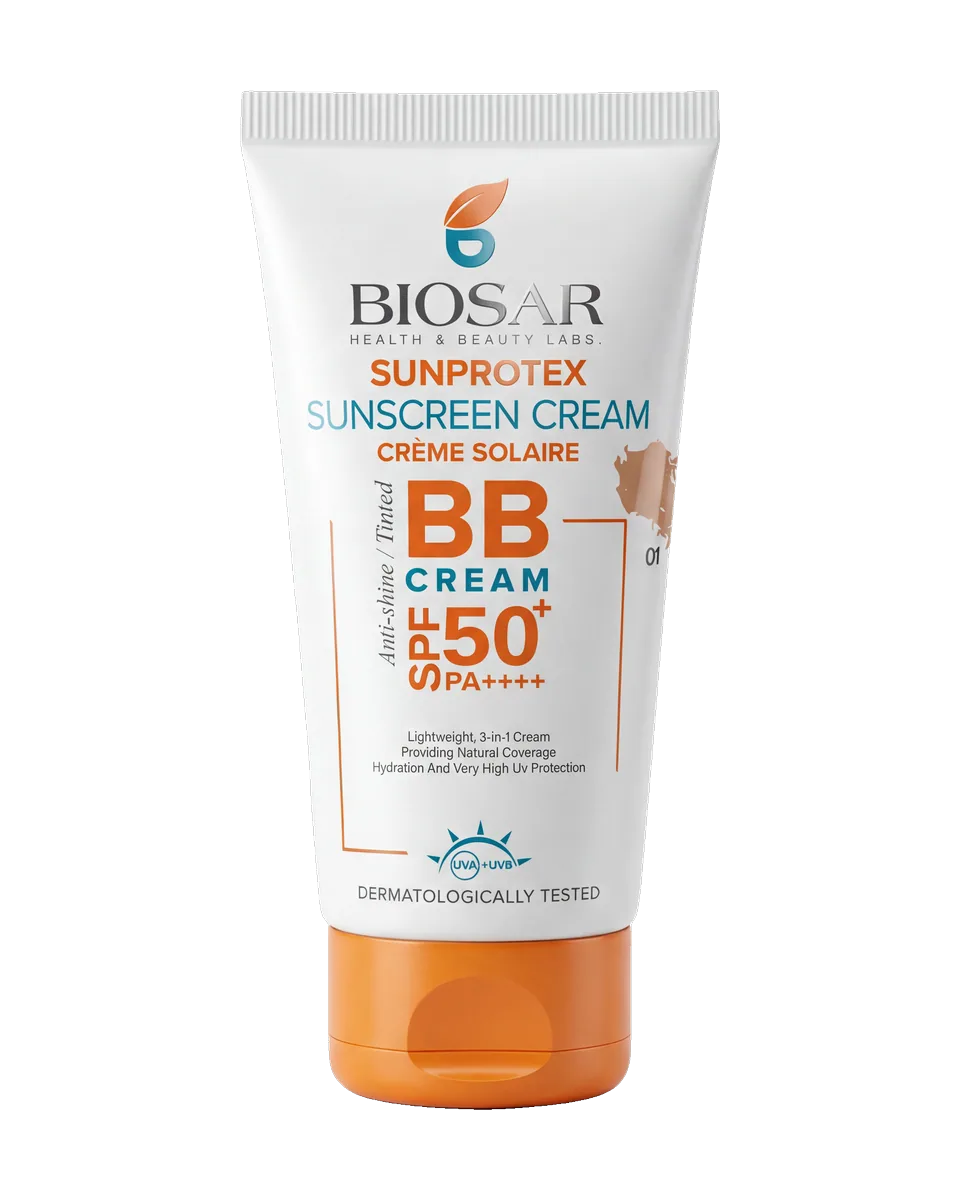
Sunprotex50 ml
Sunscreen BB Cream Tinted SPF50+
Panthenol · Zinc Oxide · Urea
Questions fréquentes
Quelle quantité de SPF appliquer ?
Deux longueurs de doigt pour le visage et le cou. L'équivalent d'un petit verre (environ 30 ml) pour le corps entier. La plupart des gens appliquent entre 25 et 50 % de la quantité testée, ce qui réduit de moitié le SPF effectif.
Filtres minéraux ou chimiques ?
Les filtres minéraux dominent en sécurité et en tolérance, en particulier pour les enfants, la grossesse et les peaux réactives. Les filtres chimiques sont souvent plus légers au toucher, mais une petite partie des utilisateurs réagit à certaines molécules. Dans la ligne Sunprotex, le fluide matifiant utilise l'oxyde de zinc seul ; les autres formats associent l'oxyde de zinc à des filtres chimiques.
Ai-je besoin d'un SPF en intérieur ?
La pigmentation liée à la lumière visible (un moteur clé du mélasma) répond aussi à la lumière intérieure. Si vous passez des heures près d'une fenêtre, un SPF quotidien en intérieur se justifie. Les UVA traversent également le vitrage.
Puis-je sauter la crème hydratante si mon SPF est hydratant ?
La plupart des SPF modernes incluent une part d'hydratation, mais ils sont formulés d'abord pour la protection UV. Si votre peau tire à la mi-journée, une couche hydratante en dessous améliore le confort sans réduire la protection.