The clash myth, finally retired
The story that vitamin C and niacinamide cancel each other dates to a 1960s pharmacy study using vitamin B3 in its acid form (nicotinic acid / niacin) and high-temperature L-ascorbic acid solutions. Modern niacinamide is the amide form. Side-by-side stability and clinical work since 2010 (Wohlrab & Kreft, Skin Pharmacol Physiol 2014; Hamed et al., Pharm Dev Technol 2017) shows the two layer cleanly at room-temperature topical concentrations.
Mechanism contrast
Vitamin C is a primary antioxidant, regenerating tocopherol and quenching reactive oxygen species generated by UV exposure. It also blocks tyrosinase upstream, reducing new melanin production at the root.
Niacinamide acts further down the pigment cascade: it inhibits melanosome transfer from melanocyte to keratinocyte, so melanin already produced never reaches the surface. Bissett (Dermatol Surg 2005) demonstrated visible improvement in hyperpigmentation, blotchiness, and fine lines after 12 weeks of 5% niacinamide.
BIOSAR products that contain each
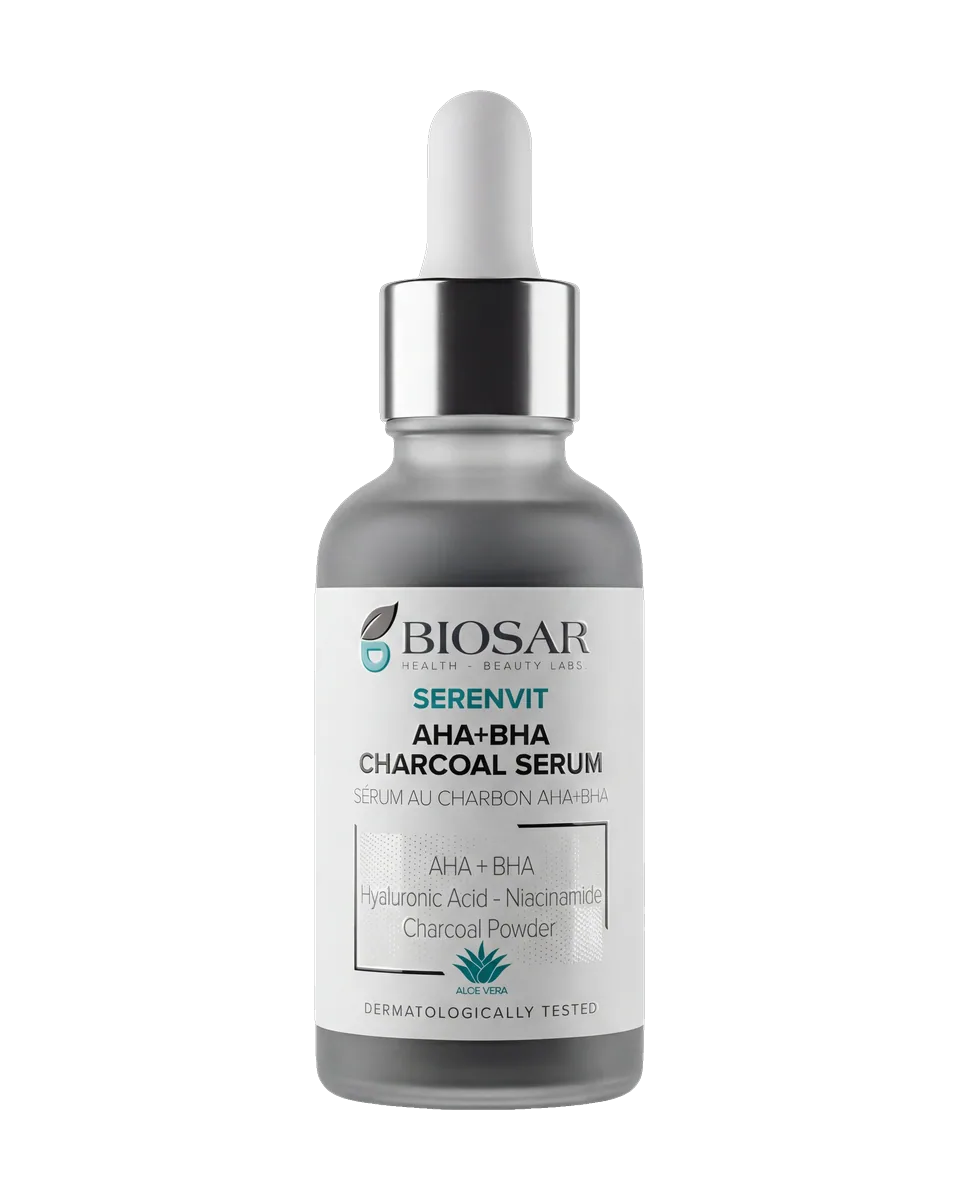
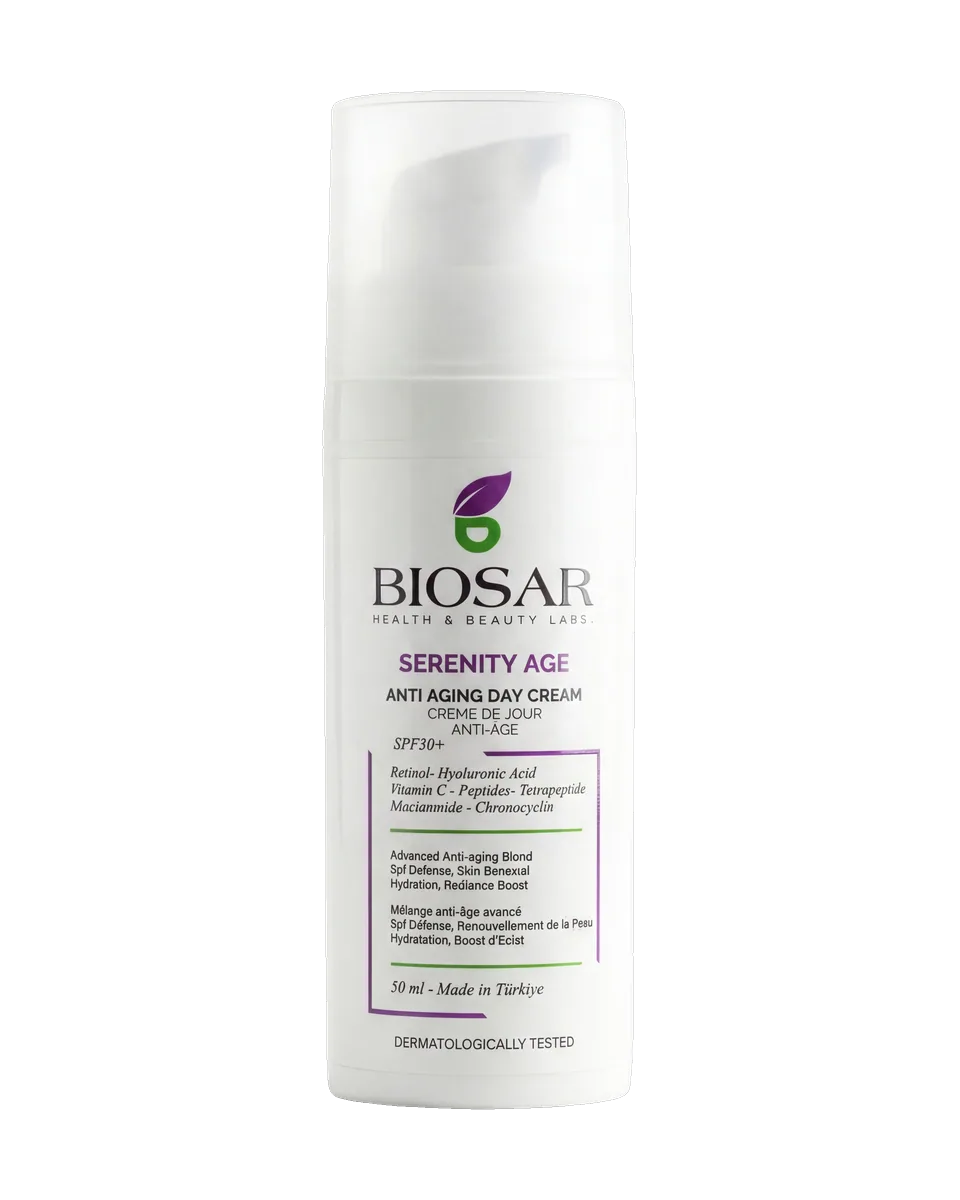
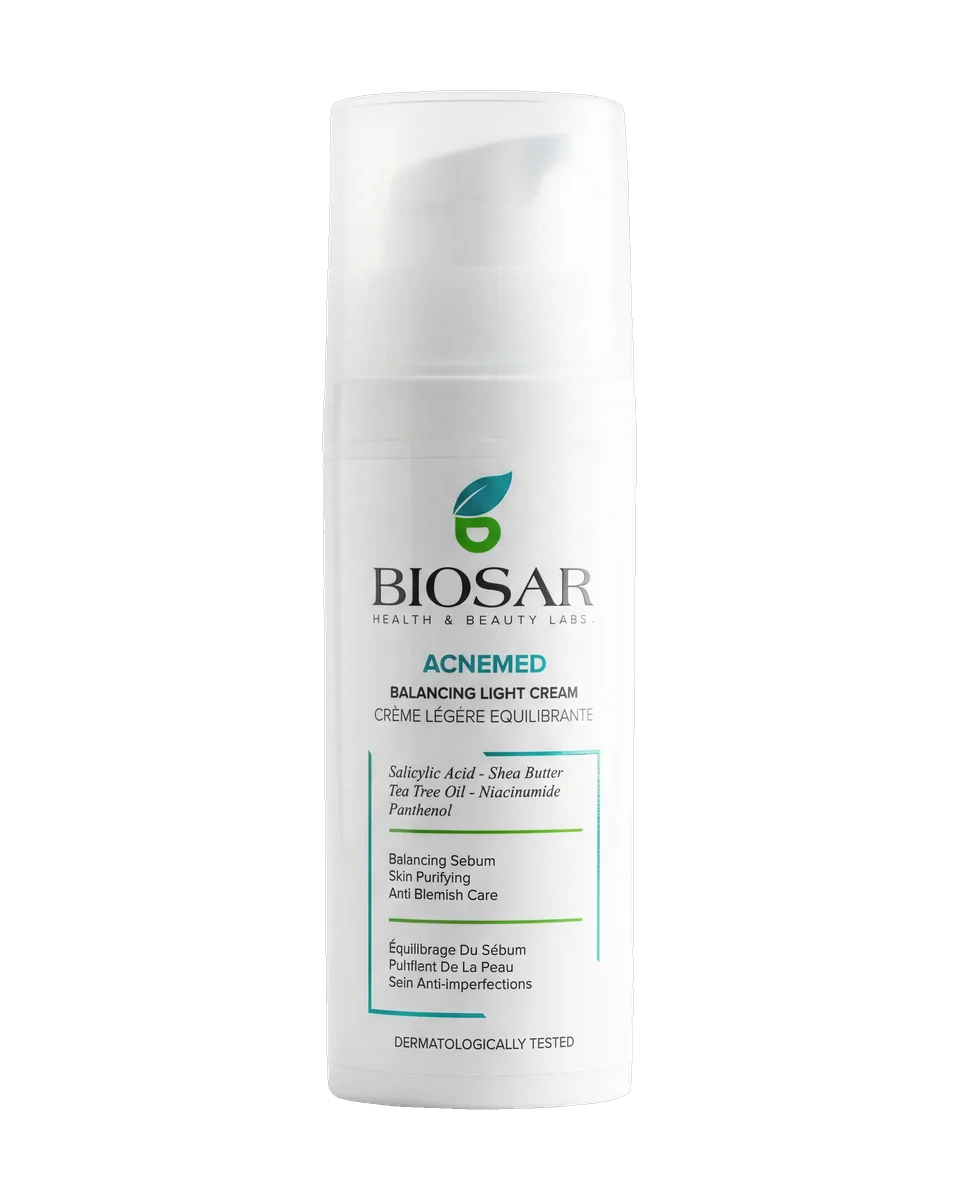
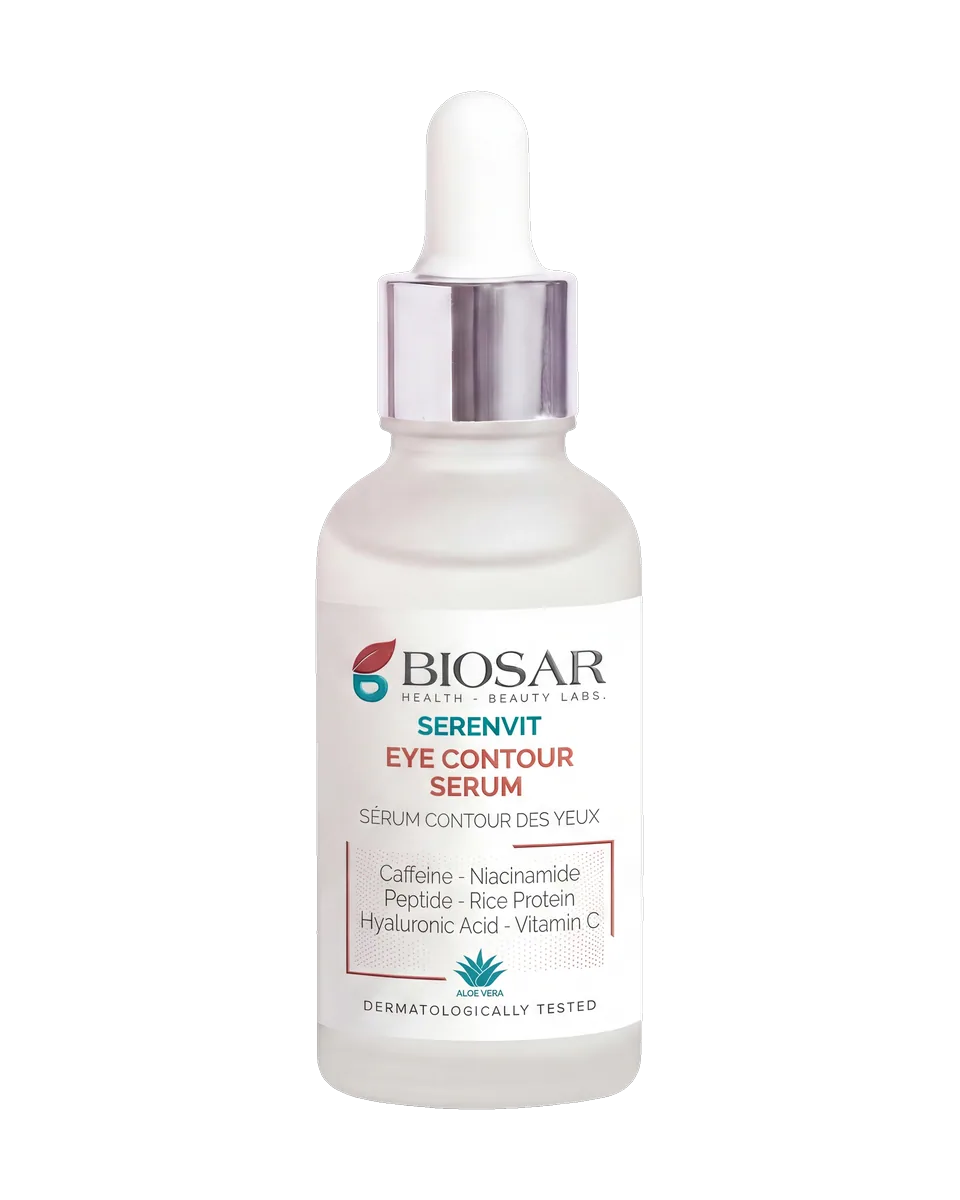
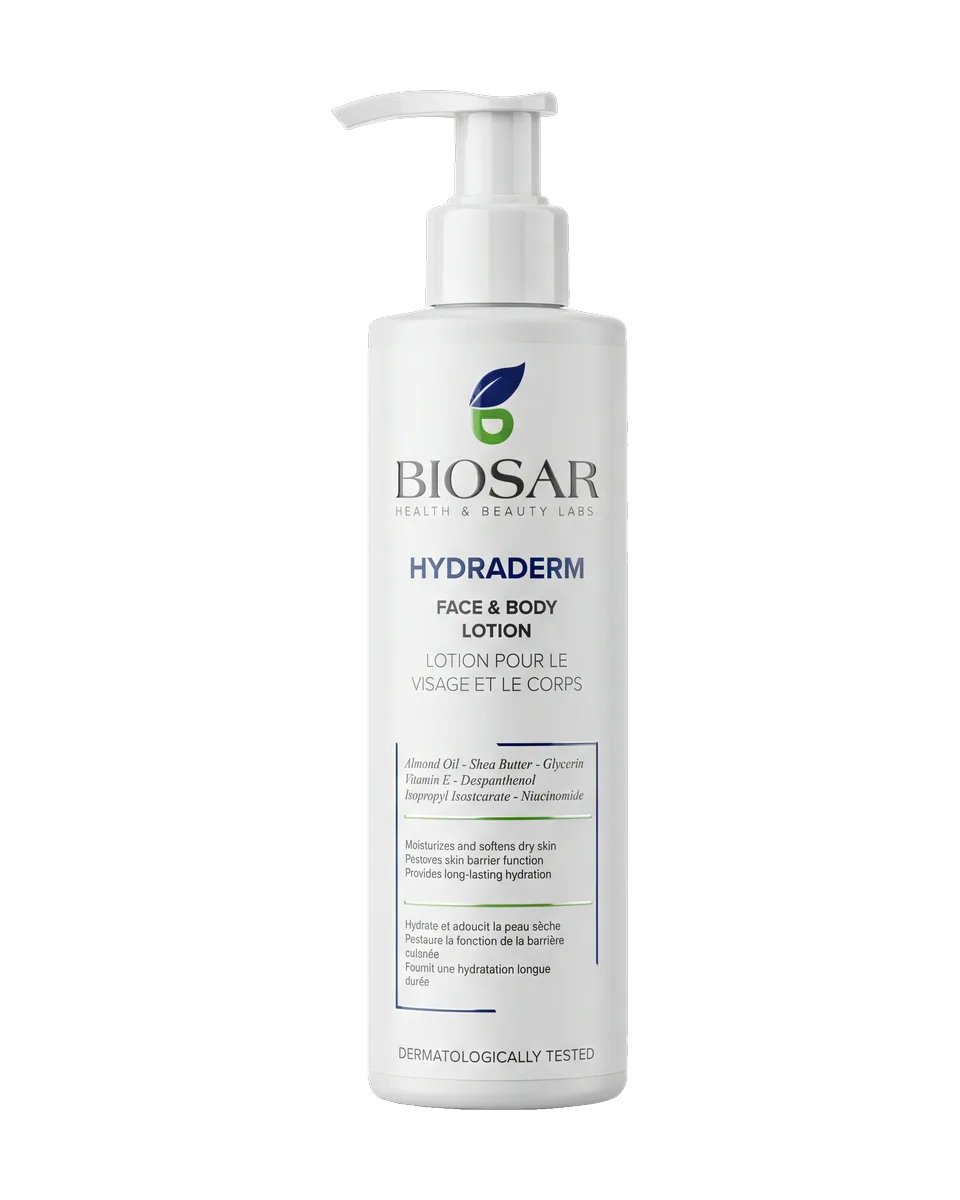
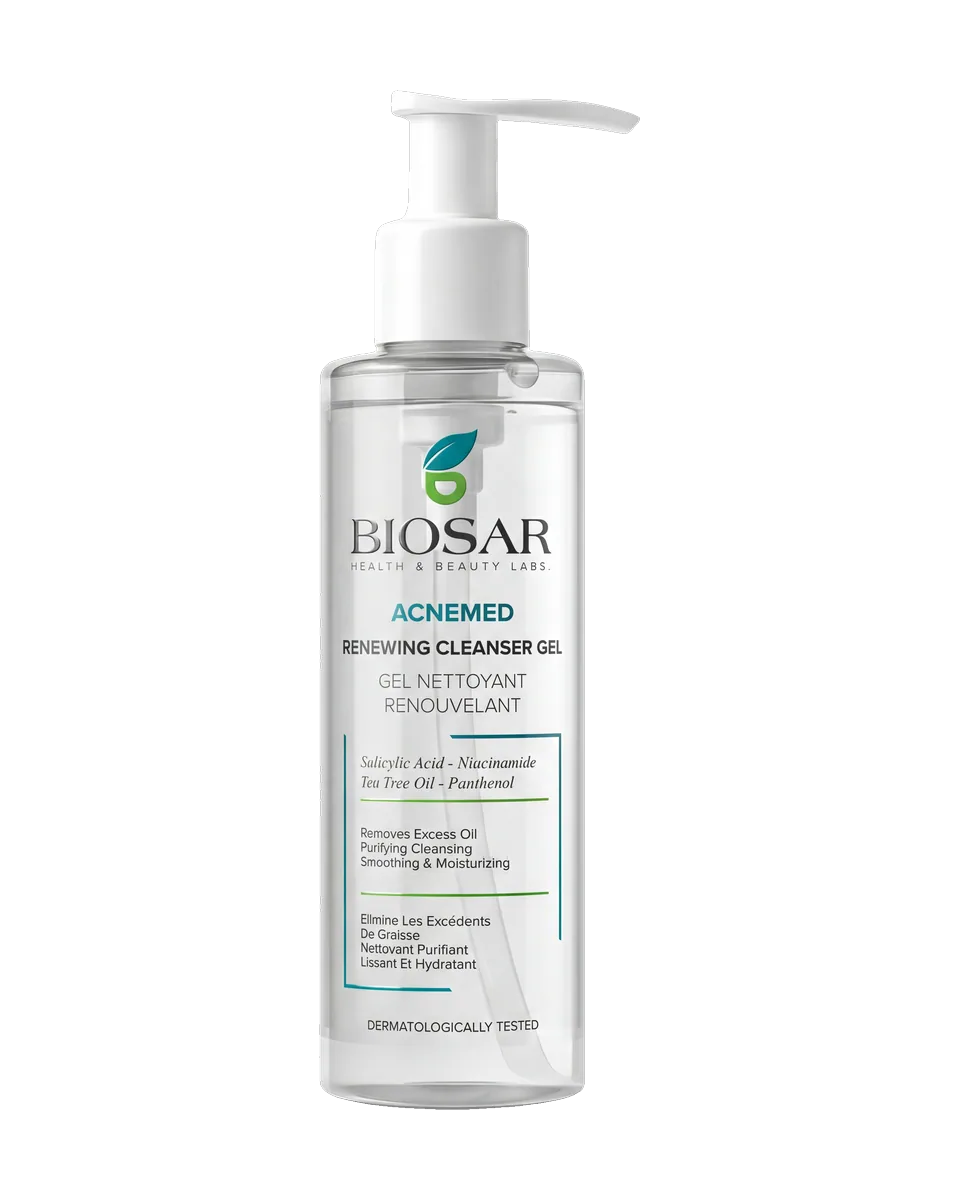
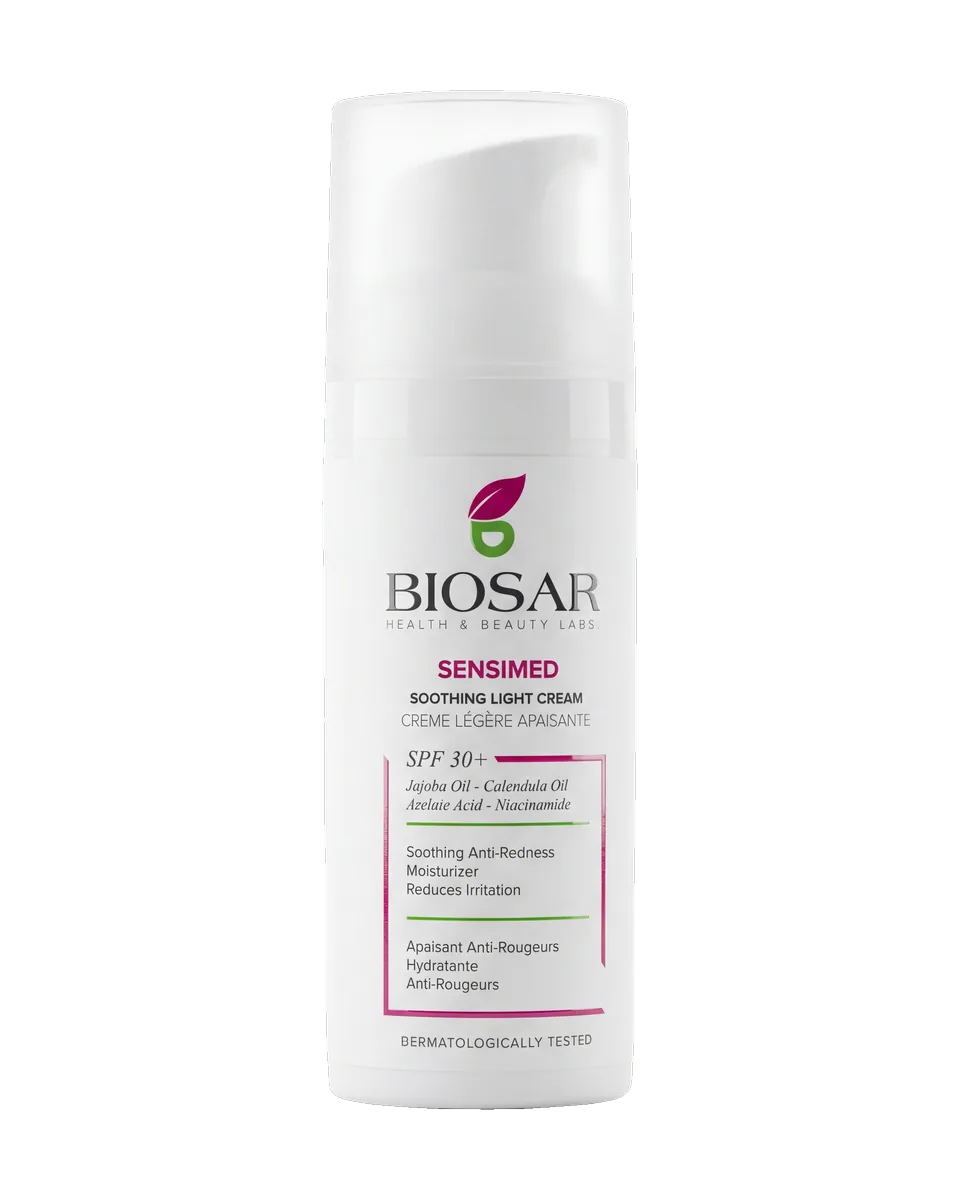
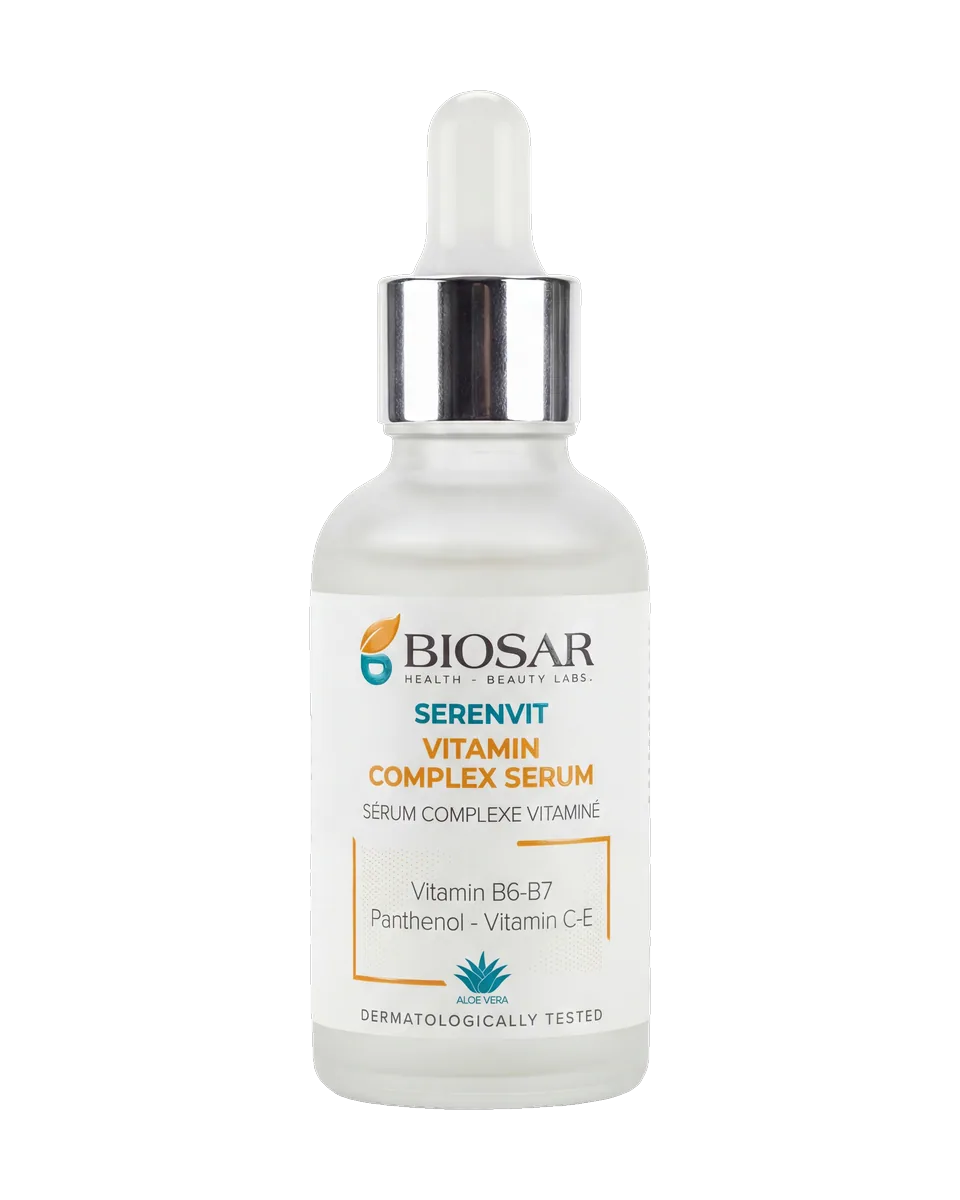
Niacinamide carries the Serenvit Vitamin Complex Serum, the Acnemed cleanser-cream pairing, and the Sensimed Soothing Light Cream SPF30. It is the most-used active across the catalog because it pairs with everything.
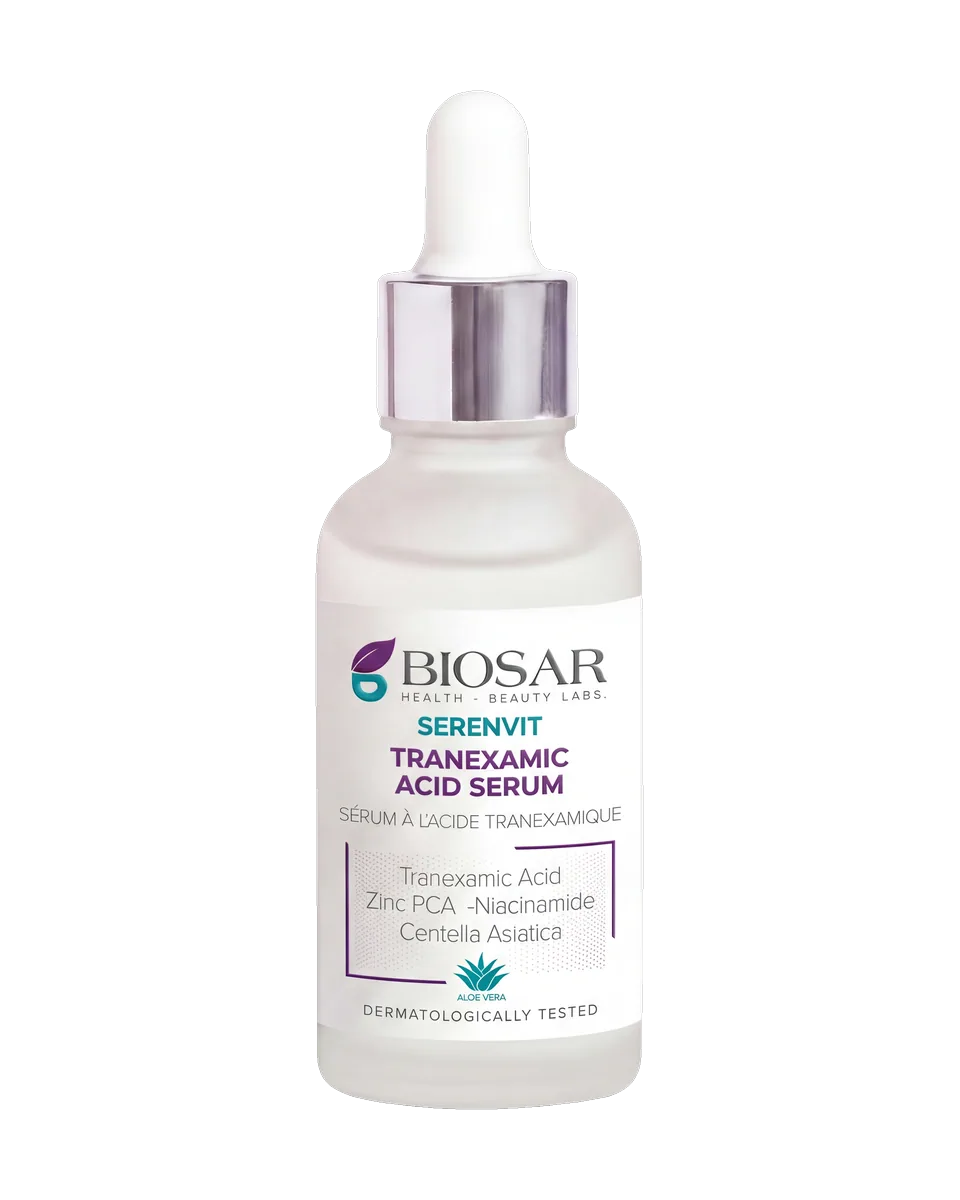
Vitamin C leads the Serenvit Vitamin Complex Serum (alongside niacinamide) and the Whitepurity Serum. Pharmacists pair the Whitepurity Serum with the Serenvit Tranexamic Acid Serum for melasma and stubborn pigmentation.
Closing recommendation
Run niacinamide twice daily as the base for tone, oil, and barrier. Run vitamin C once in the morning as the antioxidant + tone-evening accelerant. Layer them in either order. The two are partners, not rivals; the most stubborn pigmentation cases use both.