Mechanism contrast
Retinol converts in the skin to retinoic acid, which binds RAR/RXR nuclear receptors and reorganises gene expression: promoting collagen, accelerating keratinocyte turnover, and dispersing melanin clusters. The trade-off is the ramp irritation that many users meet at week two.
Bakuchiol does not bind retinoid receptors. It modulates the same downstream pathways via SIRT1 and a gentler transcriptional cascade. Chaudhuri & Bojanowski (Int J Cosmet Sci 2014) showed gene-expression changes in human skin equivalents that overlap meaningfully with retinol's profile.
Evidence summary
Dhaliwal et al. (Br J Dermatol 2019) ran a 12-week split-face randomised trial of 0.5% bakuchiol cream twice daily versus 0.5% retinol cream nightly. Both groups improved on wrinkle depth and pigmentation; the retinol arm reported more scaling and stinging. The result is the most-cited justification for bakuchiol-as-alternative.
On the retinol side, Kafi R. et al. (Arch Dermatol 2007) showed measurable improvement in fine wrinkles after 24 weeks of 0.4% retinol. The effect size held in older participants, important because retinol's efficacy shows up most reliably after 12 to 24 weeks.
BIOSAR products that contain each
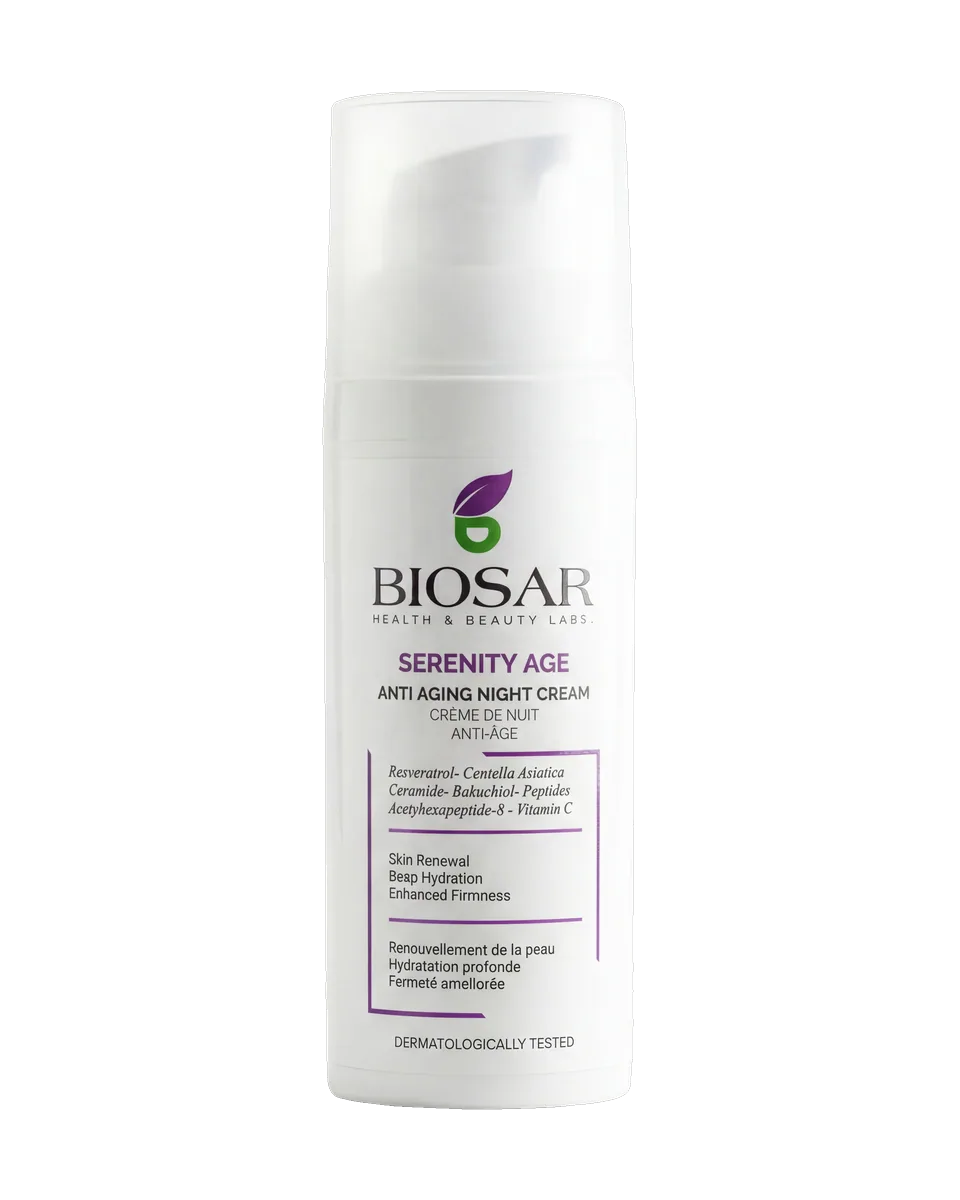
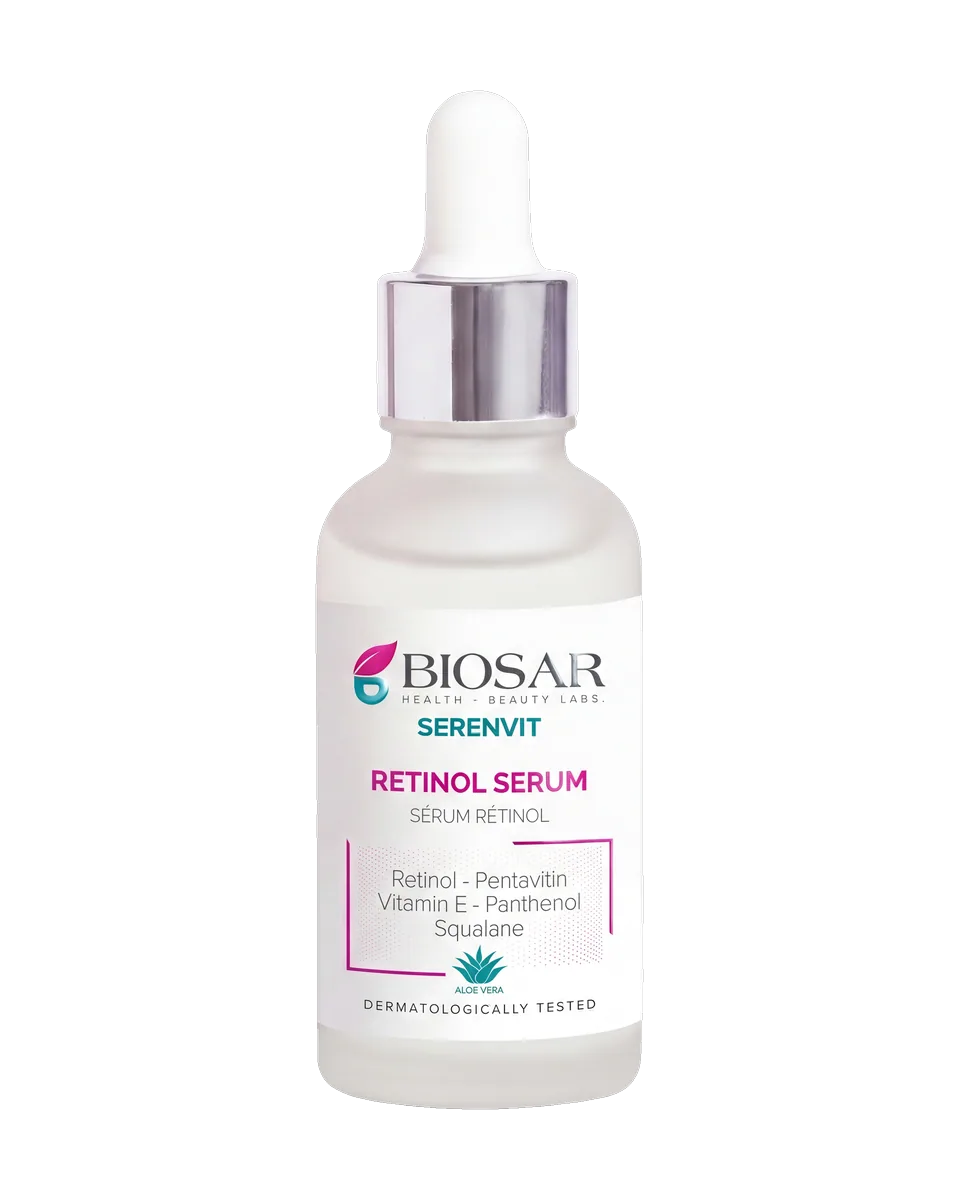
Retinol leads the Serenvit Retinol Serum and the Serenity Age Night Cream. Both are formulated with a low ramp (0.1% to 0.3%) plus ceramides and panthenol so the irritation curve stays manageable.
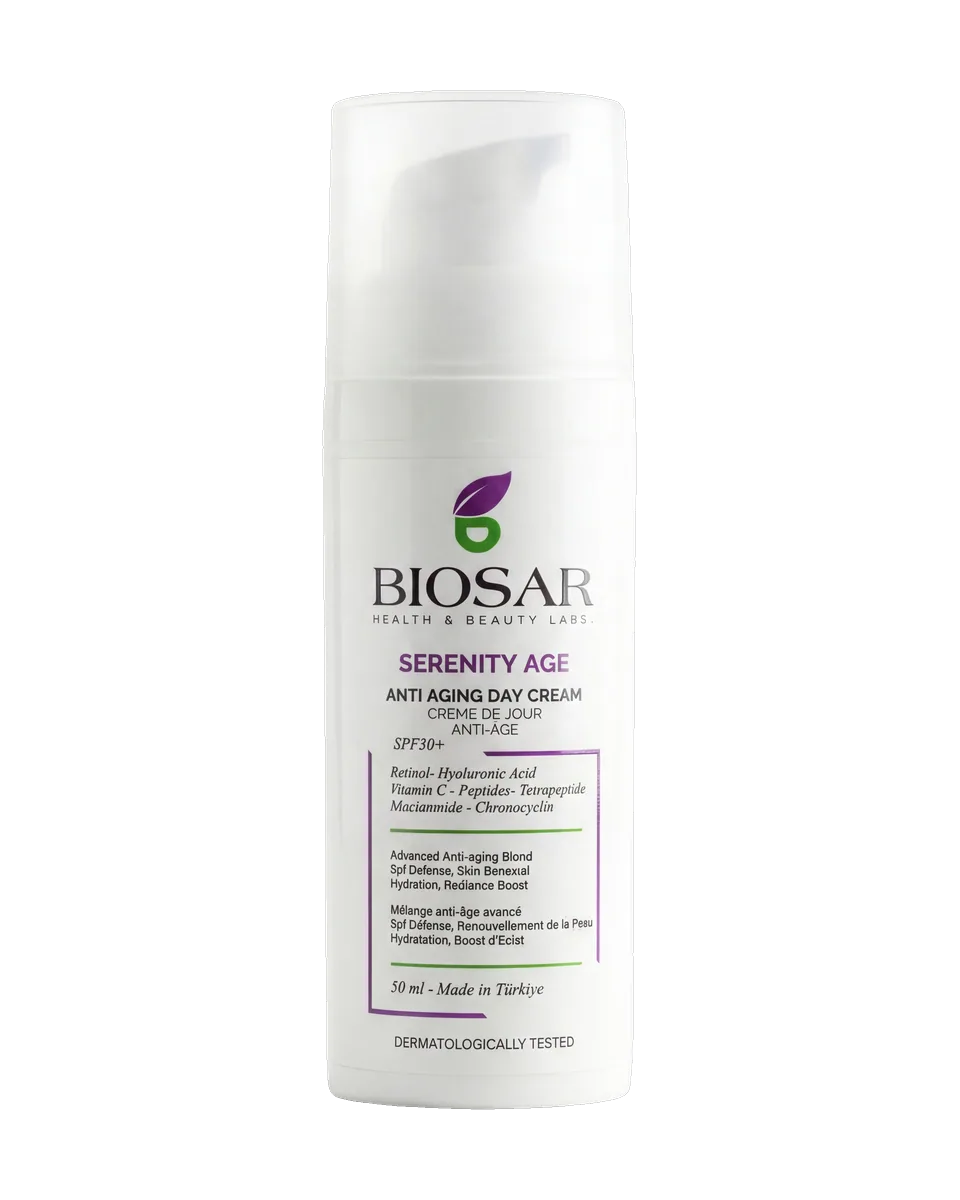
Bakuchiol features in the Serenity Age Day Cream SPF30 and selected Serenvit pairings, where it sits next to peptides and niacinamide. Pharmacists move patients onto bakuchiol-led routines when they confirm pregnancy or report retinoid-resistant skin.
Closing recommendation
Default to retinol when tolerated. Switch to bakuchiol when retinol stings, the skin reacts, or pregnancy is on the table. Both demand sunscreen and patience. The visible payoff sits at week 12, not week 2. Pair either with a ceramide moisturiser to keep the barrier intact.