Mechanism contrast
Salicylic acid is a beta-hydroxy acid (BHA). Its lipophilic structure lets it penetrate sebum-rich follicles and dissolve the keratinocyte plugs that seed comedones. The European Scientific Committee on Consumer Safety reviewed leave-on cosmetic use up to 2% as safe (SCCS/1601/18).
Azelaic acid is a saturated dicarboxylic acid produced naturally by Malassezia furfur. It blocks tyrosinase, dampens reactive oxygen species inside the follicle, and modulates Cutibacterium acnes. It clears acne and fades the post-inflammatory hyperpigmentation that often follows acne in deeper skin tones.
Evidence summary
AAD acne guidelines recommend salicylic acid as a first-line topical for mild comedonal acne. Azelaic acid is recommended at 15% to 20% for inflammatory acne, rosacea-type erythema, and concurrent post-acne pigmentation, particularly in Fitzpatrick III to V skin (Zaenglein et al., J Am Acad Dermatol 2016).
A 20-week split-face trial of 20% azelaic acid versus 0.05% tretinoin showed comparable lesion reduction with fewer irritation reports on the azelaic side (Graupe K et al., Cutis 1996). For salicylic acid, daily 2% use reduced comedone count by approximately a third over 12 weeks in a controlled trial (Zander E, Weisman S, Clin Ther 1992).
BIOSAR products that contain each
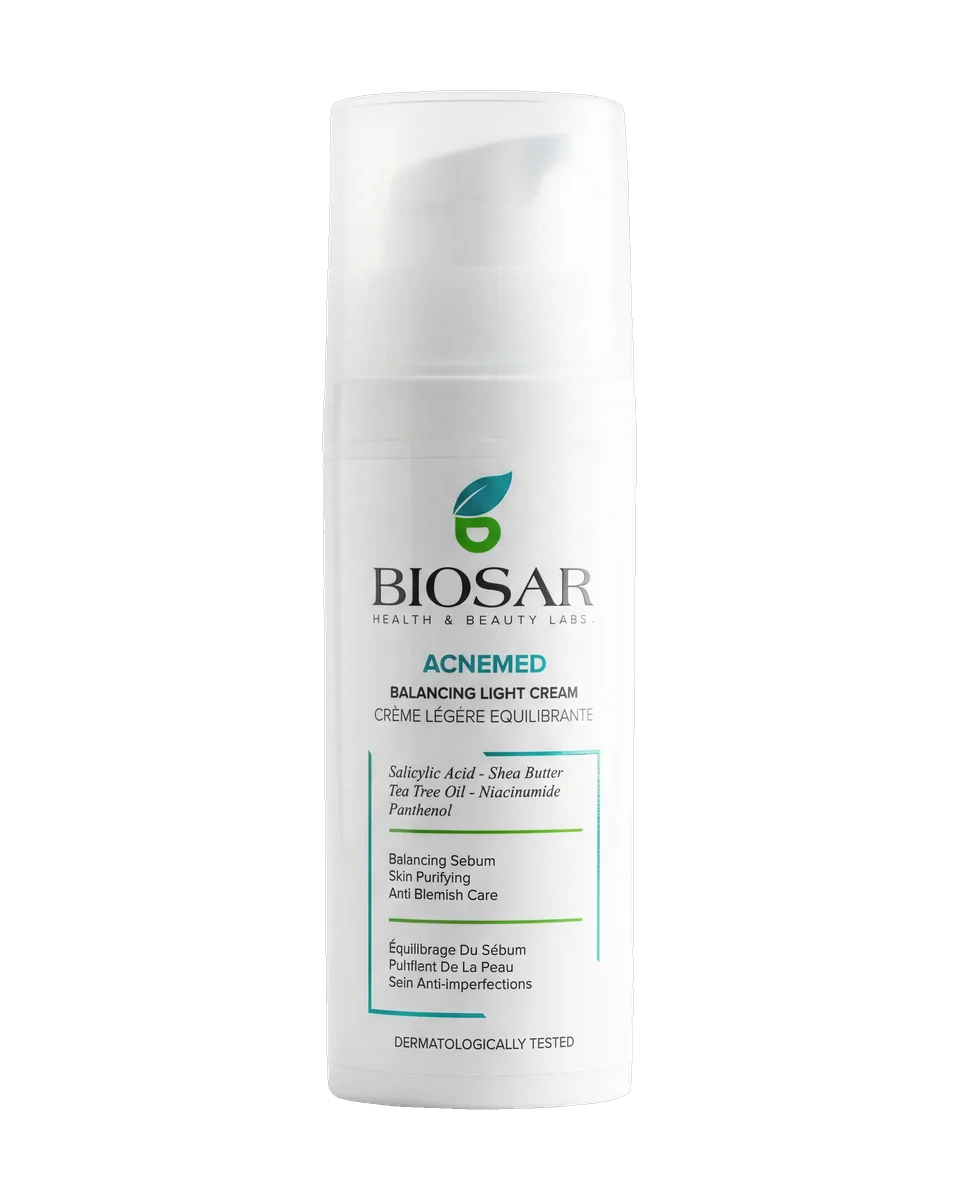
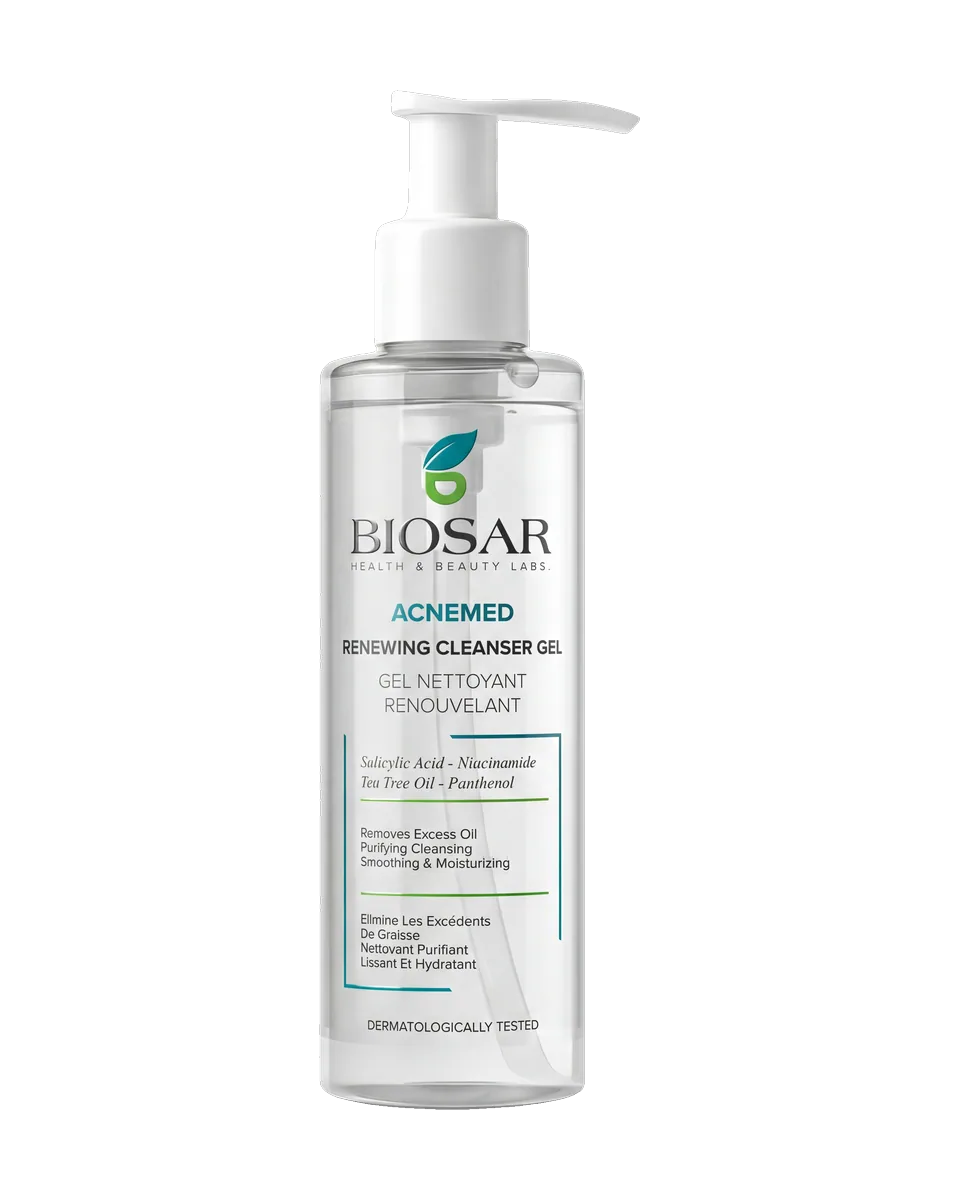
Acnemed Renewing Cleanser Gel and Acnemed Detoxifying Mask both centre on salicylic acid as their pore-resolving active, with niacinamide regulating sebum and tea tree supporting a calmer surface. The Acnemed Balancing Light Cream is the day-time pairing.
Azelaic-adjacent brightening sits in the Serenvit Tranexamic Acid Serum and the Whitepurity Cream SPF30. Both target the post-acne pigment cascade without overdrying the surface. Pharmacists pair these with the Acnemed cleanser when a patient presents with both active spots and lingering brown marks.
Closing recommendation
Treat salicylic acid as the cleanser-step pore opener. Treat azelaic acid as the leave-on calmer that handles redness and pigment. Either works alone; together they cover acne plus the marks acne leaves behind. When in doubt, pharmacists default to the gentler azelaic-acid pathway, especially during pregnancy or on reactive skin.