Active ingredient
Azelaic Acid
INCI · Azelaic Acid
Azelaic acid is a saturated dicarboxylic acid used in skincare to reduce inflammatory acne, rosacea, and post-inflammatory hyperpigmentation. It works by inhibiting Cutibacterium acnes growth, suppressing tyrosinase activity, and dampening neutrophil-driven inflammation. One of the few actives clinicians actively recommend during pregnancy. Mild additive irritation possible when layered with retinoids.
Pregnancy and breastfeeding
No specific caution is known for cosmetic use during pregnancy or breastfeeding. If you are unsure, ask your doctor or pharmacist.
Azelaic acid is recommended by Mother to Baby and ACOG as a first-line topical for acne and melasma during pregnancy and lactation. Systemic absorption is under 4% of the applied dose (Bozzo 2011, Can Fam Physician).
Mechanism in detail
What Azelaic Acid does
Dicarboxylic acid that evens tone and calms visible redness. Well tolerated by sensitive skin.
Evidence
What the research says
- 65%Prescription-strength 20% cream in women with melasma
A 24-week double-blind trial in 329 women with melasma: 20% azelaic acid cream, a prescription strength, gave good or excellent results in 65%, with no significant difference from 4% hydroquinone. Both groups used sunscreen.
A clinical study in patients, in a medical setting. It is shown for the science of the ingredient, not as an example of cosmetic use.
Read the studyInt J Dermatol 1991
- 58% · 51%15% prescription gel in rosacea: two phase III trials
Two vehicle-controlled phase III trials in 329 and 335 patients with papulopustular rosacea: 15% azelaic acid gel twice daily cut inflammatory lesions by 58% and 51%, against 40% and 39% with the vehicle gel.
A clinical study in patients, in a medical setting. It is shown for the science of the ingredient, not as an example of cosmetic use.
Read the studyJ Am Acad Dermatol 2003
Layering guidance
Use Azelaic Acid carefully alongside
These ingredients work well in a routine but are best applied at different times of day or on alternating days to limit irritation.
Where it helps
Concerns Azelaic Acid addresses
Sensitivity
If you have sensitive skin, you have probably been told it is in your head — by a product that says "gentle" on the label, by a friend whose skin tolerates everything yours cannot, sometimes by a professional who could not find a visible cause for the symptoms. It is not in your head. The mechanisms are measurable, the biology is mapped, and the care that follows from understanding them is what the Sensimed range was built around.
Sun Damage
Sun damage is the cumulative photoaging caused by ultraviolet radiation, presenting as solar lentigines, irregular pigmentation, fine lines, deeper wrinkles, leathery texture, and elevated skin cancer risk. UVA penetrates the dermis and drives collagen breakdown; UVB damages epidermal DNA and triggers melanin overproduction. Extrinsic factors, with UV exposure carrying the largest share, account for an estimated 80% of premature visible skin aging. Daily broad-spectrum SPF, antioxidant serums, and pigmentation correctors reverse early damage and prevent further progression. The BIOSAR Sunprotex range delivers broad-spectrum UVA + UVB protection layered with antioxidants for measurably stronger photoprotection.
From the BIOSAR catalog
Products formulated with Azelaic Acid
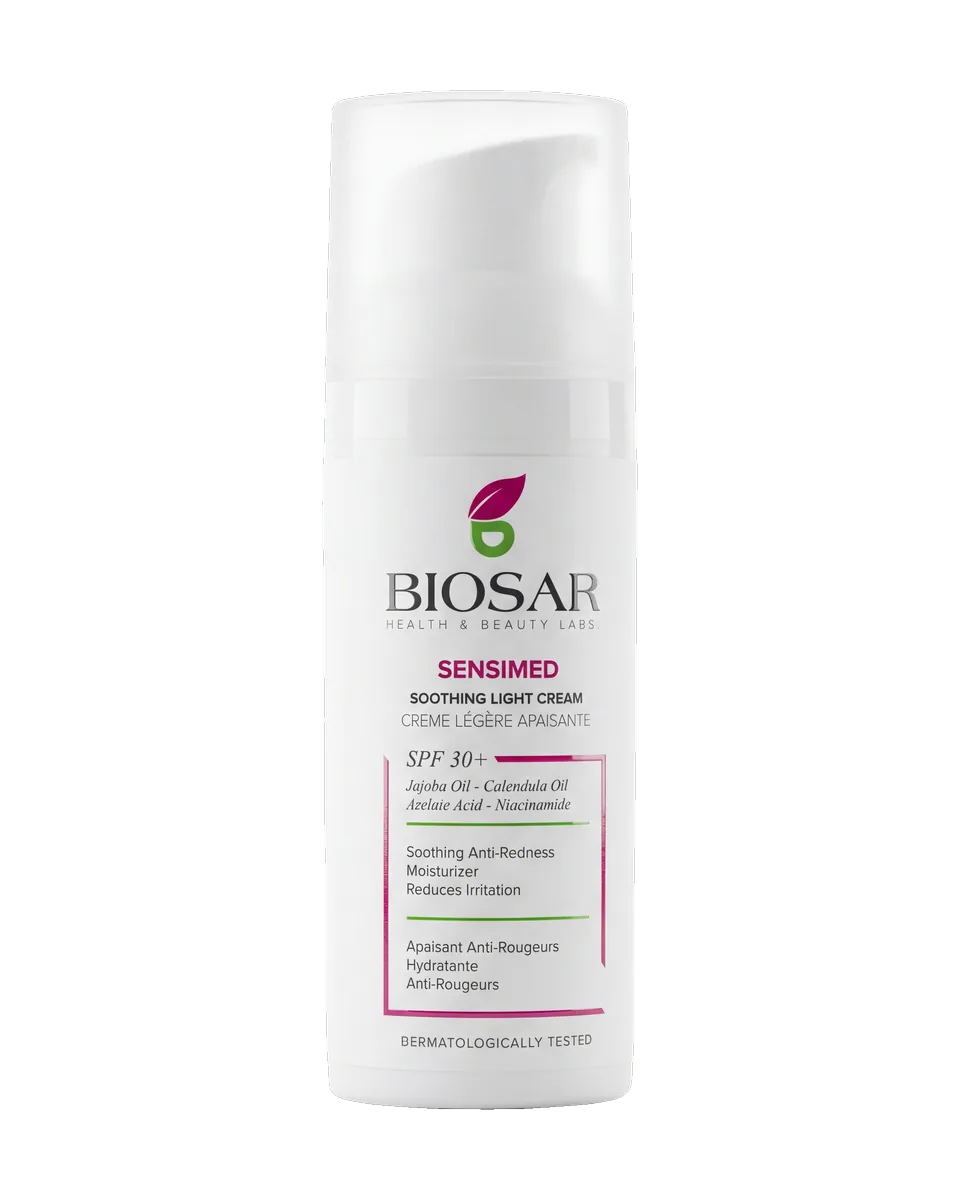
Sensimed50 ml
Soothing Light Cream SPF30
Calendula · Azelaic Acid · Niacinamide