Mechanism contrast
Salicylic acid is structural. Its lipophilic backbone lets it dive into the follicle, dissolve keratinocyte plugs, and unblock the pore. The European Scientific Committee on Consumer Safety reviewed leave-on use up to 2% as safe (SCCS/1601/18).
Tea tree oil is biological. Terpinen-4-ol, its dominant constituent, disrupts Cutibacterium acnes membranes and reduces lipase activity. The active concentration in clinical work is 5%, matched against 5% benzoyl peroxide in the often-cited Bassett trial.
Evidence summary
Bassett et al. (Med J Aust 1990) compared 5% tea tree gel with 5% benzoyl peroxide over 6 weeks. Both reduced inflamed lesion counts; tea tree had a slower onset but fewer side effects. For salicylic acid, AAD acne guidelines recommend it as a first-line topical for mild comedonal acne, with daily 2% reducing comedone count by approximately a third over 12 weeks (Zander E, Weisman S, Clin Ther 1992).
BIOSAR products that contain each
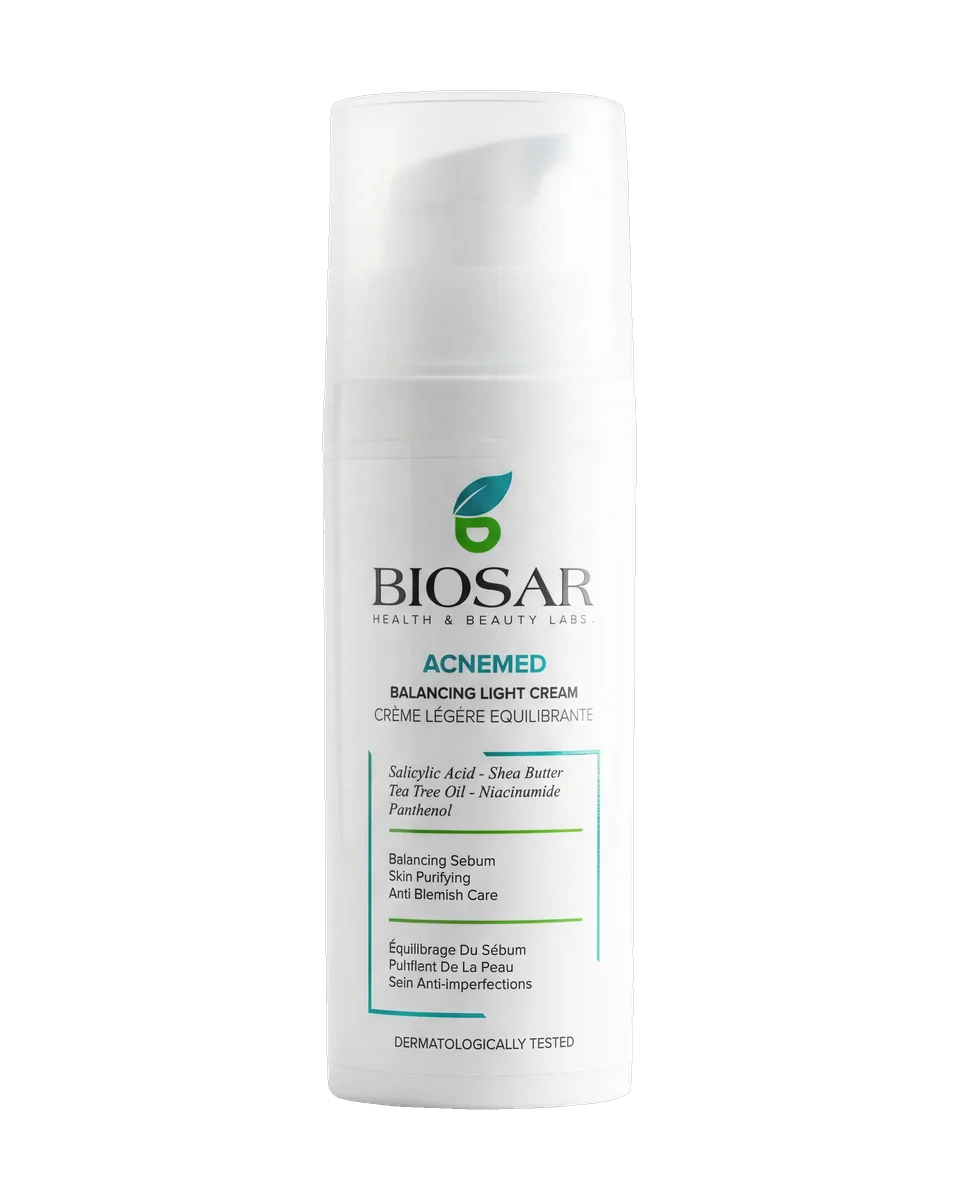
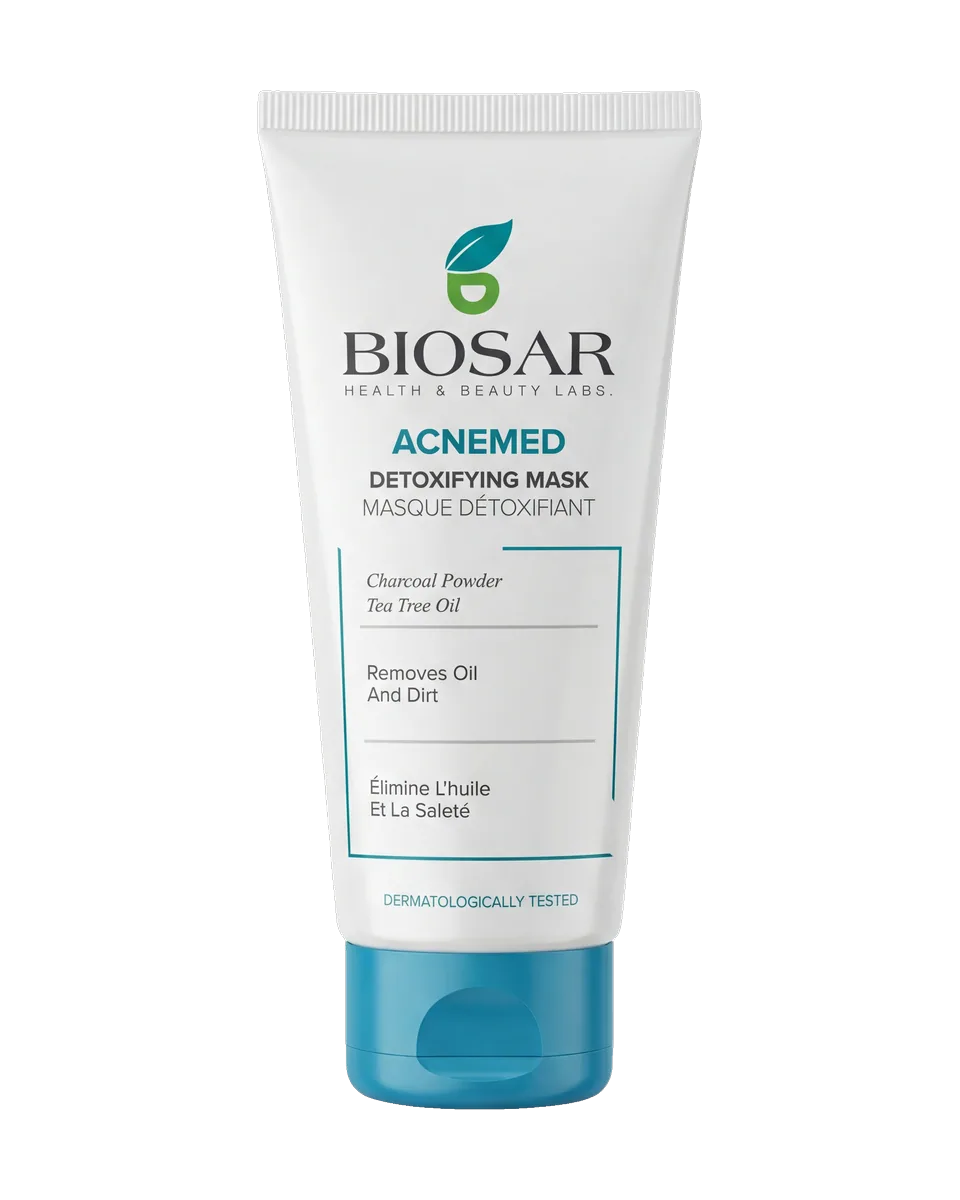
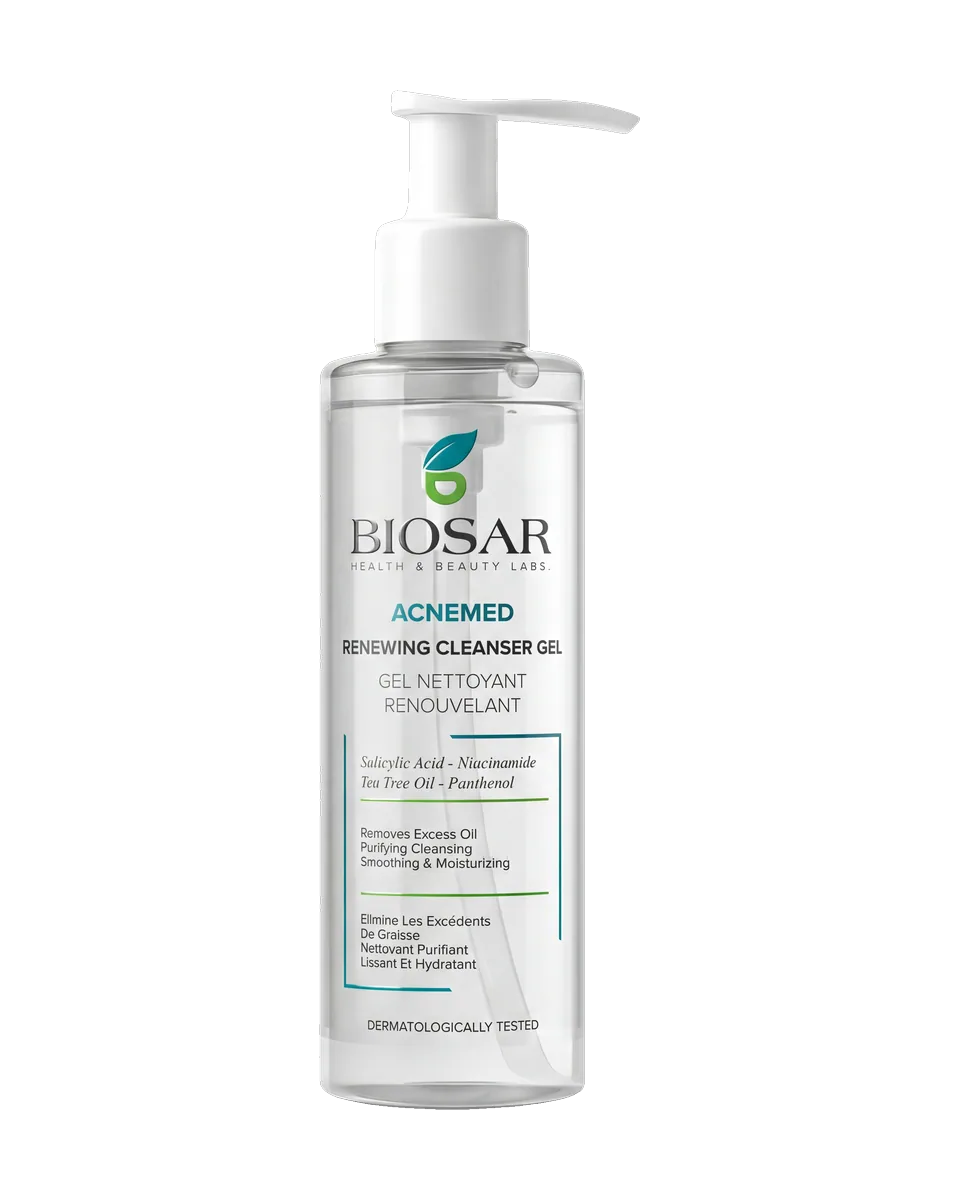
Salicylic acid leads the Acnemed Renewing Cleanser Gel and the Acnemed Detoxifying Mask, with niacinamide and aloe vera anchoring the comfort base.
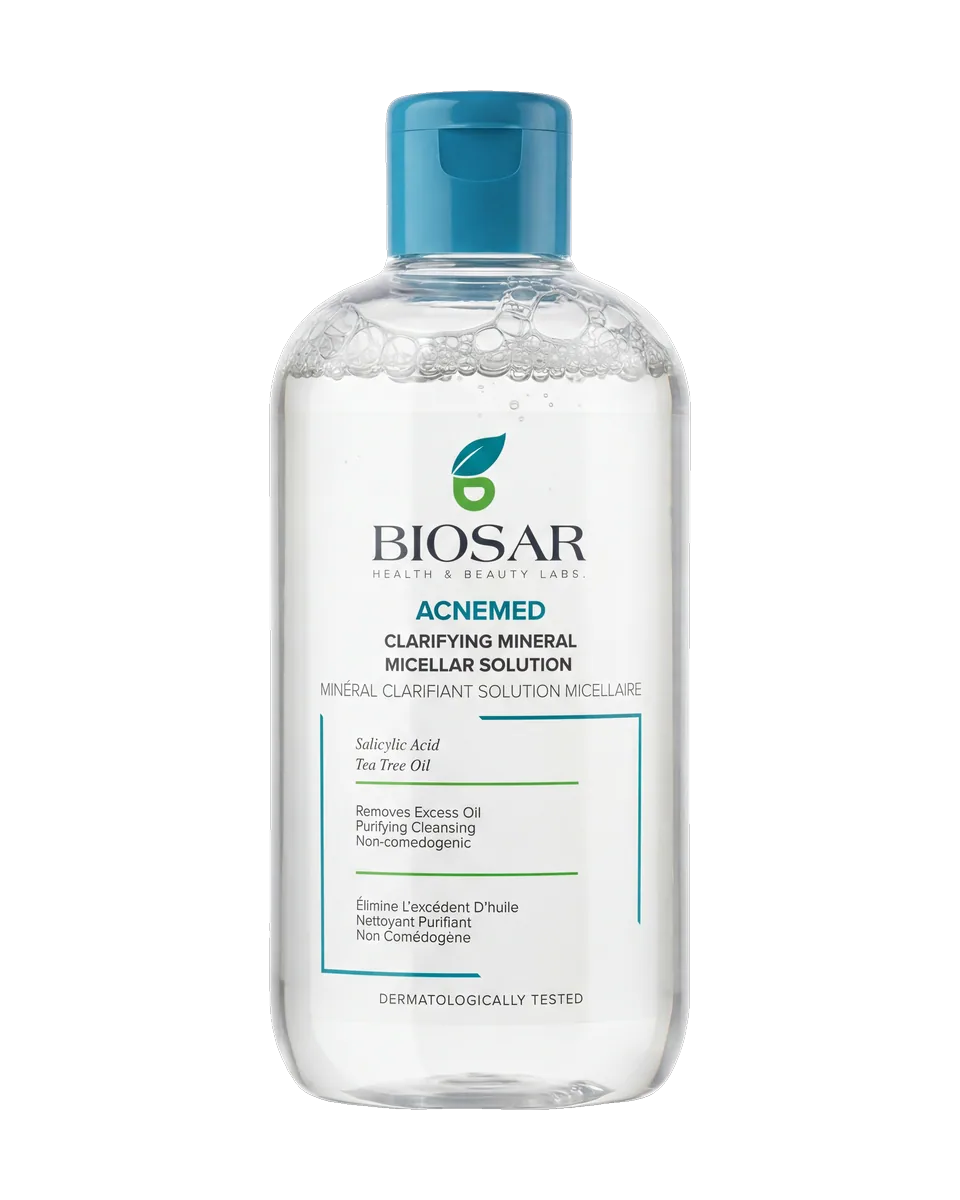
Tea tree oil sits beside salicylic acid in the Acnemed Clarifying Micellar Solution and the Acnemed Detoxifying Mask. The pairing is deliberate: blockage and bacteria almost always co-exist on blemish-prone skin, so the routine targets both.
Closing recommendation
Use salicylic acid as the daily structural fix. Use tea tree as the targeted antimicrobial layer during a flare. Modern Acnemed routines combine them, dropping tea tree to twice weekly once the active lesions resolve. Always finish with sunscreen in the morning.