Active ingredient
Tea Tree Oil
INCI · Melaleuca Alternifolia Leaf Oil
Tea tree oil is the essential oil distilled from Melaleuca alternifolia, used in skincare to reduce visible blemishes and support surface-balancing care. Its principal active, terpinen-4-ol, disrupts microbial cell membranes and dampens C. acnes-driven redness. Combine carefully with retinol or strong acids. Patch-test before facial use.
Pregnancy and breastfeeding
Use with caution — consult your clinician.
Topical tea tree oil at low cosmetic concentrations is generally considered acceptable during pregnancy and lactation. Mother to Baby cautions that human pregnancy data are limited; oral use is avoided.
Mechanism in detail
What Tea Tree Oil does
Essential oil valued for its purifying affinity with blemish-prone skin. It supports a clearer, calmer-looking surface, and is dosed at a balanced level so it stays effective without overwhelming sensitive skin.
Evidence
What the research says
- 3.55×5% gel vs placebo in mild-to-moderate acne, 45 days
A double-blind trial in 60 patients with mild-to-moderate acne: over 45 days, a 5% tea tree oil gel reduced the total lesion count 3.55 times more than placebo gel, and the severity index 5.75 times more. Tolerability was similar.
A clinical study in patients, in a medical setting. It is shown for the science of the ingredient, not as an example of cosmetic use.
Read the studyIndian J Dermatol Venereol Leprol 2007
Where it helps
Concerns Tea Tree Oil addresses
Acne
Acne is rarely just acne. It is the anxiety before a meeting, the photo you skip, the makeup routine that started as "a little" and is now twenty minutes. The marks last longer than the breakouts, and they carry the breakout's weight long after the skin has healed. The Acnemed range is the salicylic-acid-led routine BIOSAR built for the full cycle — clearing active blemishes, calming the inflammation that follows, and reducing the marks the breakouts leave behind. Designed under dermatological supervision.
Dryness
Dryness is a barrier dysfunction in which skin loses water faster than it can retain or replenish it, presenting as flaking, tightness, dullness, and roughness. Mild dryness reflects routine over-cleansing or environmental exposure; chronic dryness signals a deeper deficit in skin lipids (ceramides, cholesterol, fatty acids) and humectant content (the natural moisturising factor). Effective treatment hydrates and replenishes the barrier through three layered actions: humectants that draw water in, occlusives that seal it in, and barrier actives that rebuild the lipid mortar. The BIOSAR Hydraderm range delivers this layered hydration and visibly plumps dehydrated skin.
Hair Loss
For the months you have been finding more hair on the pillow than the comb. For the part line that has slowly widened. For the new mother, the man at the temple recession, the woman watching her ponytail thin — hair loss is a quiet anxiety that most people carry alone for too long before they ask anyone. The Hairmical range is built around the actives that the dermatology and trichology literature considers most defensible for visible shedding: Procapil's three-mechanism complex, caffeine for follicular microcirculation, biotinyl-tripeptide for follicle anchoring. Topical actives work on the follicle's clock — give them 4 to 8 weeks of consistent use for visible improvement, and months for a full growth cycle.
From the BIOSAR catalog
Products formulated with Tea Tree Oil
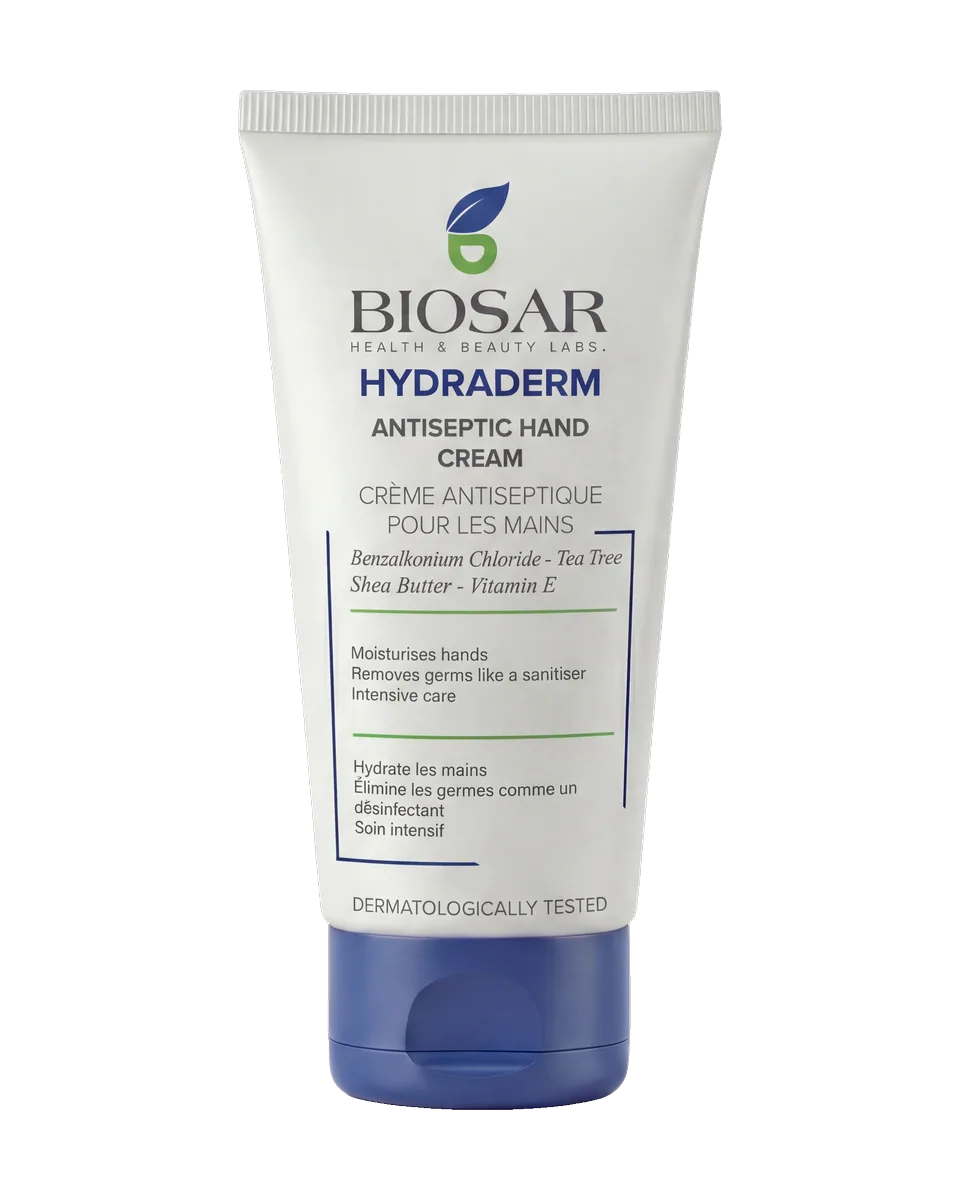
Hydraderm60 ml
Antiseptic Hand Cream
Tea Tree Oil · Shea Butter · Panthenol
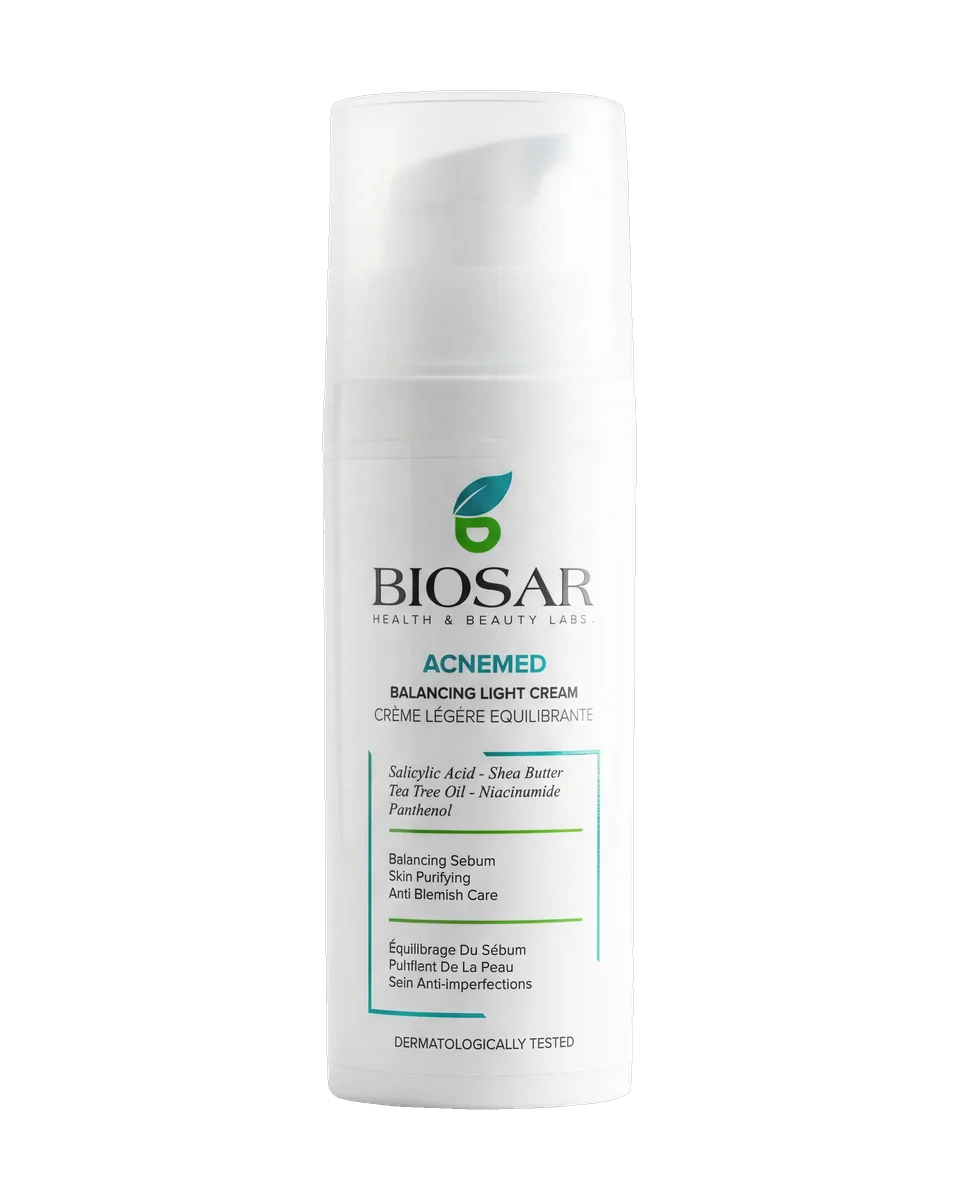
Acnemed50 ml
Balancing Light Cream
Niacinamide · Salicylic Acid · Tea Tree Oil
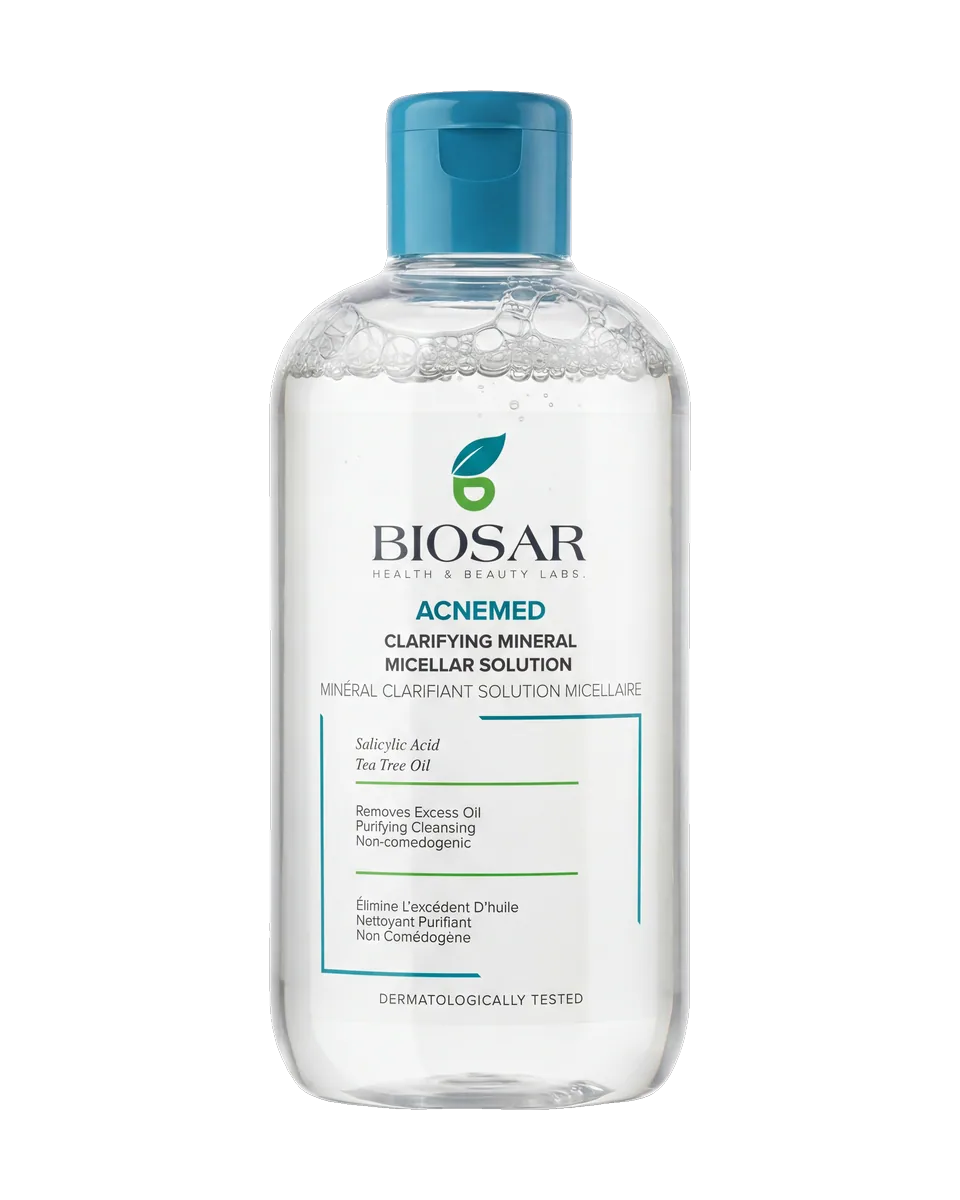
Acnemed250 ml
Clarifying Micellar Solution
Salicylic Acid · Tea Tree Oil · Panthenol
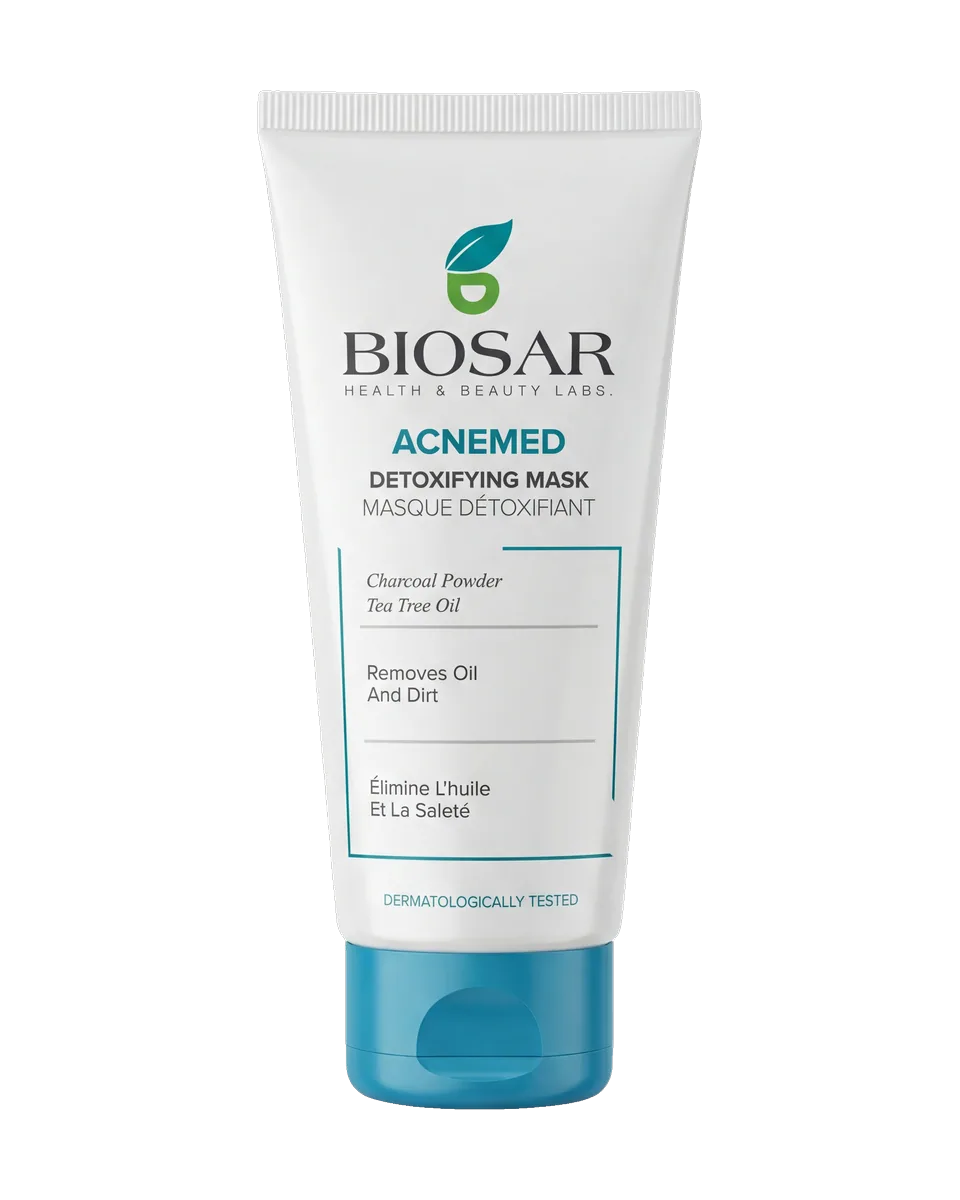
Acnemed100 ml
Detoxifying Mask
Niacinamide · Tea Tree Oil · Activated Charcoal
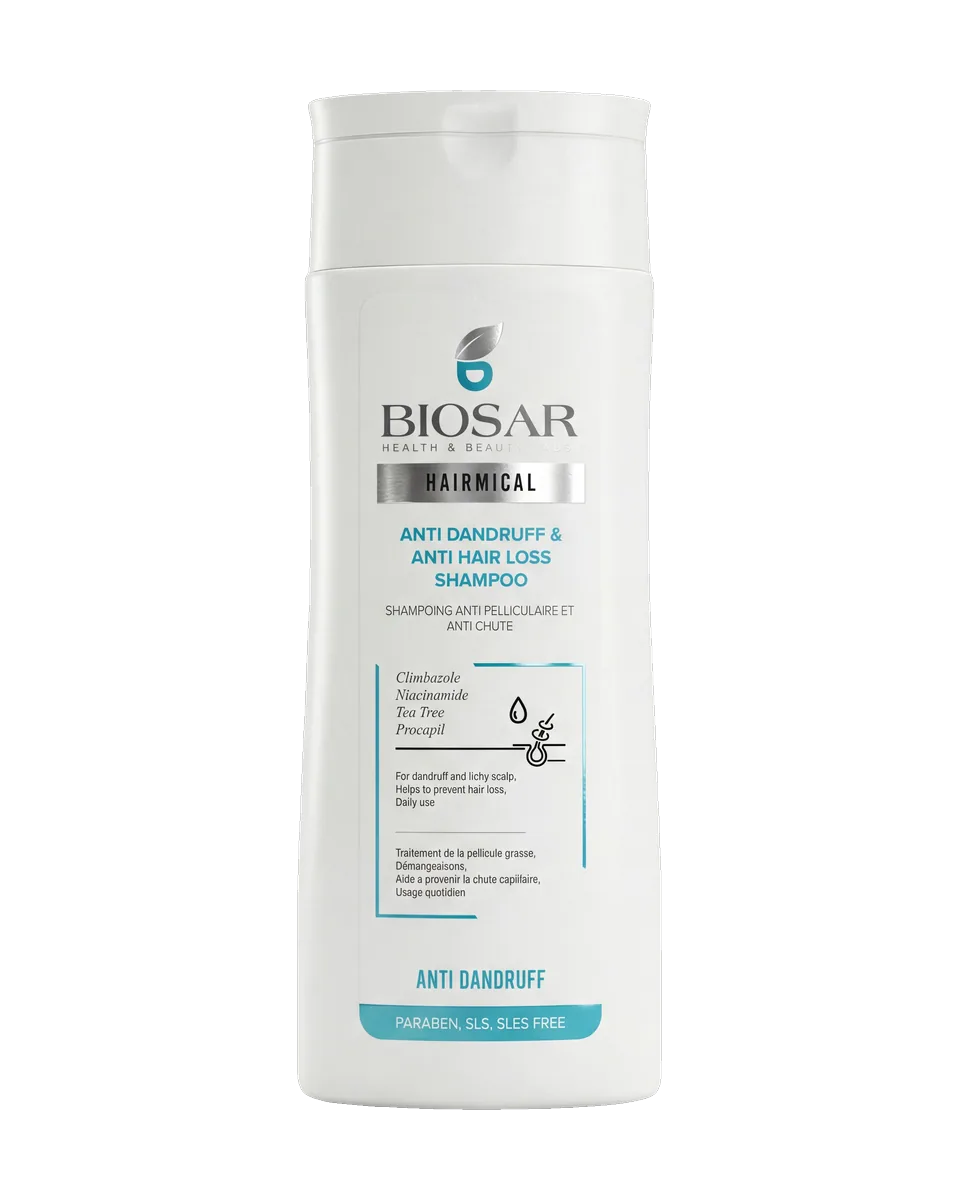
Hairmical300 ml
Hair Loss Prevent Shampoo (Anti-Dandruff)
Procapil · Niacinamide · Tea Tree Oil
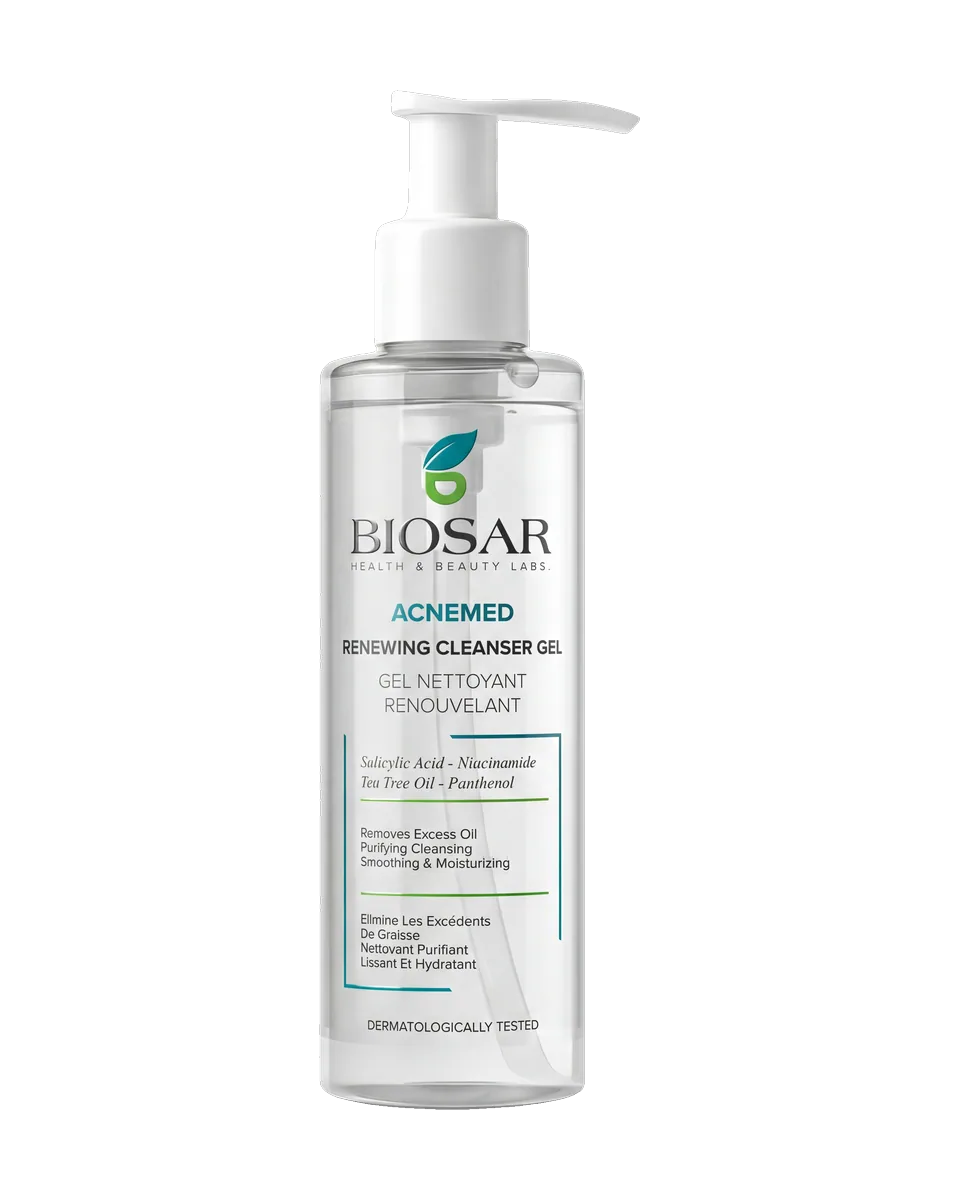
Acnemed200 ml
Renewing Cleanser Gel
Salicylic Acid · Tea Tree Oil · Niacinamide