Active ingredient
Tranexamic Acid
INCI · Tranexamic Acid
Tranexamic acid is a synthetic lysine analogue used in skincare to reduce melasma, post-inflammatory hyperpigmentation, and uneven tone. It inhibits plasmin-mediated melanogenesis and dampens melanocyte response to UV-induced inflammation. Pairs well with vitamin C, niacinamide, and alpha-arbutin in stacked pigment-correction routines. No major conflicts.
Pregnancy and breastfeeding
No specific caution is known for cosmetic use during pregnancy or breastfeeding. If you are unsure, ask your doctor or pharmacist.
Topical tranexamic acid at cosmetic concentrations is considered acceptable during pregnancy and lactation per Mother to Baby. Oral or systemic use is a separate clinical decision and falls outside cosmetic scope.
Mechanism in detail
What Tranexamic Acid does
Amino acid derivative that targets stubborn pigmentation pathways. Works alongside Alpha-Arbutin or Niacinamide for multi-pathway tone correction.
Evidence
What the research says
- 4.80 → 2.335% topical vs 2% hydroquinone in women with melasma
A double-blind trial in 60 women with melasma: 5% topical tranexamic acid twice daily for 12 weeks lowered the severity score from 4.80 to 2.33, with no difference from 2% hydroquinone (4.37 to 2.30). Both groups used sunscreen.
A clinical study in patients, in a medical setting. It is shown for the science of the ingredient, not as an example of cosmetic use.
Read the studyDermatol Ther (Heidelb) 2017 (Atefi)
Where it helps
Concerns Tranexamic Acid addresses
Dullness
Dull skin is the visible loss of luminosity, where the surface appears flat, grey, or fatigued instead of light-reflective. The underlying causes are dead-cell accumulation on the stratum corneum, dehydration, microcirculation impairment, and oxidative stress. Effective treatment combines gentle exfoliation (alpha- and beta-hydroxy acids), antioxidant serums (vitamin C, niacinamide), barrier hydration, and consistent broad-spectrum SPF. Visible improvement typically arrives within two to four weeks of a structured routine, matching the natural cell-turnover cycle of healthy skin.
Hyperpigmentation
Across Fitzpatrick III–V skin tones — the majority of darker skin tones — the most common consultation is the same: the patch on the cheekbone that did not fade. Melasma, post-inflammatory hyperpigmentation, the marks that follow acne and friction. The pattern is photoresponsive, the mechanism is mapped, and visible improvement is reachable with consistent care. The Whitepurity range is built for that work — Alpha-Arbutin for stable tyrosinase inhibition, Niacinamide-led brightening, and the SPF discipline that decides whether any of the rest will hold.
From the BIOSAR catalog
Products formulated with Tranexamic Acid
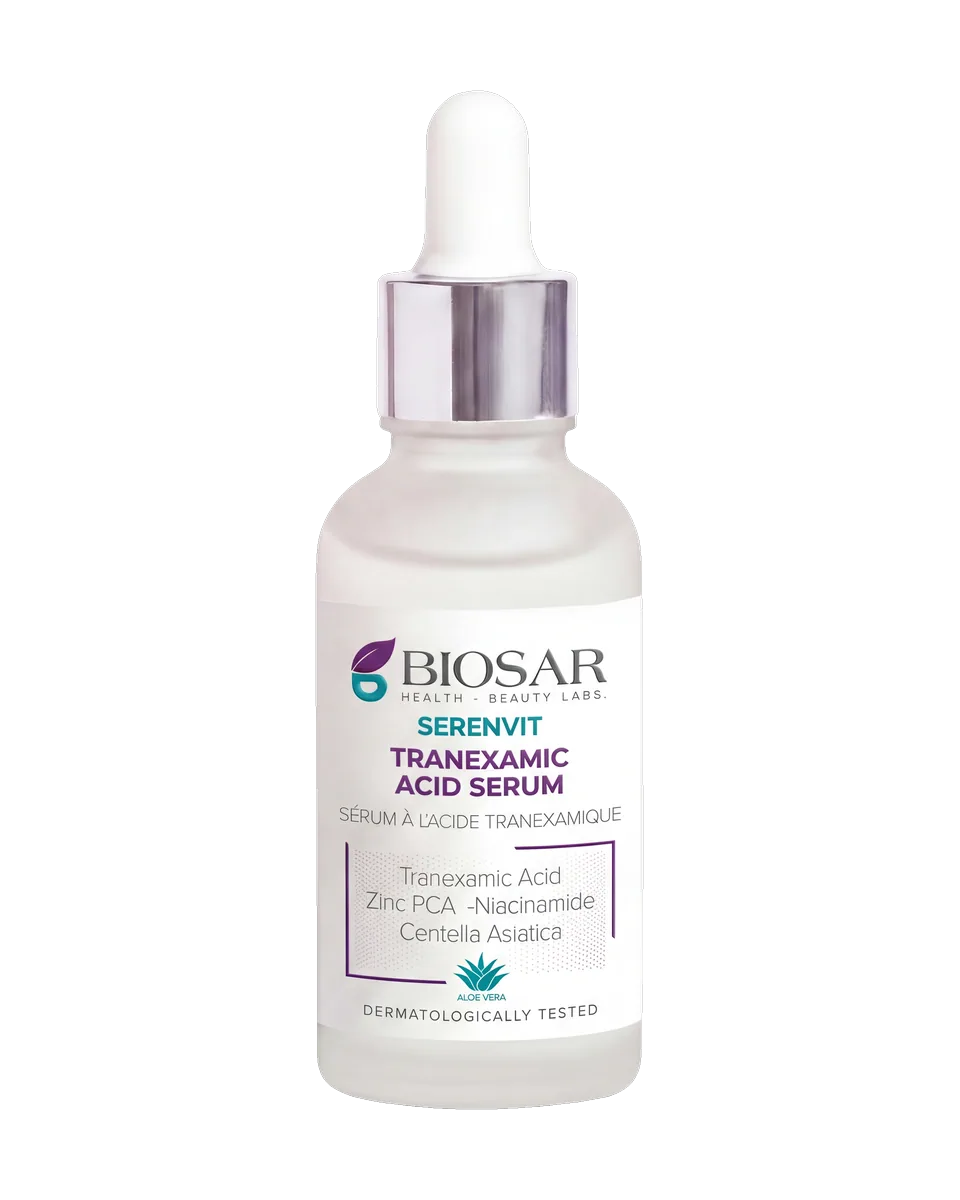
Serenvit30 ml
Tranexamic Acid Serum
Tranexamic Acid · Niacinamide · Zinc PCA
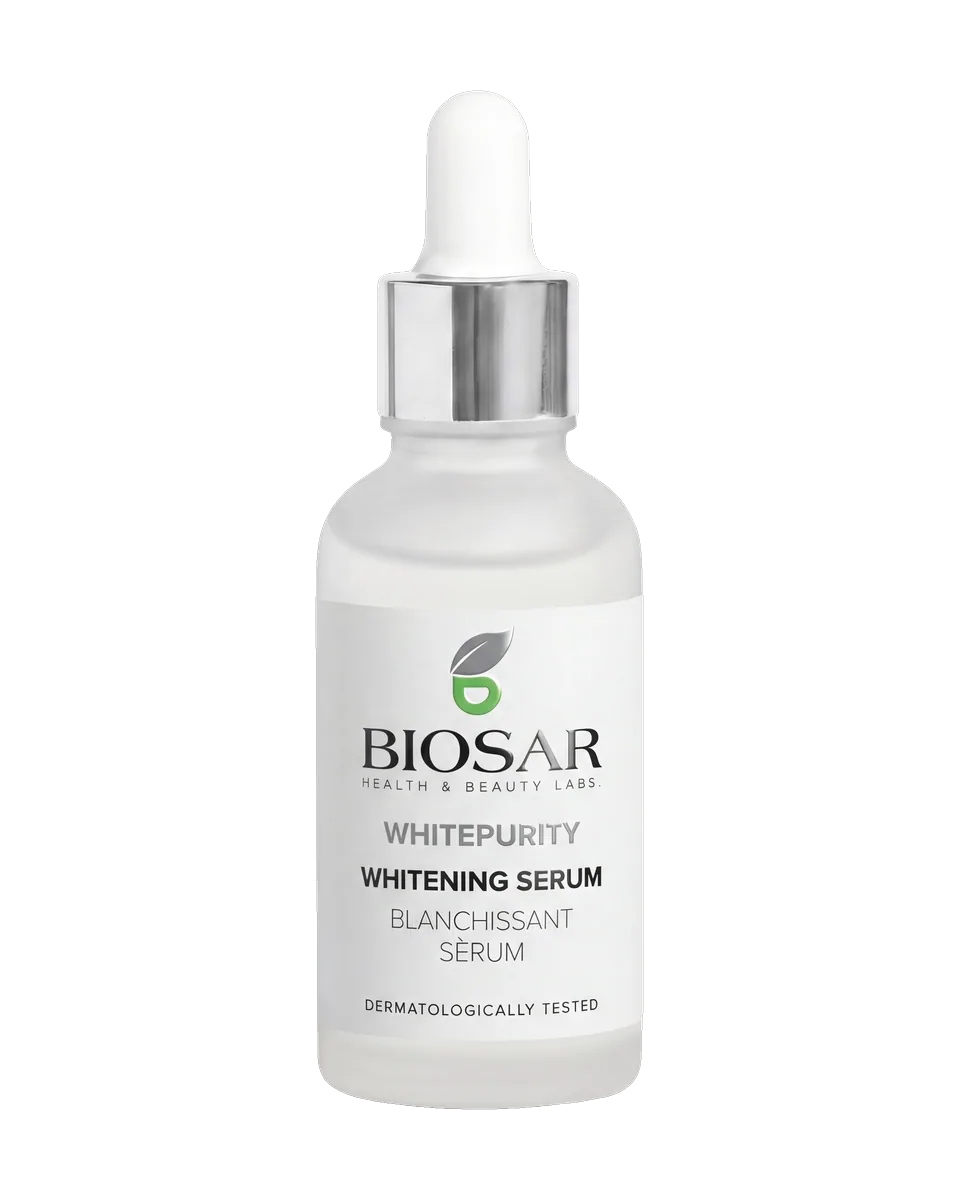
Whitepurity30 ml
Whitening Serum
Alpha-Arbutin · Niacinamide · Vitamin C