GUIDE
A dry skin routine needs humectants to attract water, occlusives to prevent loss and emollients to fill barrier gaps. With BIOSAR, wash gently, apply the hyaluronic acid serum on damp skin, then seal at once with the Hydraderm face cream. Hydraderm hand and cracked-heel creams extend the routine to hands and feet.
Dry skin is barrier-poor skin. Hyaluronic acid and glycerin pull water in; ceramide and squalane lock it down; shea butter and panthenol seal the surface. The Hydraderm range plus two serums gives you a complete dry-skin routine for face, body, hands, and feet.

Why this guide
Dry skin signals an underperforming barrier, the lipid layer that keeps water in and irritants out. Treating it requires three pillars: humectants to attract water, occlusives to prevent loss, and emollients to fill gaps in the barrier. The routine below assigns each pillar to a specific BIOSAR product so the routine builds barrier function instead of masking surface tightness for a few hours.
Step 1
Face — water-in, water-locked
Start with a gentle cleanse: the Hydraderm Face Gel is a rinse-off face cleansing gel. Apply the hyaluronic acid serum on damp skin (humectant phase), then the face cream (occlusive + emollient phase), morning and evening.
Step 2
Lipid restoration — ceramide pathway
When dryness is severe (winter, post-flight, post-cleanser), the Serenvit collagen + vitamin E serum and the face-and-body lotion add ceramide and panthenol at the level the barrier needs to repair, not just feel comfortable.
Step 3
Hands — high-friction, low-lipid
Hand skin loses lipids fastest because it is washed most. The antiseptic and anti-aging hand creams stack panthenol, shea butter, and (for the anti-aging) urea, which pulls water into the upper layers and softens callouses.
Step 4
Feet — cracked heels and dry pads
Foot skin tolerates higher urea and salicylic acid than face skin. The cracked-heel restoring cream uses both, plus shea butter for surface comfort. Apply at night under cotton socks for 2 to 3 weeks.
GUIDE
Featured BIOSAR products
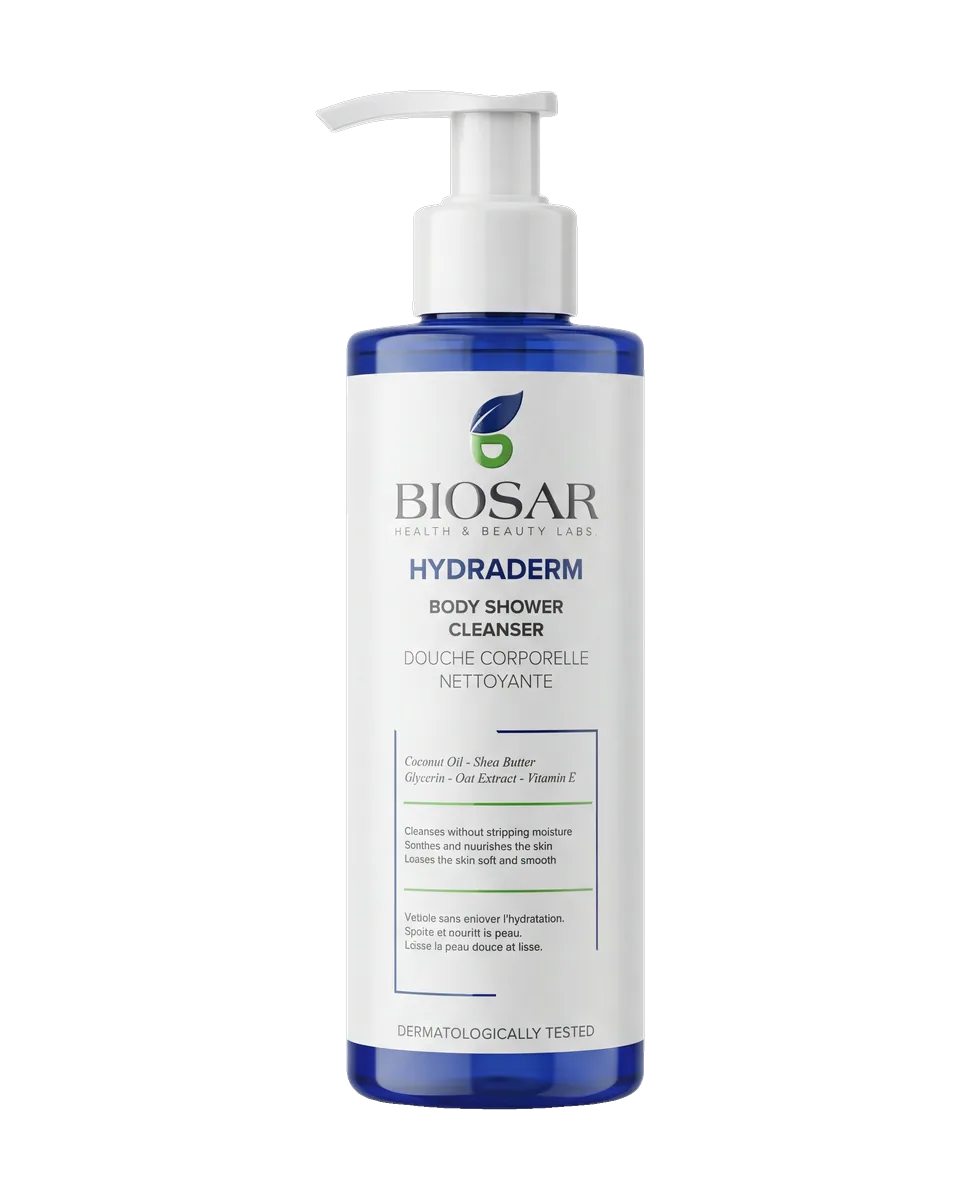
Hydraderm200 ml
Body Shower Cleanser
Shea Butter · Glycerin · Oat Extract
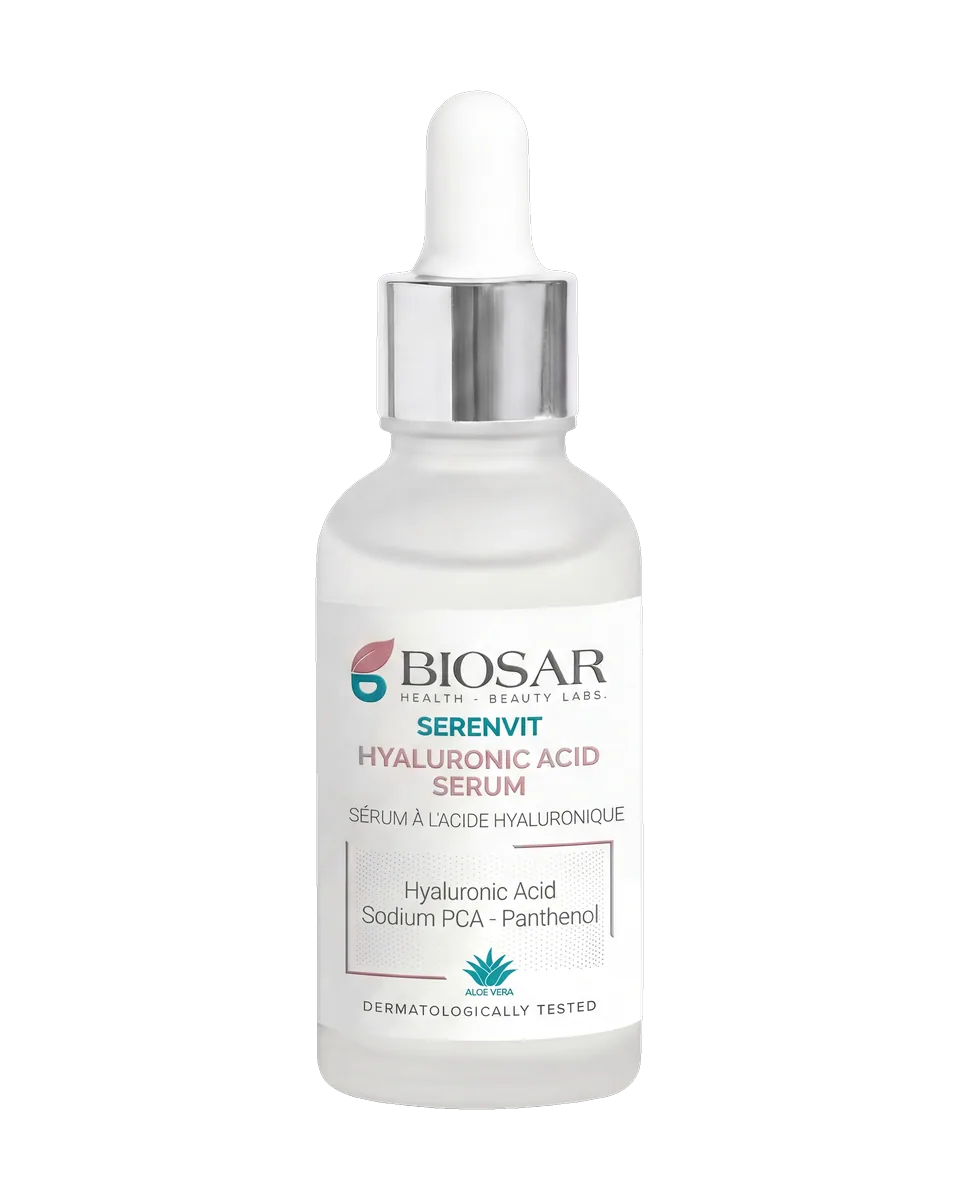
Serenvit30 ml
Hyaluronic Acid Serum
Hyaluronic Acid · Panthenol · Aloe Vera
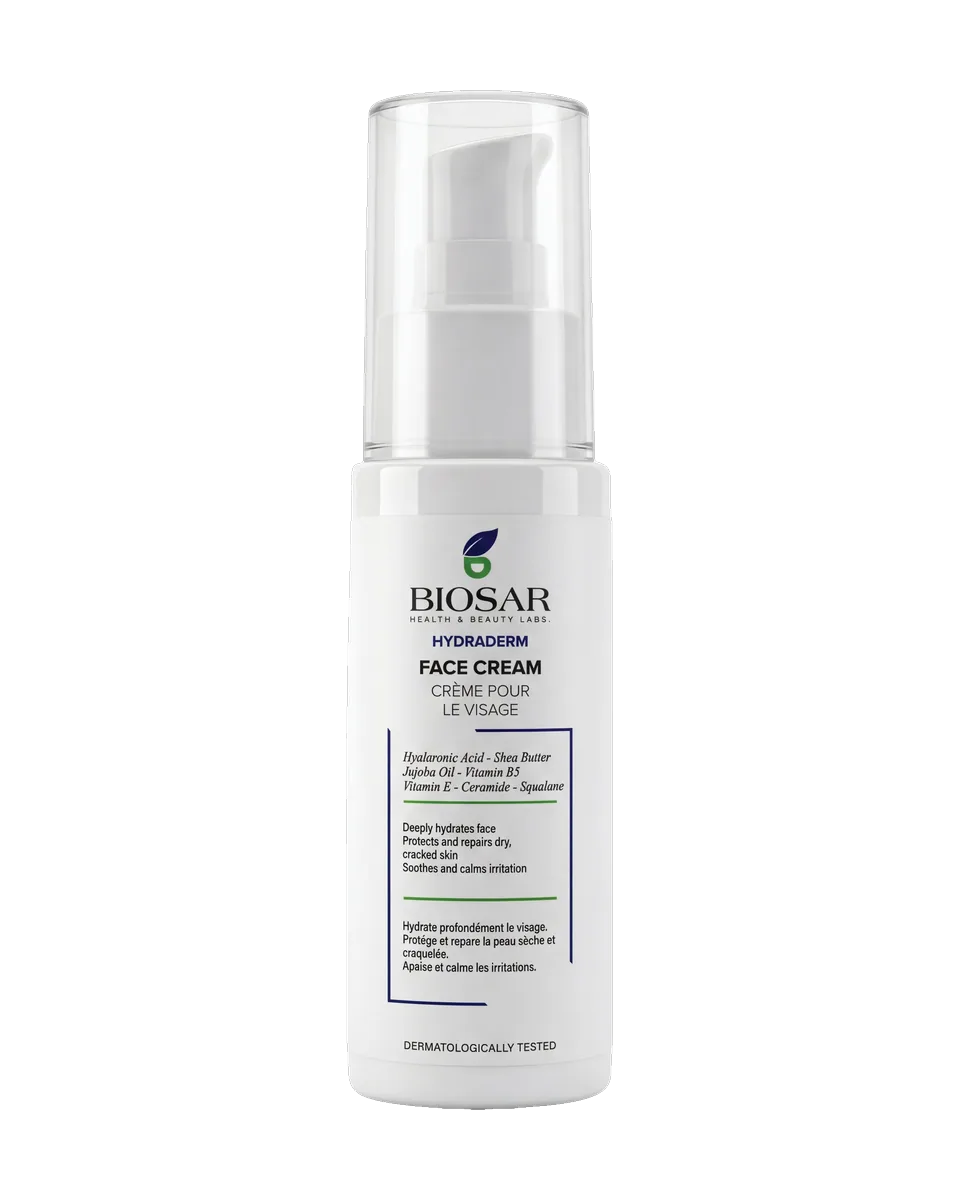
Hydraderm50 ml
Face Cream
Hyaluronic Acid · Ceramide · Shea Butter
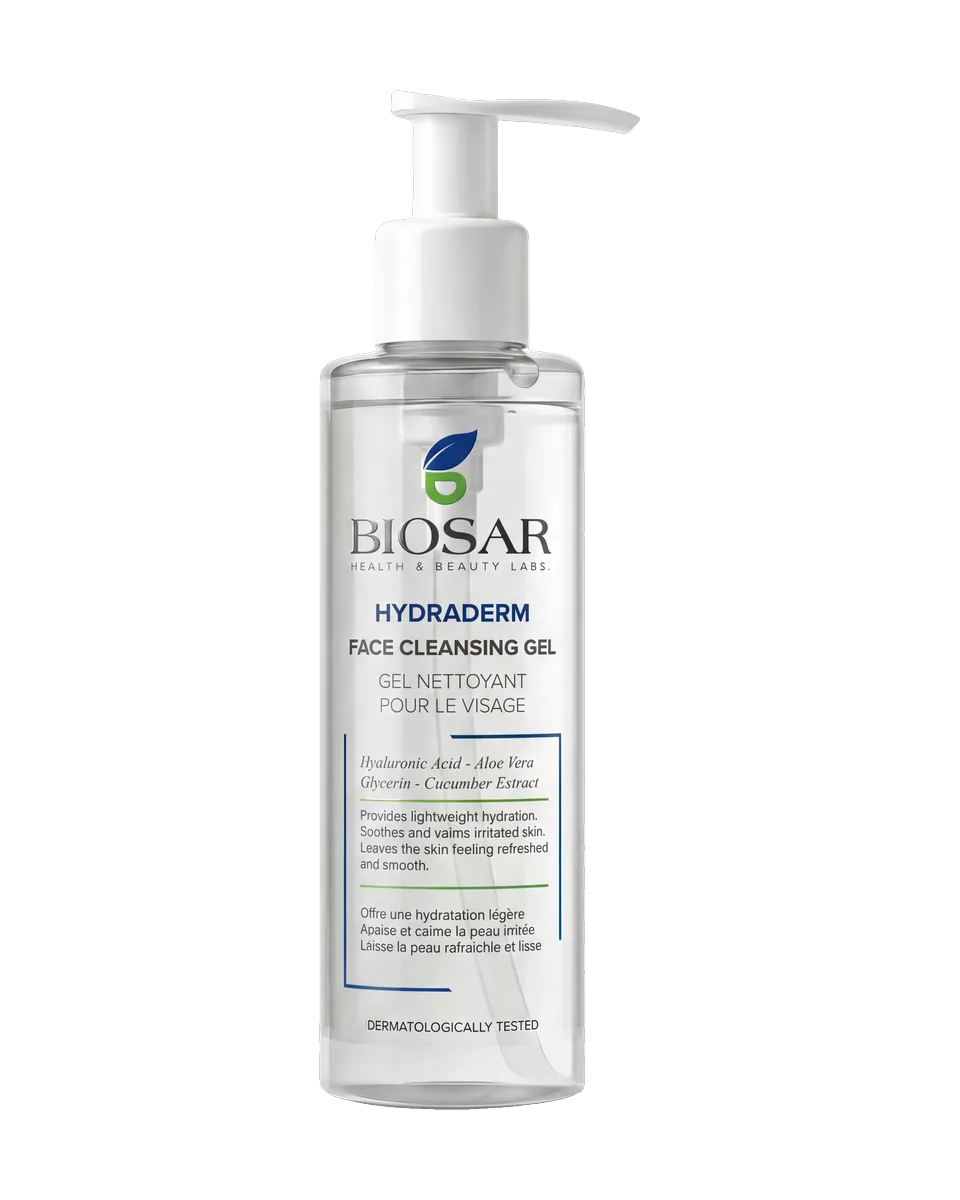
Hydraderm200 ml
Face Gel
Hyaluronic Acid · Aloe Vera · Glycerin
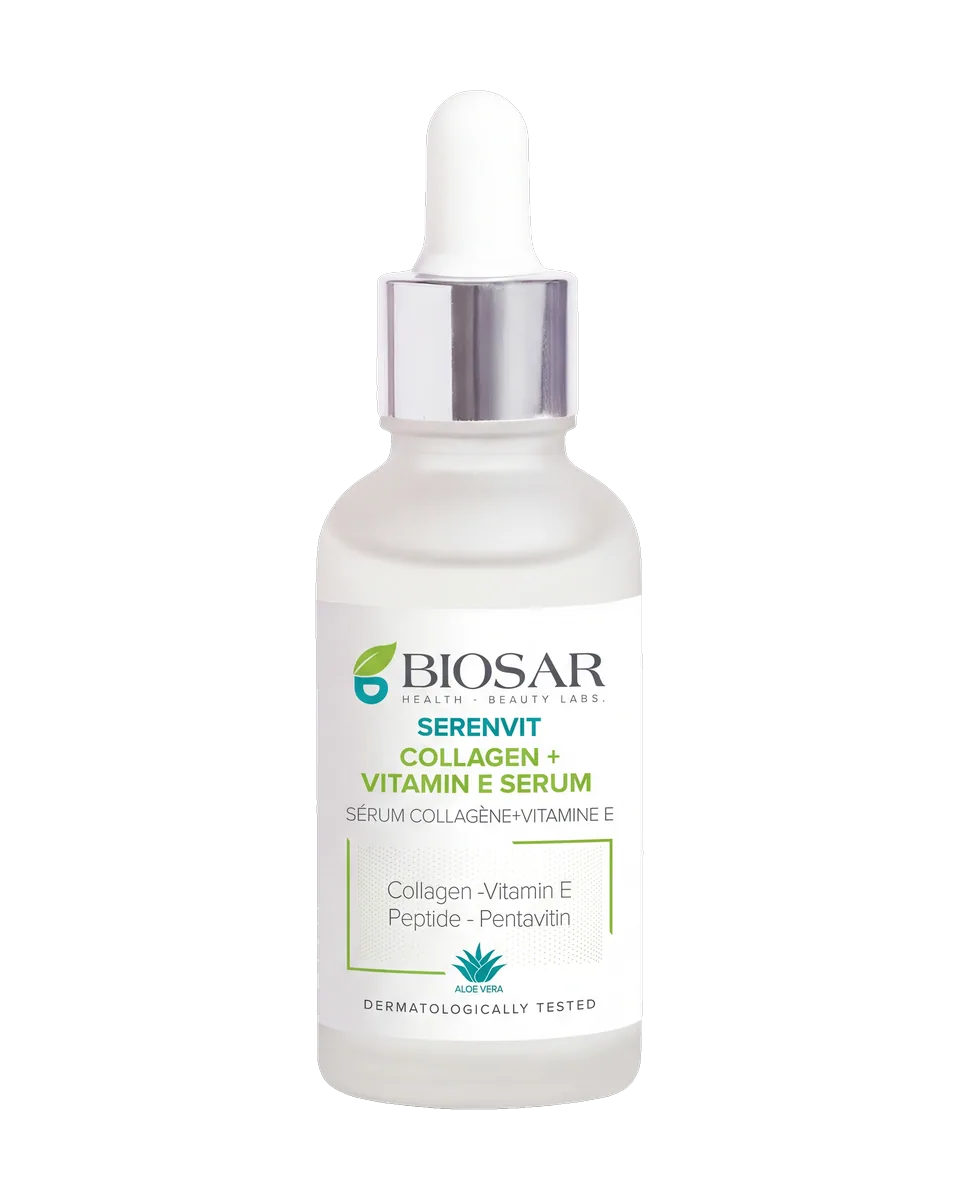
Serenvit30 ml
Collagen + Vitamin E Serum
Peptides · Vitamin E · Collagen
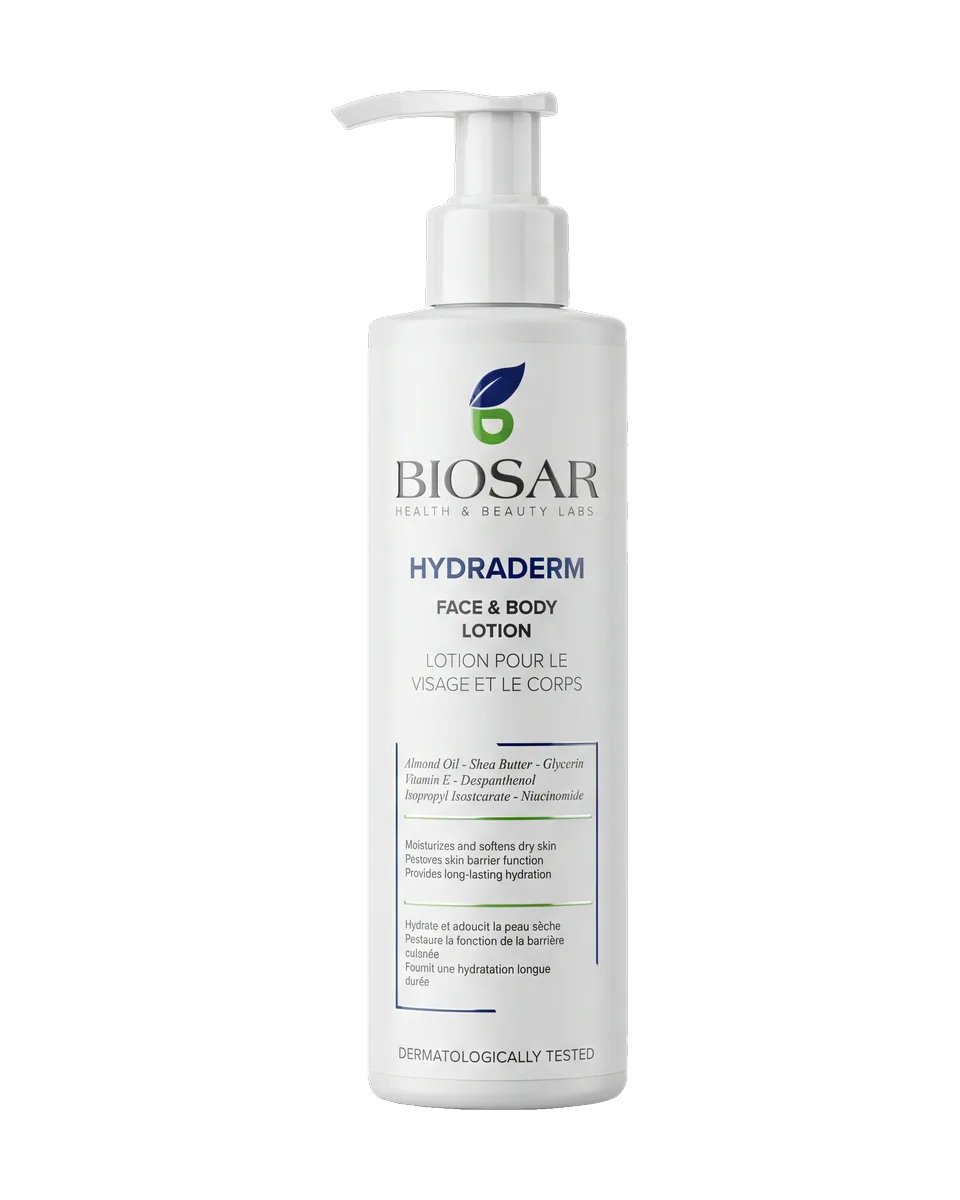
Hydraderm200 ml
Face Body Lotion
Almond Oil · Shea Butter · Glycerin
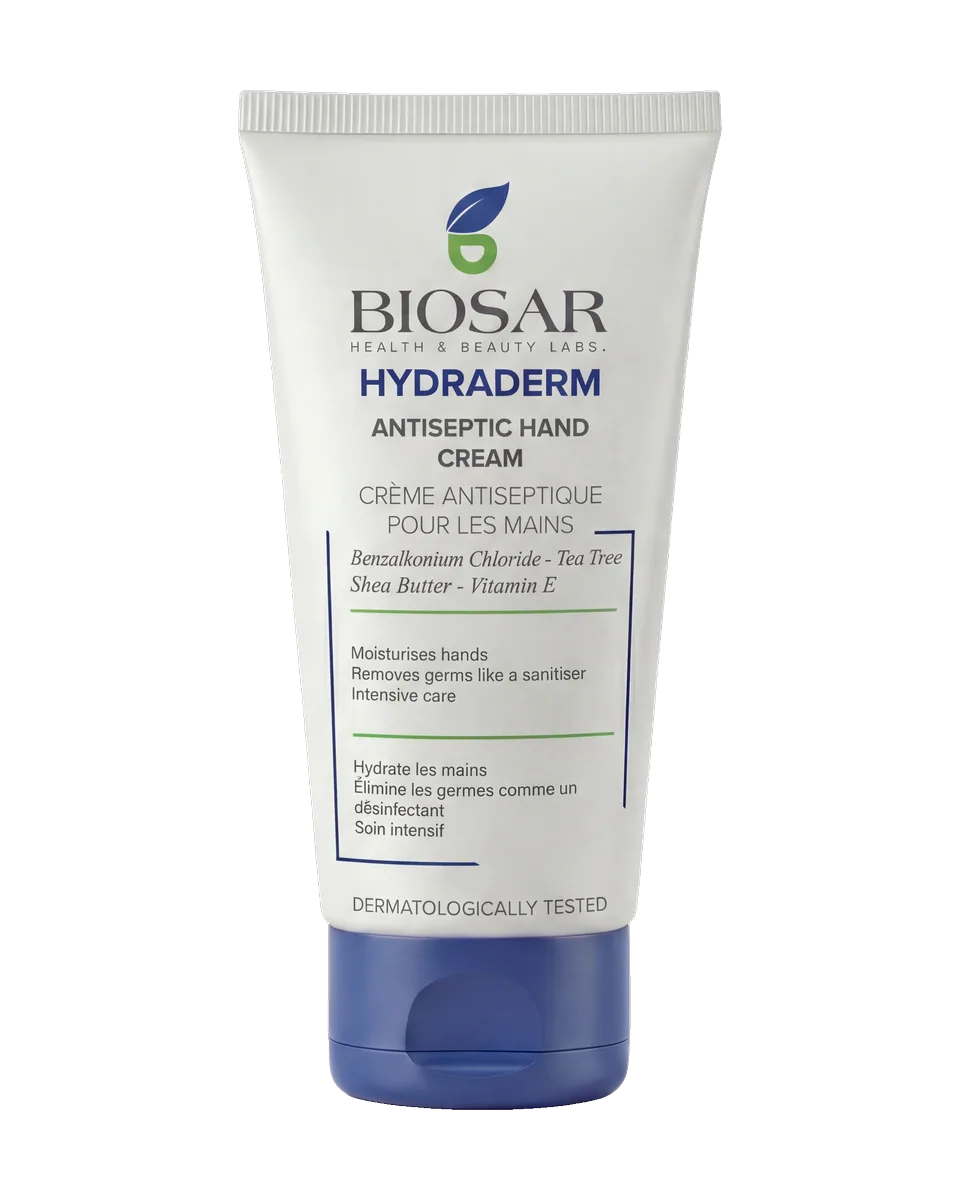
Hydraderm60 ml
Antiseptic Hand Cream
Tea Tree Oil · Shea Butter · Panthenol
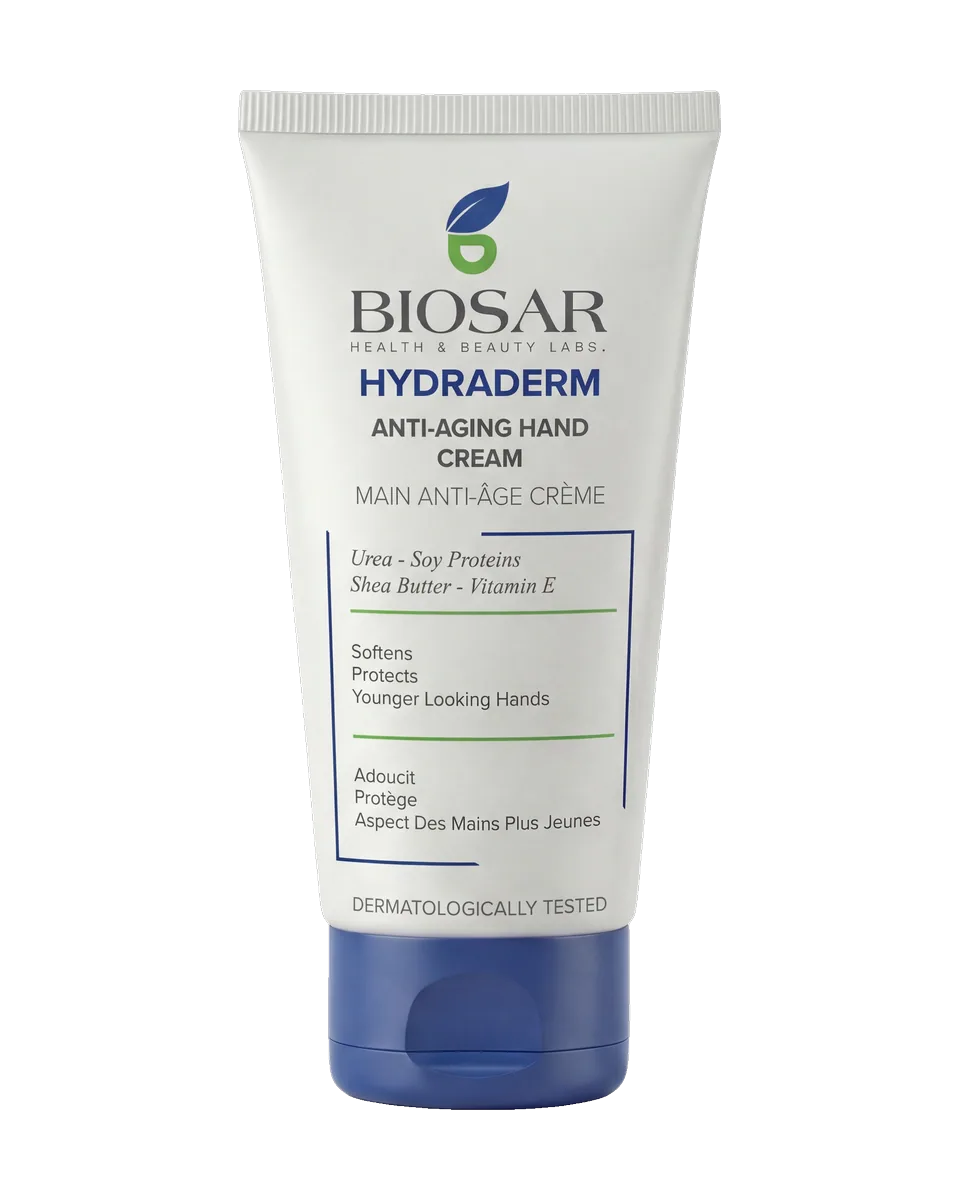
Hydraderm60 ml
Anti-Aging Hand Cream
Shea Butter · Urea · Soy Protein
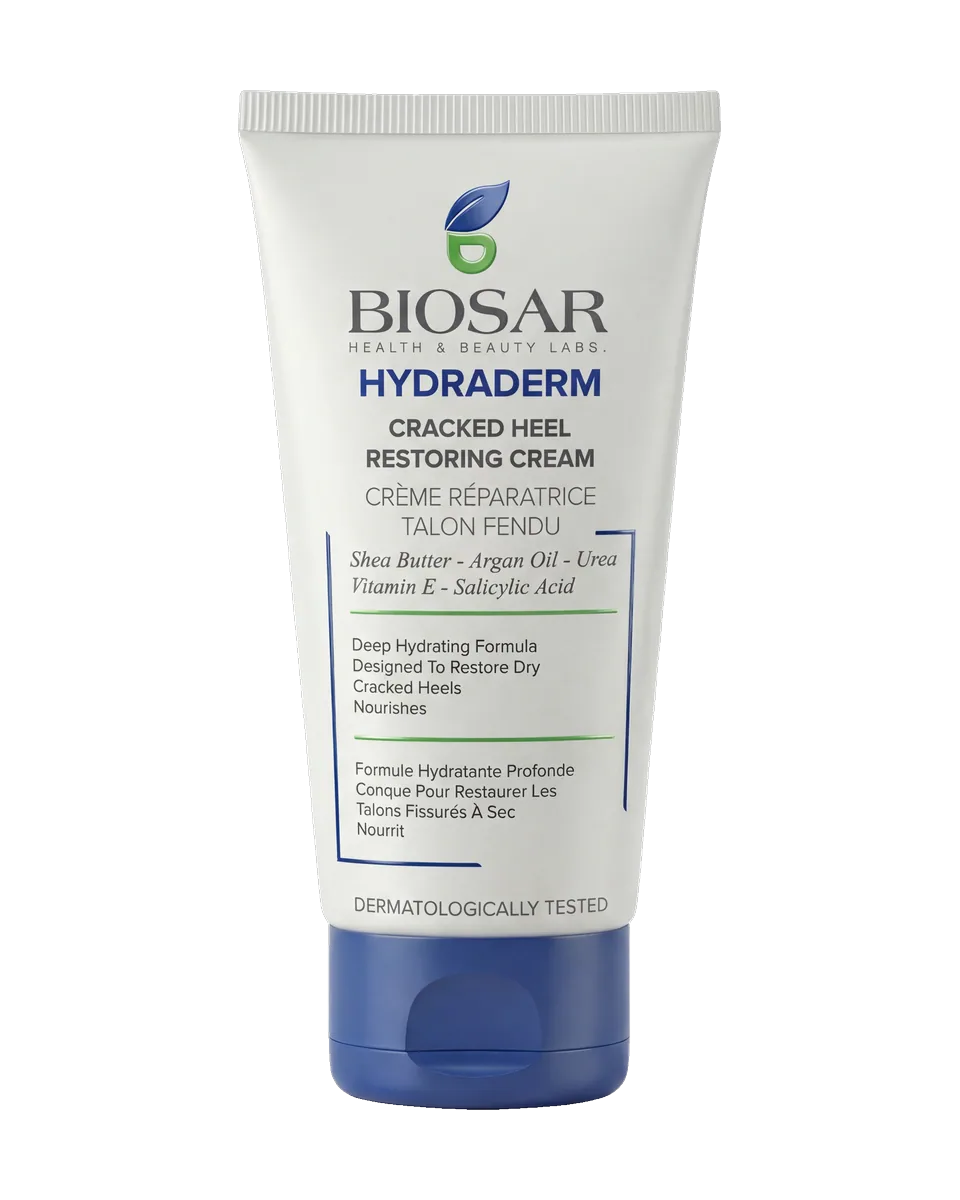
Hydraderm60 ml
Cracked Heel Restoring Cream
Urea · Salicylic Acid · Shea Butter
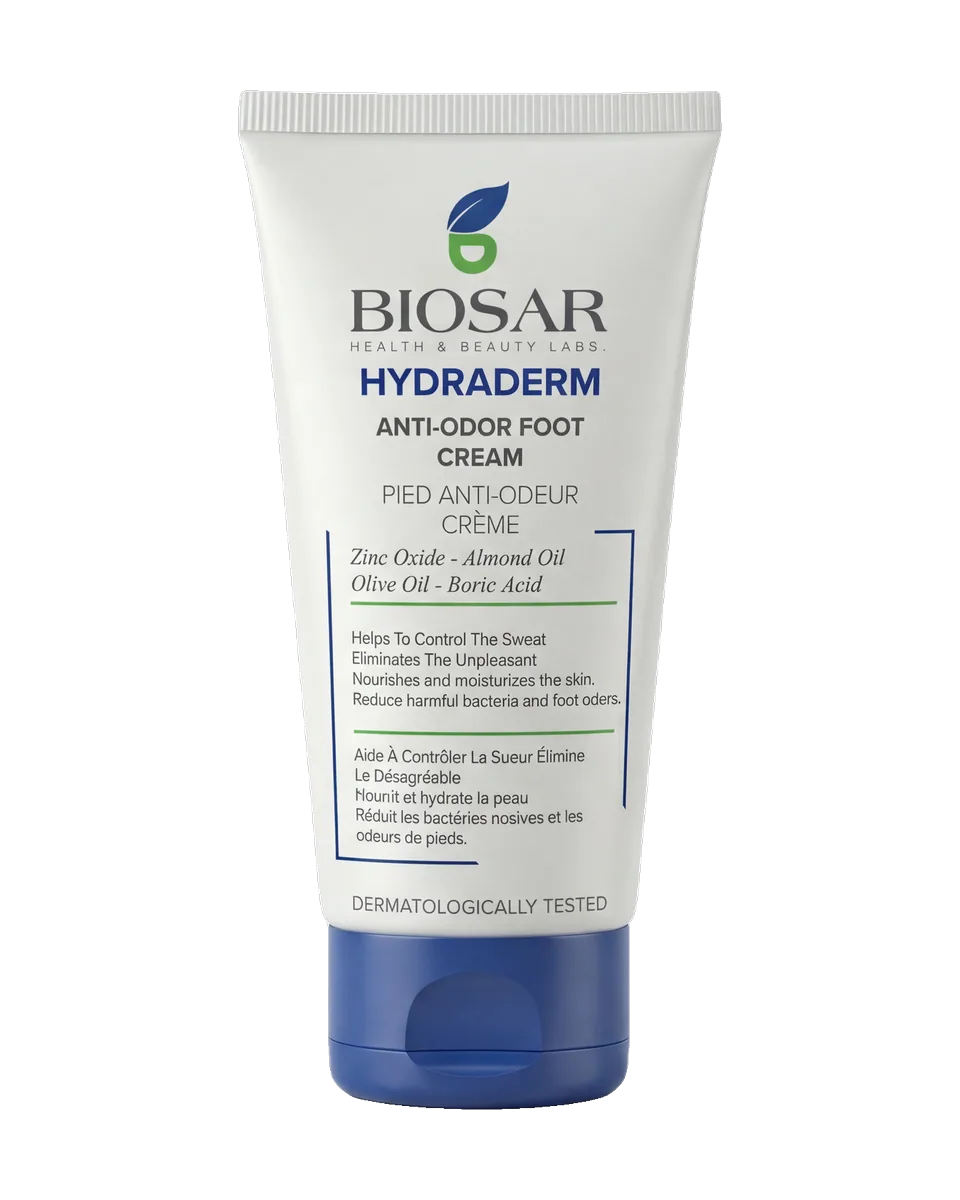
Hydraderm60 ml
Anti-Odor Foot Cream
Zinc Oxide · Almond Oil · Olive Oil
Frequently asked
Should dry skin avoid acids entirely?
No, but choose them carefully. Polyhydroxy acids (PHAs) and lactic acid are gentler than glycolic. The Serenvit collagen + vitamin E serum gives barrier-friendly exfoliation through peptides instead of acids.
Hyaluronic acid feels tight on my skin — what's wrong?
Hyaluronic acid pulls water from wherever it can. Apply it on damp skin and seal immediately with a cream. On dry skin without a sealing layer, it can pull water from deeper skin layers and feel tight.
Is the cream heavy for daytime?
The Hydraderm face cream sits well under SPF and makeup.
Can I use the body lotion on the face?
The face-and-body lotion is formulated for both, with face-grade comedogenicity testing. Use it when you want a heavier seal on top of the serum-and-cream layer in winter.