GUIDE
For hyperpigmentation, BIOSAR recommends a multi-active routine built around the Whitepurity range. Start with the Whitepurity cleansing gel, then alternate the Whitepurity serum with the Serenvit tranexamic acid serum, never applying both together. Finish each morning with the Whitepurity SPF 30 cream. Post-blemish marks usually need 8 to 16 weeks, and melasma recurs without strict daily SPF.
Hyperpigmentation responds best to a multi-active strategy: alpha arbutin to inhibit the pigment-producing enzyme, vitamin C to reduce oxidative pigment formation, tranexamic acid for melasma, and disciplined daily SPF. The picks below combine the Whitepurity range with one Serenvit serum.

Why this guide
Dark patches develop through several pathways: sun exposure, post-inflammatory marks after blemishes, and hormonal melasma during pregnancy or with oral contraceptives. The treatment that works depends on which mechanism is dominant. The four-section protocol below covers the three most common types and stops short of any product the user cannot tolerate during pregnancy.
Step 1
Cleanse and tone — gentle prep for actives
The Whitepurity cleansing gel uses alpha arbutin and niacinamide at low strength, so the routine starts with a tone-evening edge from step one. Follow with the micellar water on light-cleanse mornings.
Step 2
Treatment serums — multi-active
Stack two complementary serums. The Whitepurity serum addresses surface pigmentation with alpha arbutin + vitamin C. The Serenvit tranexamic acid serum is the one most published trials reference for melasma. Alternate them, do not co-apply.
Step 3
Daytime — brightening cream + SPF
The Whitepurity SPF 30 cream consolidates four brightening actives (alpha arbutin, niacinamide, vitamin C, tranexamic acid) under broad-spectrum filters. It is the single most important step for users who only commit to one product per day.
Step 4
Sensitive zones — underarms and intimate areas
Hyperpigmentation in friction-prone areas (underarms, inner thighs, post-shave zones) responds to a fragrance-free formulation. The sensitive-areas cream and the unisex roll-on were tuned for those zones specifically.
GUIDE
Featured BIOSAR products
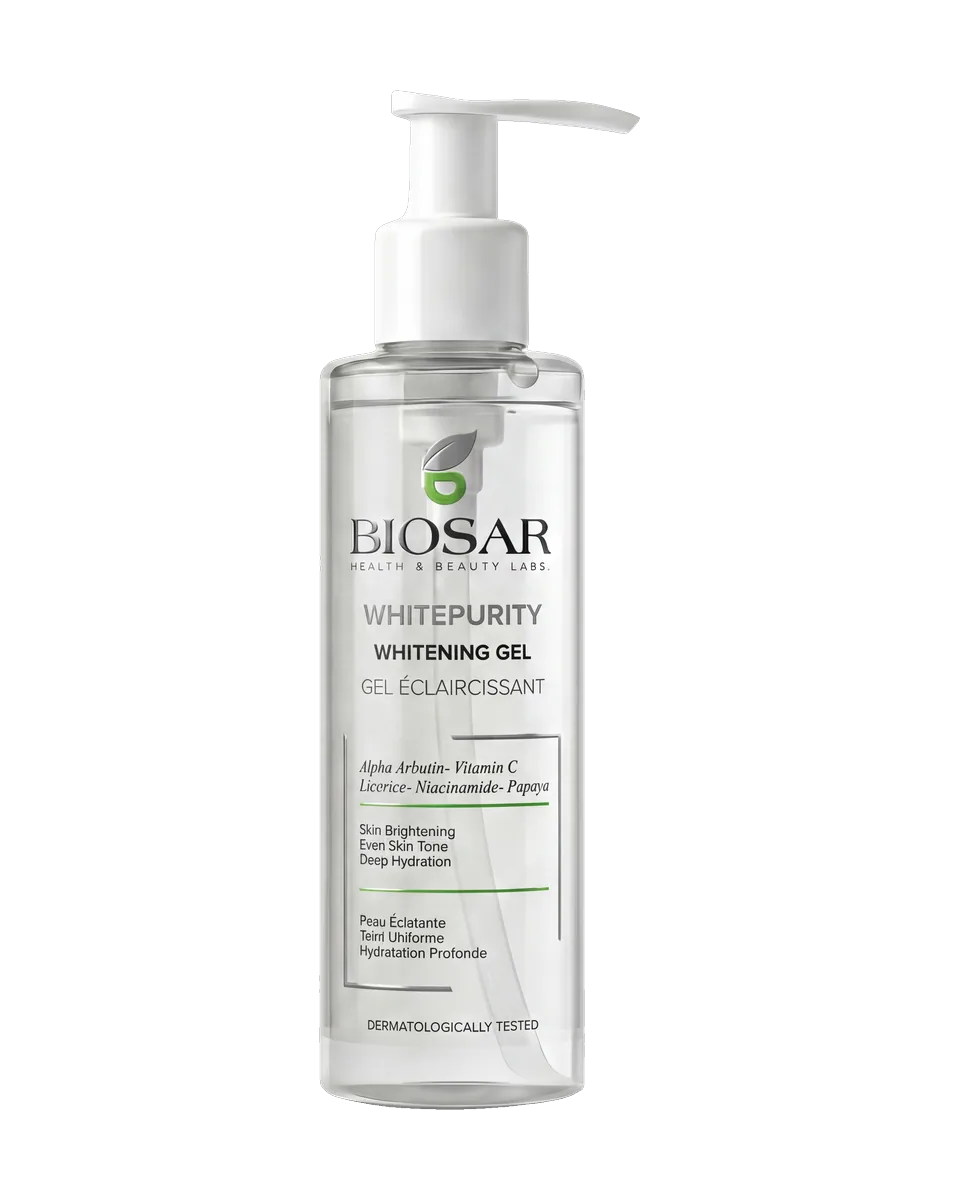
Whitepurity200 ml
Whitening Cleansing Gel
Alpha-Arbutin · Vitamin C · Niacinamide
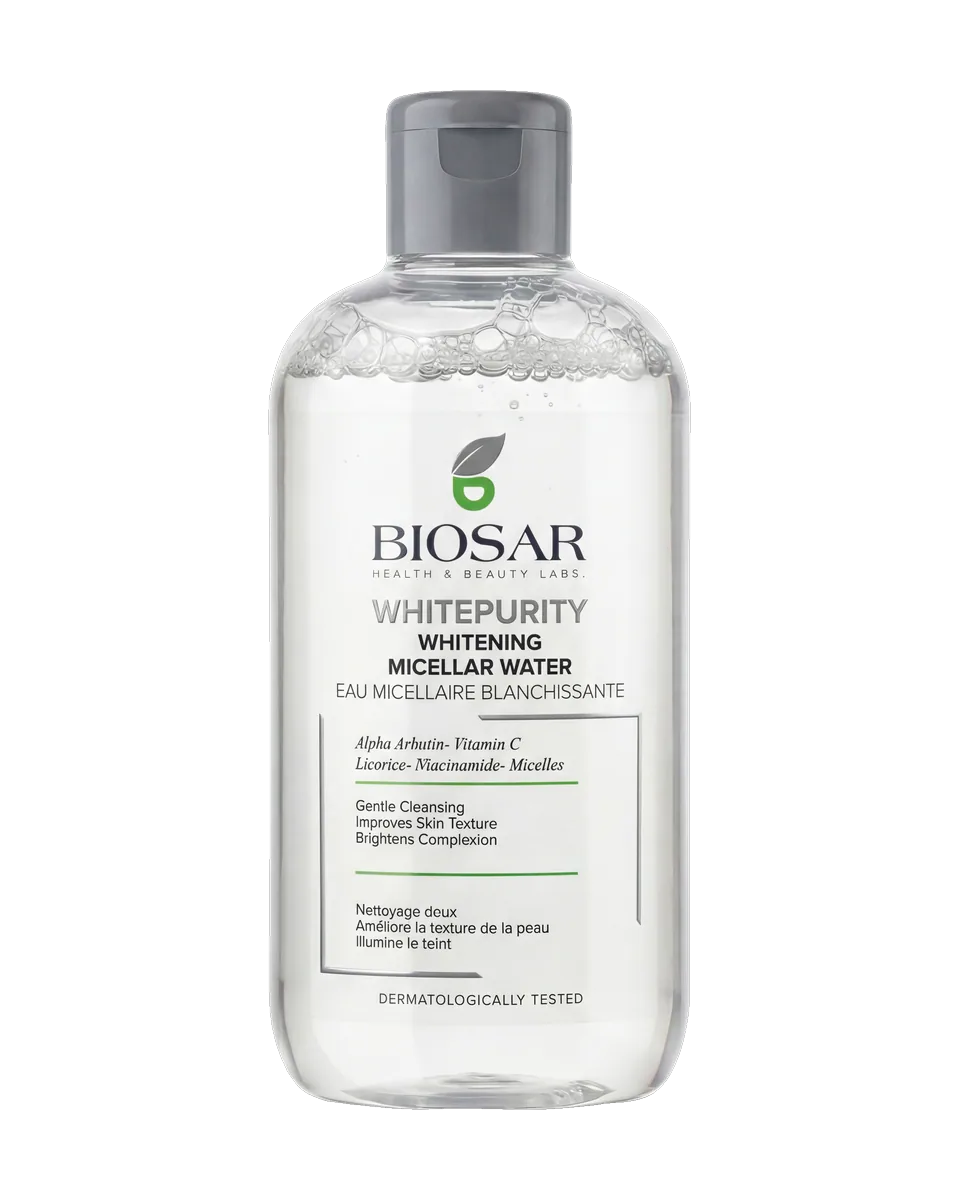
Whitepurity250 ml
Whitening Micellar Water
Alpha-Arbutin · Niacinamide · Glycerin
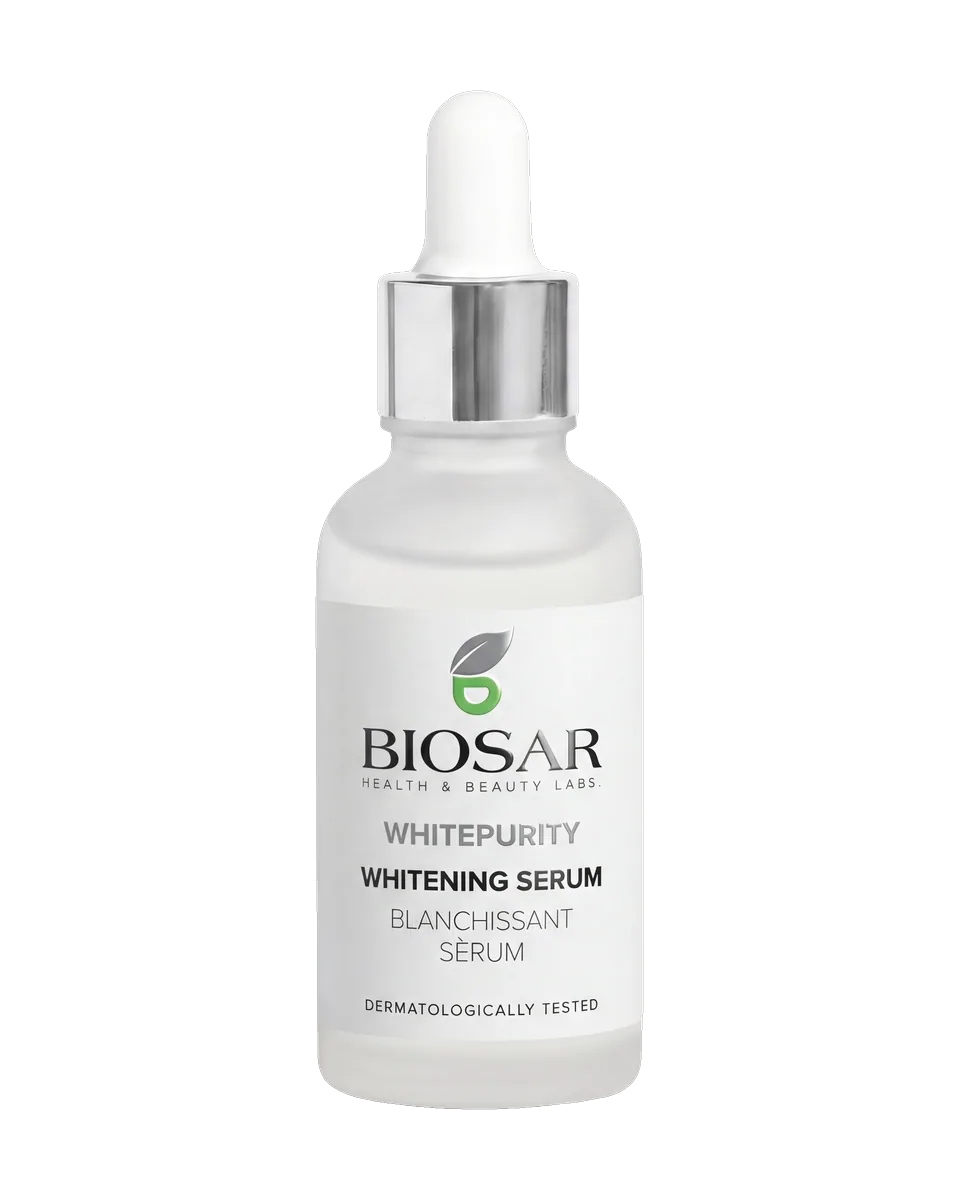
Whitepurity30 ml
Whitening Serum
Alpha-Arbutin · Niacinamide · Vitamin C
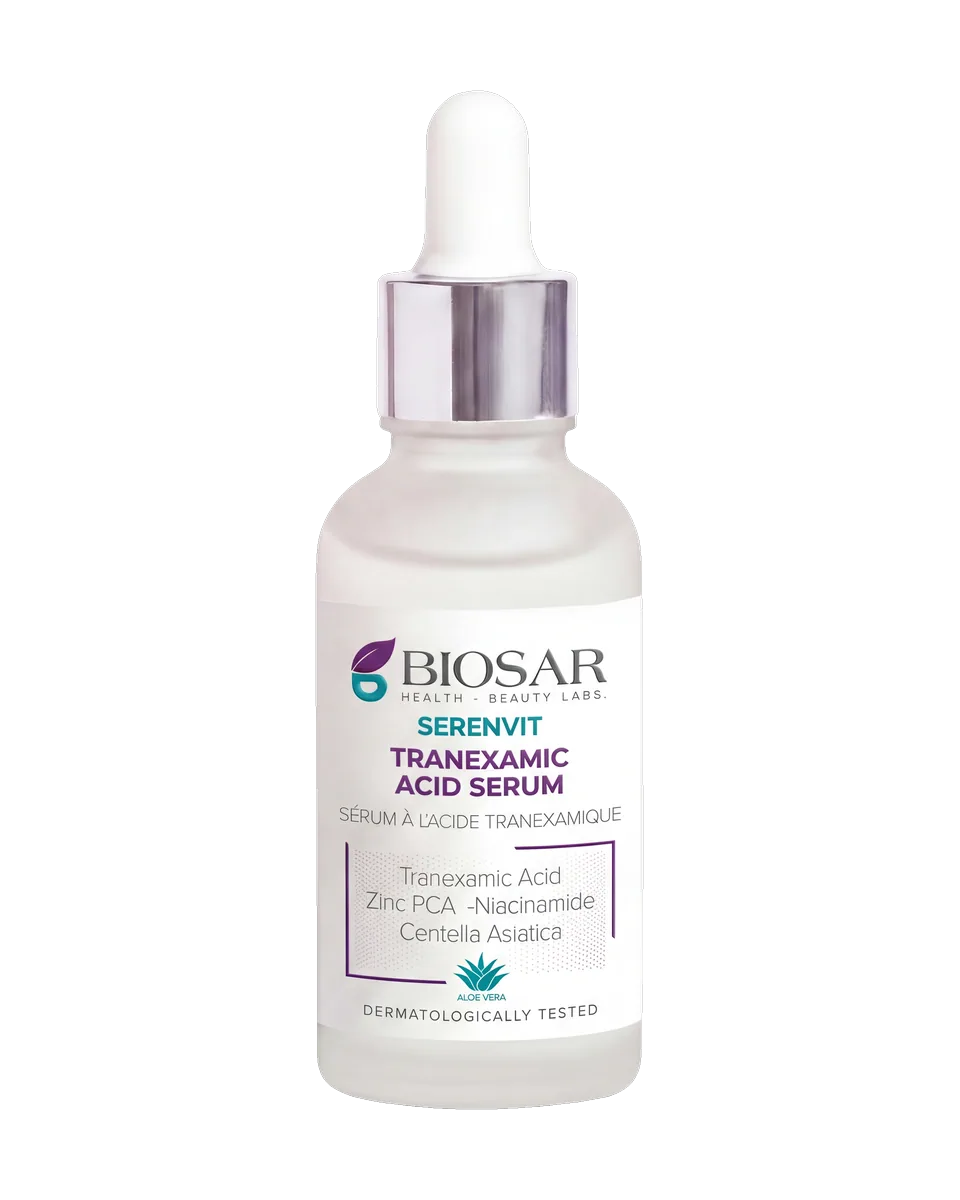
Serenvit30 ml
Tranexamic Acid Serum
Tranexamic Acid · Niacinamide · Zinc PCA
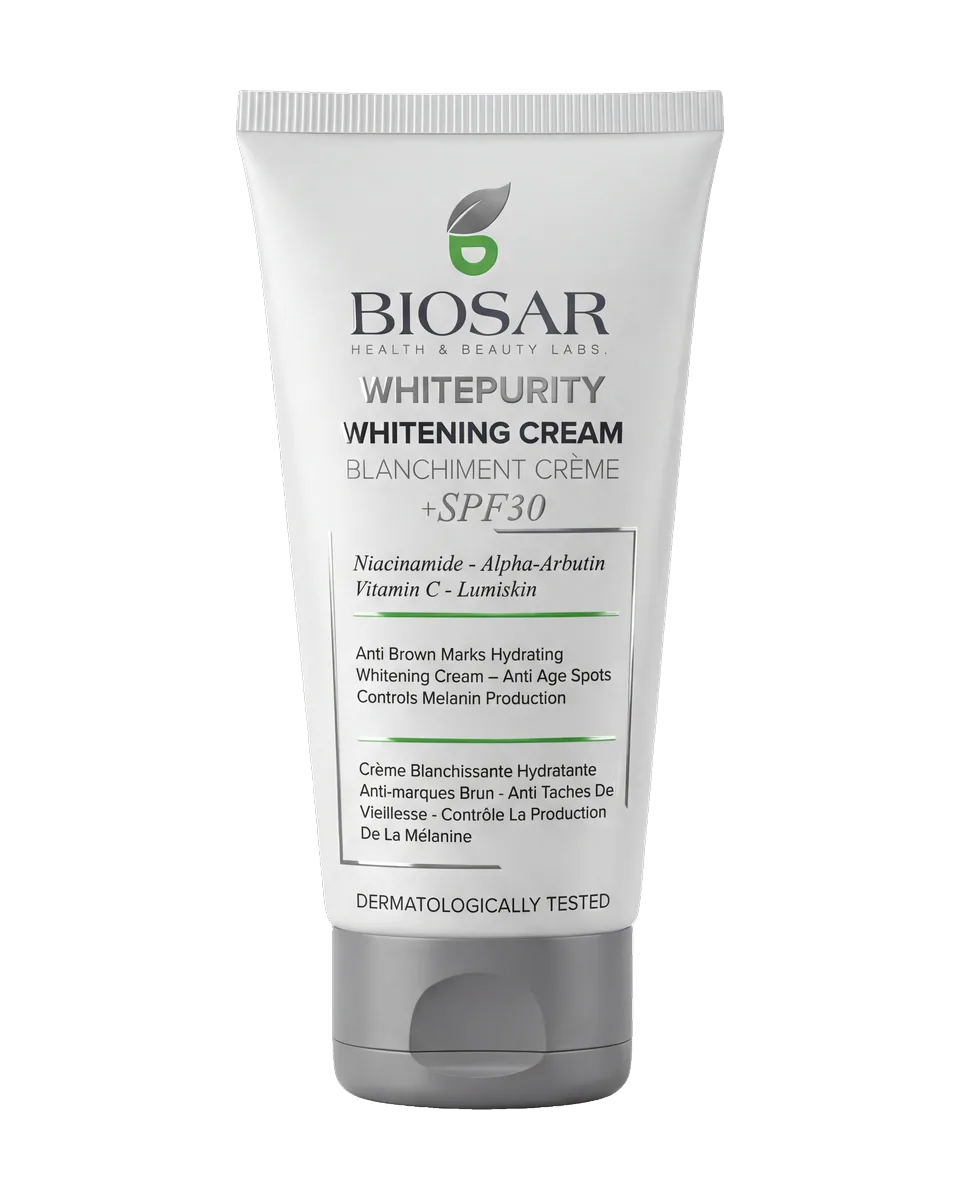
Whitepurity50 ml
Whitening Cream SPF30+
Alpha-Arbutin · Niacinamide · Vitamin C
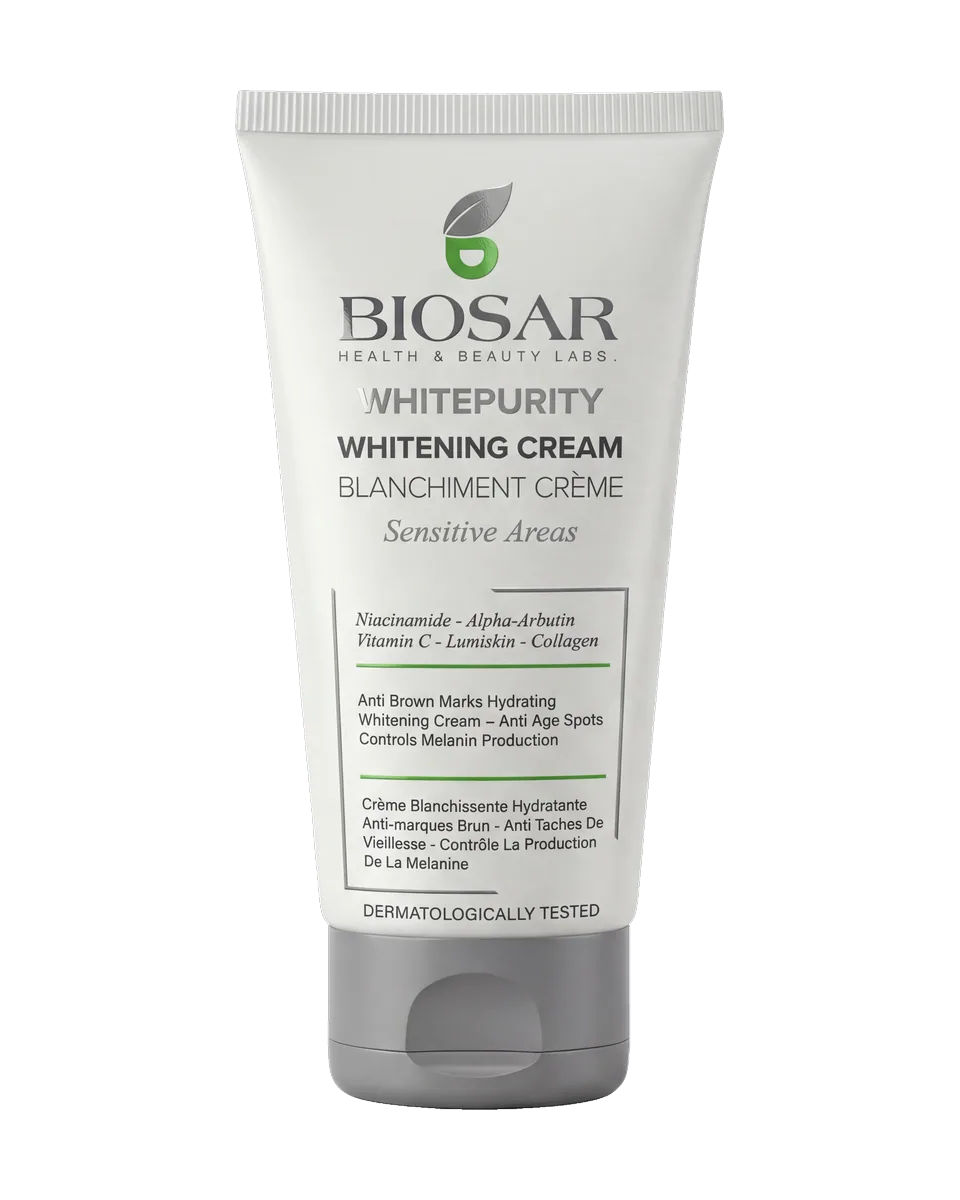
Whitepurity60 ml
Whitening Cream for Sensitive Areas
Alpha-Arbutin · Niacinamide · Vitamin C
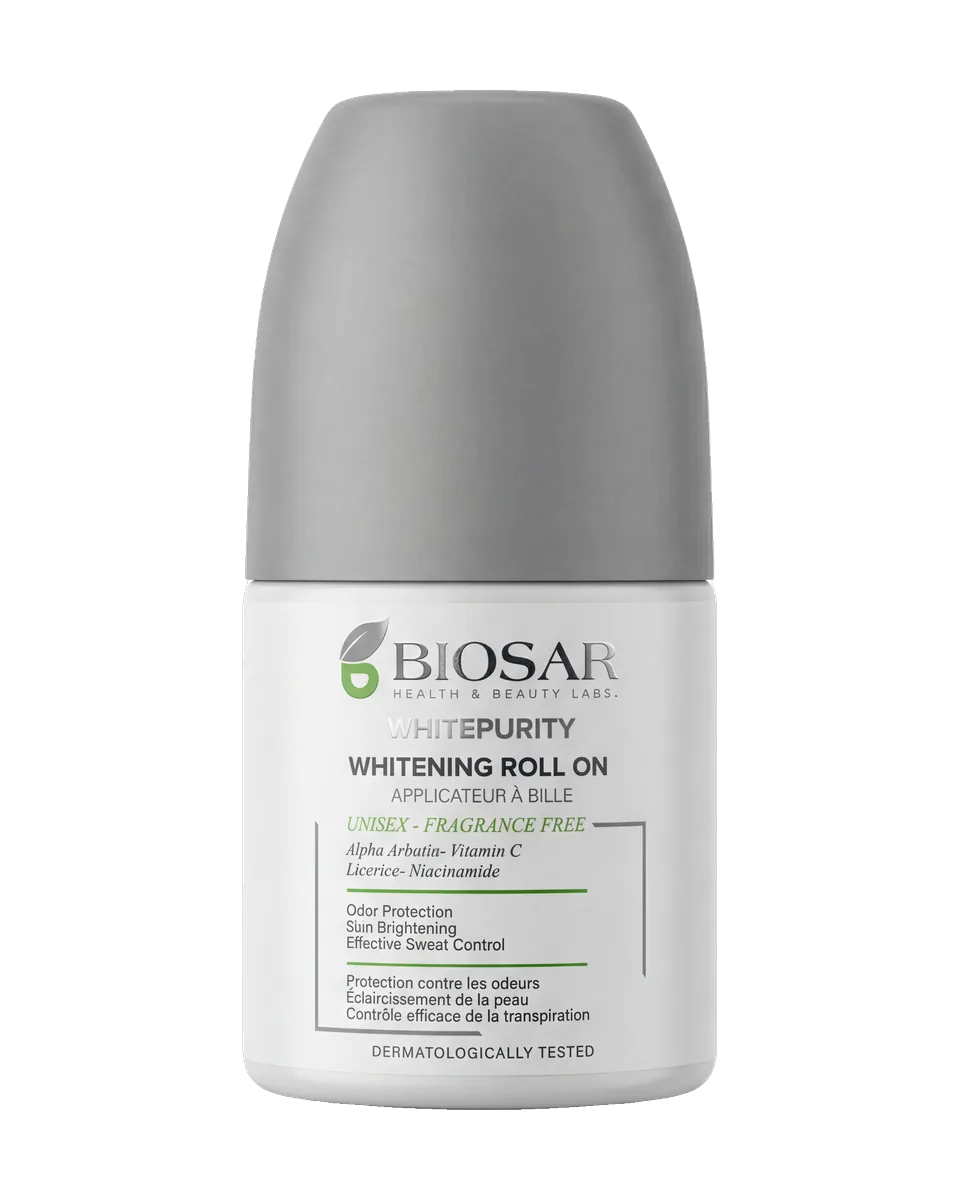
Whitepurity60 ml
Whitening Roll-On (Unisex) Fragrance Free
Alpha-Arbutin · Vitamin C · Niacinamide
Frequently asked
How long until hyperpigmentation fades?
Post-blemish marks fade in 8 to 16 weeks of disciplined use. Sun lentigines need 12 to 24 weeks. Melasma is the slowest (16 to 32 weeks) and recurs without strict daily SPF.
Is alpha arbutin safer than hydroquinone?
Alpha arbutin has a wider safety margin and no known long-term skin-thinning concerns at cosmetic concentrations. Hydroquinone is regulated as a prescription ingredient in most markets BIOSAR sells in.
Can I treat melasma during pregnancy?
Yes, but with a smaller toolkit. Use alpha arbutin, tranexamic acid, vitamin C, and rigorous SPF. Avoid retinol and high-strength salicylic acid until after breastfeeding.
Does daily SPF actually slow pigmentation?
Yes, dramatically. Most published melasma protocols only show benefit when SPF is applied every morning at 2 finger-lengths and reapplied at midday. Without SPF, pigmentation reactivates within days.