GUIDE
The right SPF depends on skin type, activity and the area protected. In BIOSAR's Sunprotex range, the oil-control fluid suits oily skin and the dry-sensitive cream suits reactive skin. The kids cream is made for children's skin, while the spray covers the body. Reapply every 2 hours during direct exposure.
BIOSAR's Sunprotex range covers 7 SPF formats, including oil-control fluid for oily skin, cream for dry and sensitive skin, kids cream for pediatric use, a spray for the body, and a tinted BB cream that doubles as light makeup. The picker below matches each format to the skin profile it serves best.

Why this guide
There is no single best SPF. The right format depends on your skin type, your activity, and the area you are protecting. Mineral filters (titanium dioxide, zinc oxide) lead the safety dossier; the Sunprotex formats use zinc oxide alone or combine it with chemical filters. The breakdown below pairs each Sunprotex format with the skin scenarios it was tuned for, so you do not need to compromise on either tolerance or finish.
Step 1
Oily and acne-prone skin
The oil-control fluid uses a matte non-comedogenic base and stacks niacinamide alongside the filters. It sits cleanly under makeup and does not accelerate midday shine.
Step 2
Sensitive, reactive, or dry skin
The dry-sensitive cream uses a blend of UV filters that includes zinc oxide, with hyaluronic acid to keep the formulation barrier-supportive rather than barrier-stressing.
Step 3
Children and pregnancy
The kids cream is a fragrance-light, zinc-oxide-based cream with added UV filters, dermatologically tested for skin from 6 months upward.
Step 4
Body and high-coverage zones
The spray format covers legs, arms, and back fast: the limiting factor for most people. Reapply every 2 hours during direct exposure. The standard cream serves as your face-and-neck format if your skin is normal-to-combination.
Step 5
Tinted SPF for everyday wear
The BB tinted cream gives SPF 50 plus a light tint that evens skin tone. It works as a no-makeup makeup option that still delivers full UV protection, which usually beats a separate base + SPF combo on consistency.
GUIDE
Featured BIOSAR products
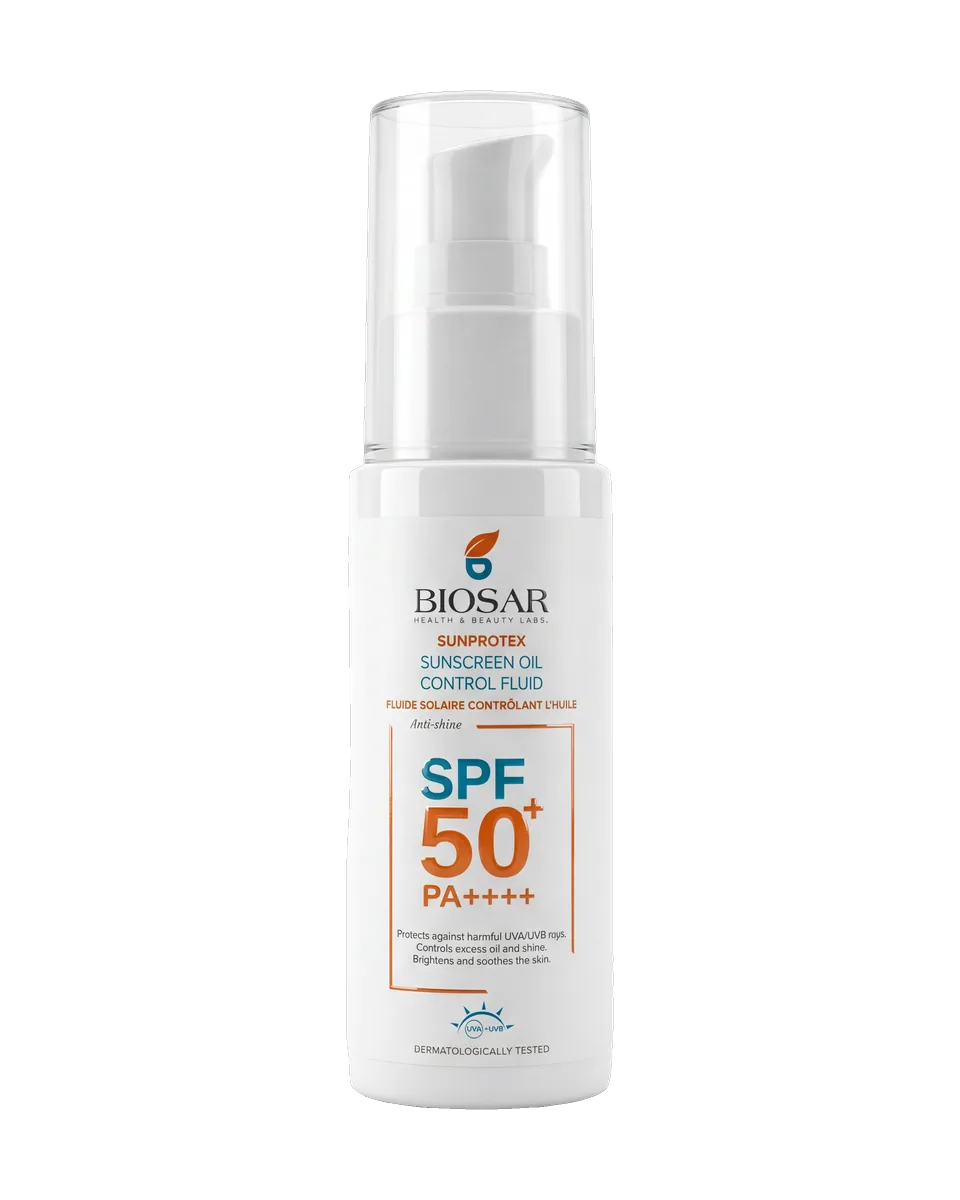
Sunprotex50 ml
Oil Control Sunscreen Anti-Shine Fluid
Zinc Oxide · Niacinamide · Green Tea Extract
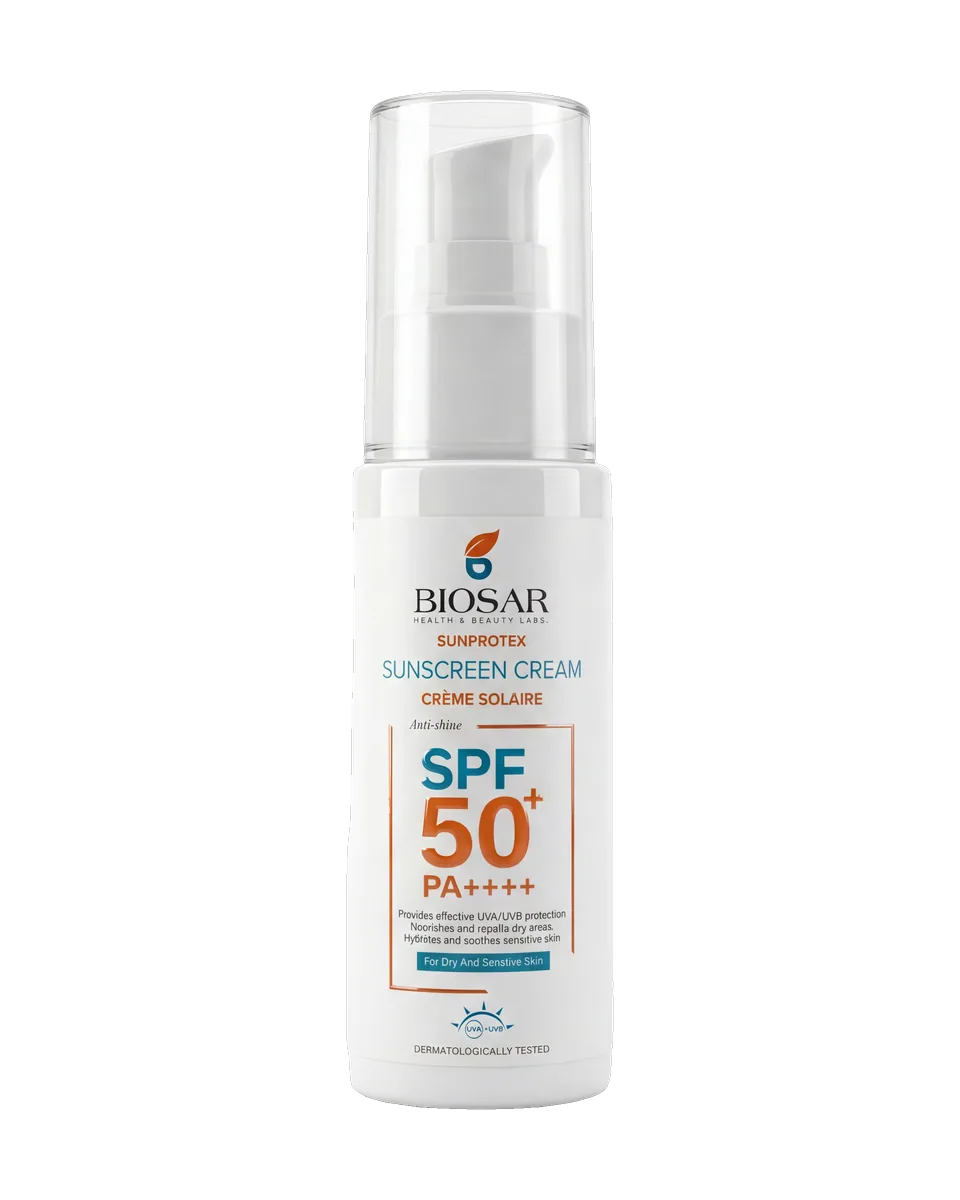
Sunprotex50 ml
Sunscreen for Dry and Sensitive Skin
Zinc Oxide · Hyaluronic Acid · Colloidal Oatmeal
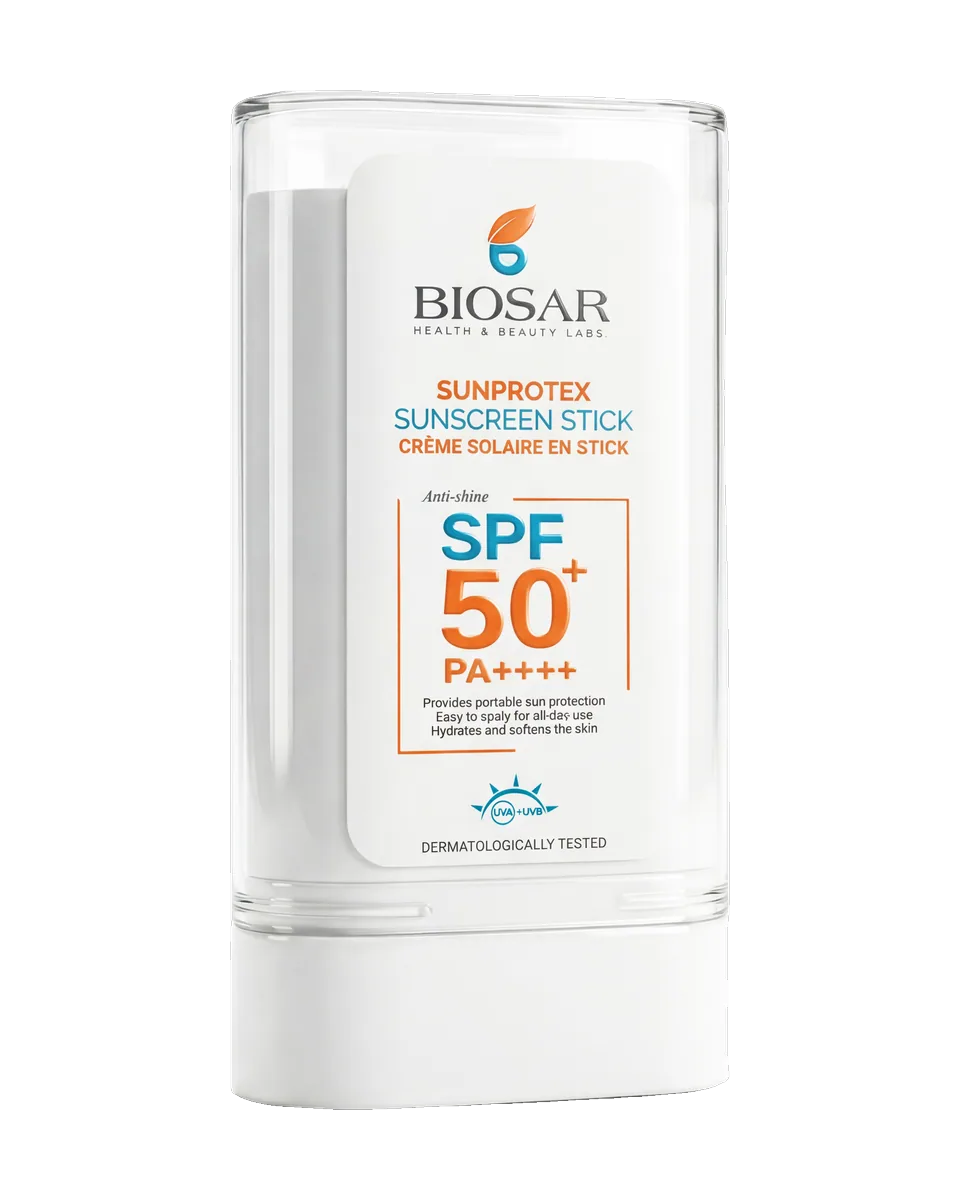
Sunprotex20 ml
Sunscreen Stick
Zinc Oxide
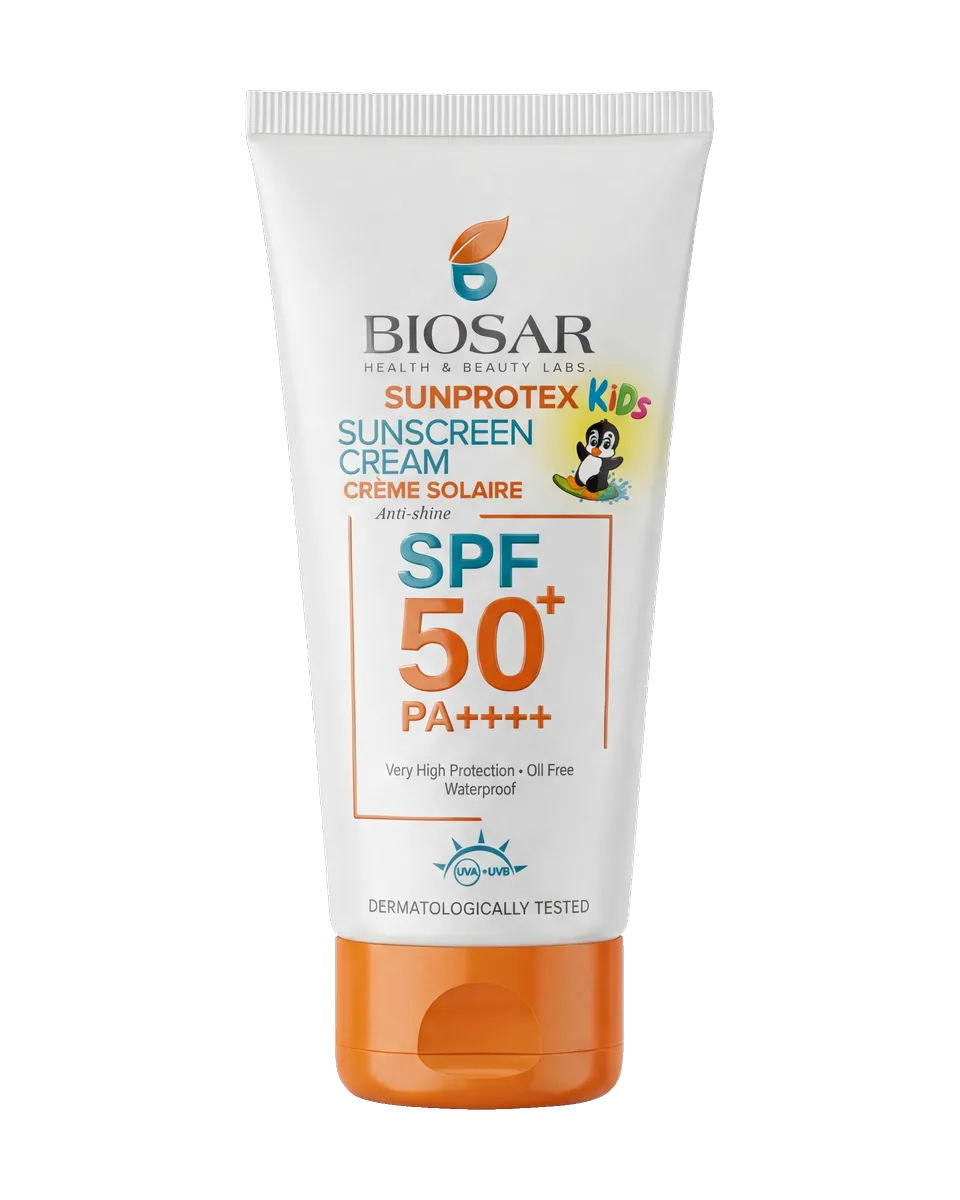
Sunprotex50 ml
Sunscreen Cream for Kids SPF50+
Panthenol · Zinc Oxide · Vitamin E
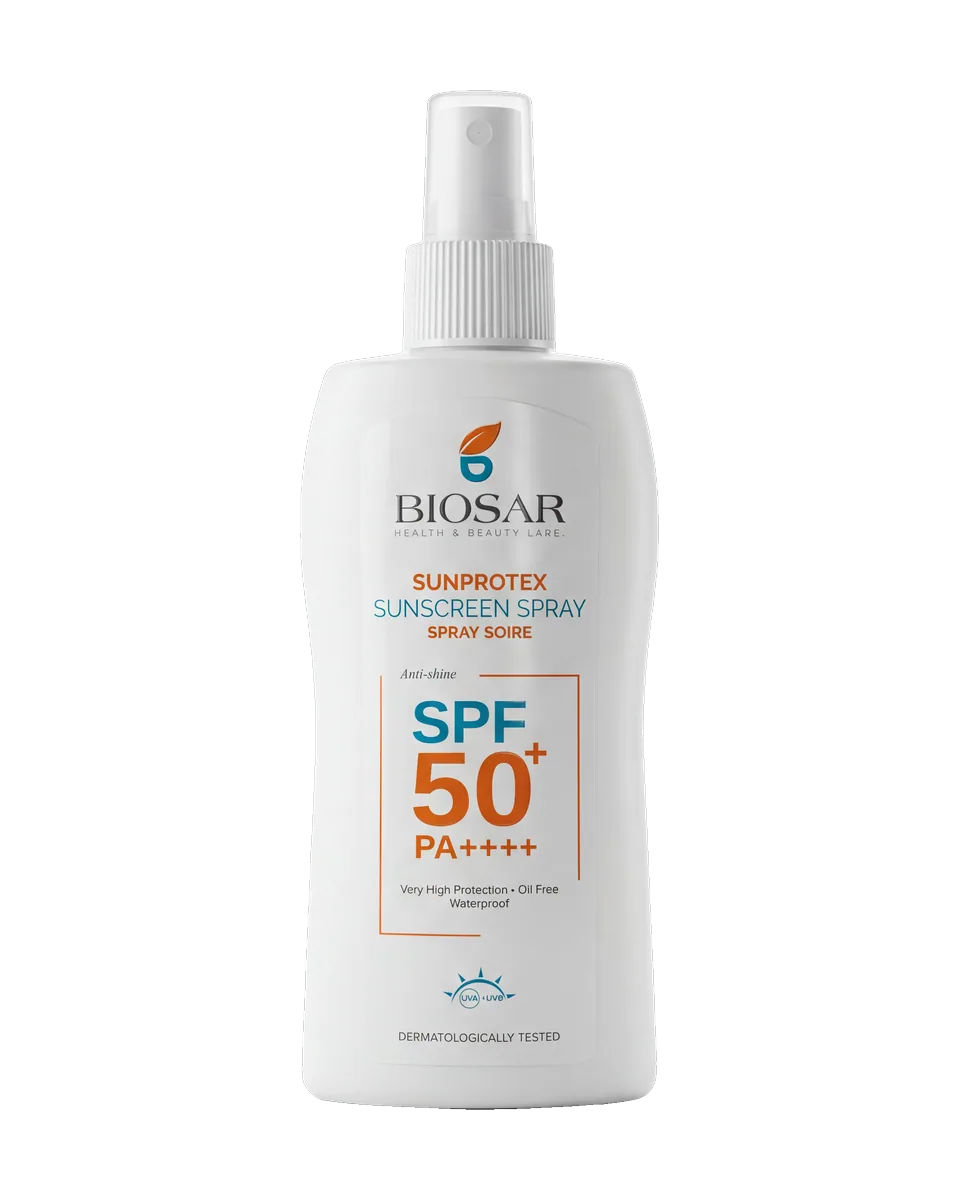
Sunprotex200 ml
Sunscreen Spray SPF50+
Panthenol · Zinc Oxide · Urea
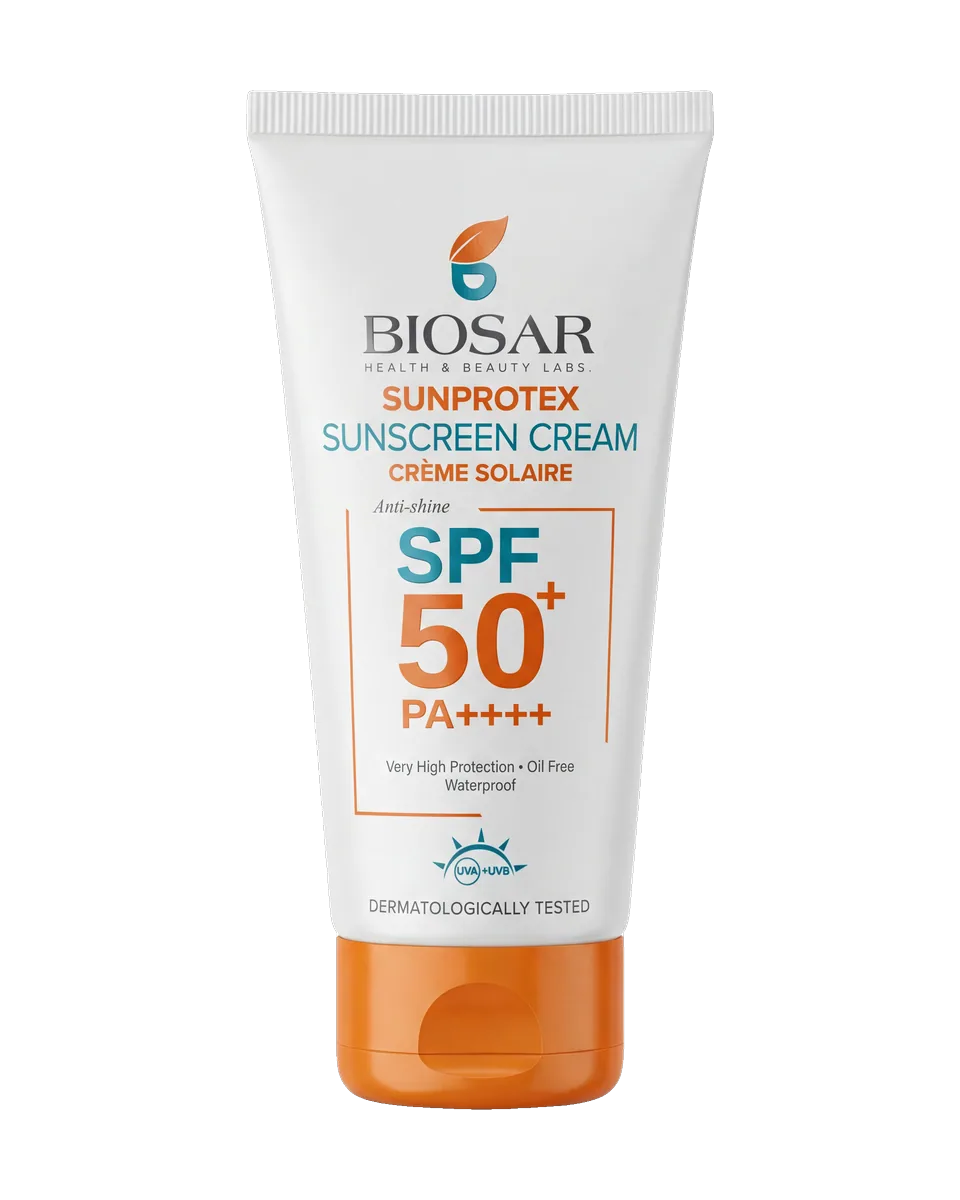
Sunprotex50 ml
Sunscreen Cream SPF50+
Panthenol · Zinc Oxide · Urea
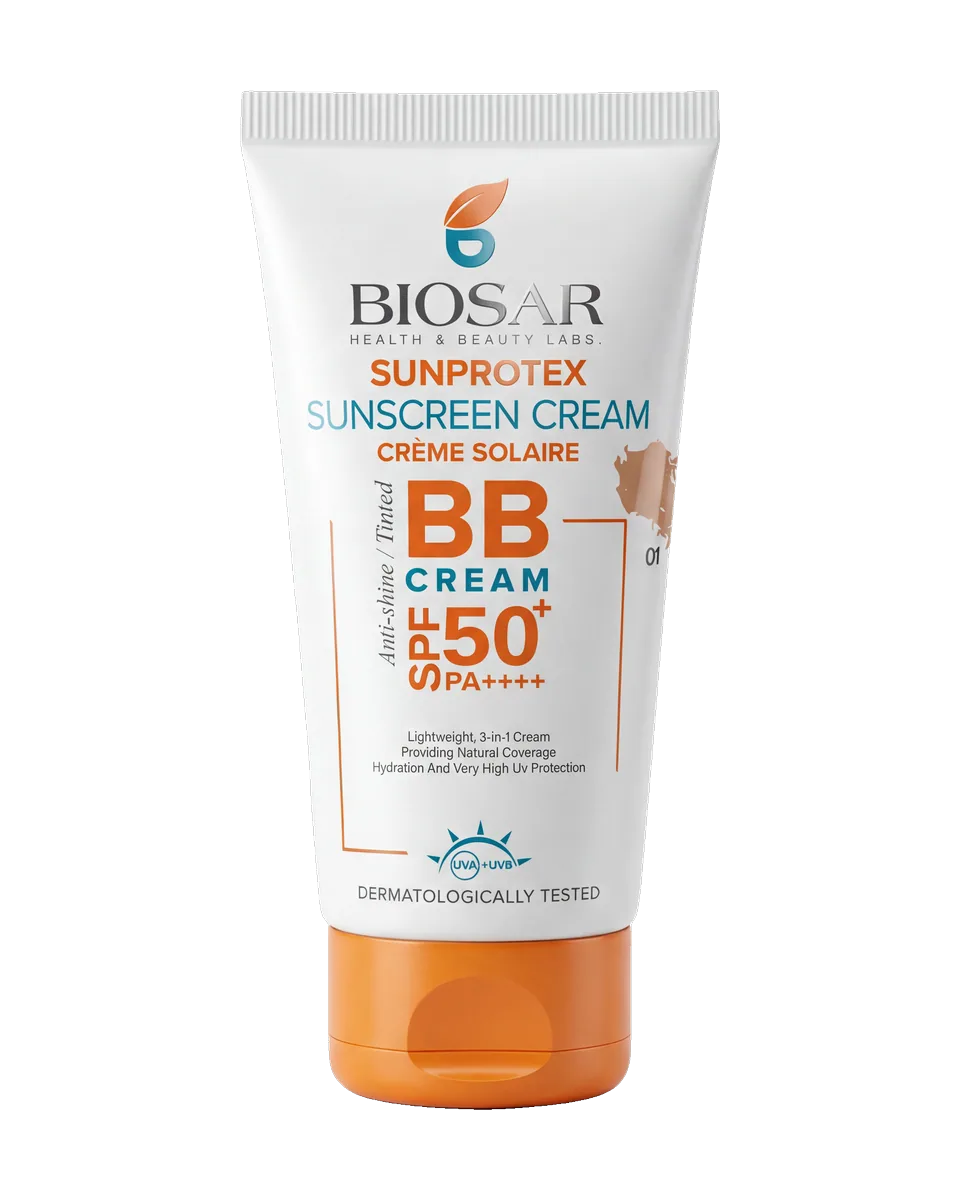
Sunprotex50 ml
Sunscreen BB Cream Tinted SPF50+
Panthenol · Zinc Oxide · Urea
Frequently asked
How much SPF should I apply?
Two finger-lengths for face and neck. A shot-glass amount (roughly 30 ml) for full body. Most people apply between 25 and 50 percent of the tested amount, which drops effective SPF by half.
Mineral or chemical filters?
Mineral filters lead on safety and tolerance, especially for children, pregnancy, and reactive skin. Chemical filters often feel lighter on the skin but a small subset of users react to specific molecules. In the Sunprotex line, the oil-control fluid uses zinc oxide alone; the other formats combine zinc oxide with chemical filters.
Do I need SPF indoors?
Visible-light pigmentation (a key driver of melasma) responds to indoor light too. If you sit near a window for hours, daily indoor SPF is worth applying. UVA also passes through window glass.
Can I skip moisturizer if my SPF is hydrating?
Most modern SPFs include hydration, but they are formulated to deliver UV protection first. If your skin reads dry by midday, a layer of moisturizer underneath improves comfort without reducing SPF.