Concern
If you have sensitive skin, you have probably been told it is in your head — by a product that says "gentle" on the label, by a friend whose skin tolerates everything yours cannot, sometimes by a professional who could not find a visible cause for the symptoms. It is not in your head. The mechanisms are measurable, the biology is mapped, and the care that follows from understanding them is what the Sensimed range was built around.
Last reviewed by BIOSAR Scientific Team, PharmD, Cosmetic Chemistry, Pharmacy practice on .
Epidemiology
Self-reported sensitive skin has emerged as one of the most common dermatological complaints worldwide. Multinational consumer surveys place self-identification rates between 60% and 70% of adults, with women reporting sensitivity at roughly 1.4 times the rate of men (Source: Farage, Front Med 2019). Clinically validated sensitive-skin syndrome — confirmed by lactic-acid stinging tests and tolerance challenges — affects an estimated 25% of adults (Source: Misery et al., J Eur Acad Dermatol Venereol 2020). Climatic exposure, urbanisation, hard water, and routine over-layering of cosmetic actives all contribute to the rising prevalence. In hot, dry climates, low ambient humidity, intense sun, and high pollutant loads compound barrier compromise, and reactive skin commonly coexists with rosacea, atopic dermatitis, and post-inflammatory hyperpigmentation in skin tones III through V.
Why it happens
Low ceramide content, fatty acid imbalance, and reduced filaggrin expression thin the stratum corneum. Water loss accelerates and previously inert irritants reach the nerve endings beneath. Ceramide-rich moisturisers in the 3:1:1 cholesterol:ceramide:fatty-acid ratio restore the physiological mortar and rebuild barrier integrity over four to eight weeks of consistent use.
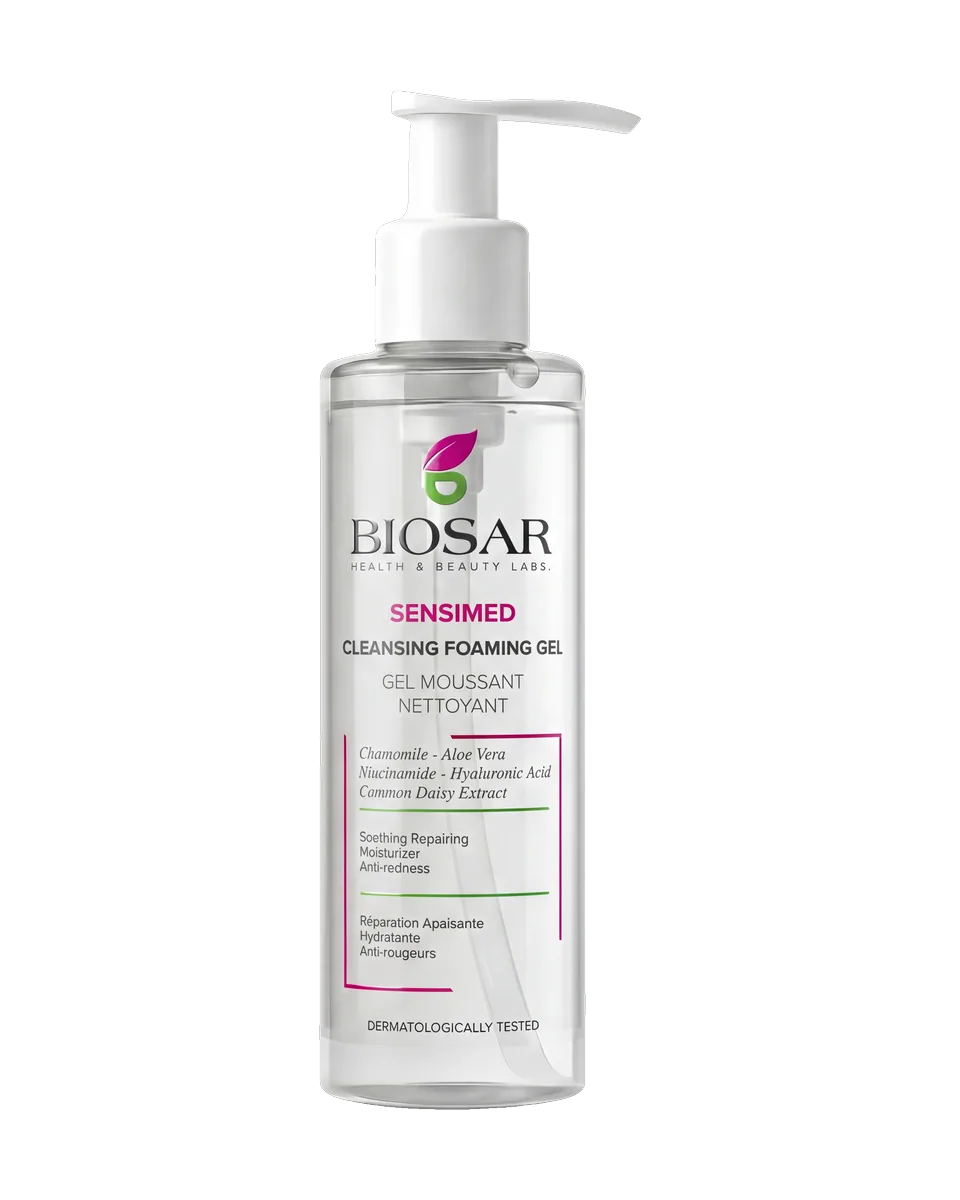
Sulphate-based cleansers, hot water, and twice-daily aggressive washing strip the lipid barrier and elevate stratum-corneum pH above the protective acid mantle. Sensitive skin tolerates only sulphate-free formulations at near-neutral pH, applied with cool to lukewarm water. Cleansing once per day at night is sufficient for most reactive phenotypes.
Retinoids, alpha-hydroxy acids, and beta-hydroxy acids applied at supratherapeutic concentrations or stacked in the same routine overwhelm the barrier. The clinical pattern is unmistakable: visible improvement at week one followed by reactivity at week three. Tolerance returns when the routine is simplified to one active at a time, introduced at the lowest effective concentration.
Cold wind, dry indoor heating, hard water, and ambient pollution each compromise the barrier. Hard water deposits calcium and magnesium on the skin surface, blunting cleanser efficacy and prompting users to wash more aggressively. Air pollution — particularly PM2.5 particulate — penetrates the stratum corneum and activates the aryl hydrocarbon receptor, driving inflammation and sensitivity.
Eczema, rosacea, contact dermatitis, and seborrheic dermatitis frequently coexist with sensitive skin. Each shares the underlying barrier dysfunction and shares the management principles: gentle cleansing, ceramide-rich moisturisation, redness-soothing actives, and disciplined avoidance of irritants. Diagnostic clarity is a dermatologist conversation; the daily routine remains structurally similar.
Mechanism
Sensitive skin is not a single condition but a phenotype produced by three converging mechanisms. Each operates through measurable biological pathways and each responds to specific dermocosmetic interventions. Patients who are told their sensitivity is psychosomatic are usually patients whose mechanisms have not been mapped. The three pathways below sit on decades of published evidence and explain why a calm, minimal routine outperforms an aggressive corrective one.
The stratum corneum is the body's primary water-retention layer. Its corneocyte-lipid bilayer — a brick-and-mortar architecture of dead keratinocytes embedded in ceramides, cholesterol, and free fatty acids — controls how much water the skin loses to the environment. Transepidermal water loss (TEWL), measured in grams per square metre per hour, is the standard biophysical marker of barrier integrity. Healthy skin sits around 5–10 g/m²/h; sensitive and reactive skin commonly measures 12–25 g/m²/h or higher.
When the barrier thins, two problems compound. Water loss accelerates, leading to tightness, dullness, and flaking. And the lipid mortar that normally blocks irritants from reaching nerve endings becomes permeable, so substances that healthy skin tolerates without notice — surfactants, low-molecular-weight fragrance, ethanol — penetrate to depths where they trigger neurosensory firing. Barrier-rebuilding actives address this directly: 3:1:1 ratio of ceramides, cholesterol, and palmitic acid restores the physiological mortar; niacinamide upregulates filaggrin synthesis; squalane fills lipid voids while the barrier rebuilds. The intervention is structural rather than symptomatic.
The TRPV1 receptor — discovered by Caterina and colleagues in 1997 — is a calcium ion channel expressed on sensory nerve endings in the dermis. It opens in response to heat above 43°C, capsaicin from chili, and certain low-pH cosmetic actives, transmitting the stinging-burning signal that defines sensitive skin. In the reactive phenotype, TRPV1 is upregulated and primed: it fires at temperatures and concentrations that healthy skin ignores. The result is that visible inflammation is not required for symptoms — patients can experience persistent stinging from a product that produces no measurable redness.
TRPV1-modulating actives reduce this reactivity through different mechanisms. Centella asiatica extract downregulates TRPV1 expression over four to eight weeks of consistent use; ectoin stabilises membrane proteins and dampens neuronal signalling; allantoin and beta-glucan reduce sensory nerve sensitivity at the dermal interface. None of these actives produce overnight relief — sensory nerve thresholds reset slowly — but at the eight-week mark patients describe a measurable reduction in subjective stinging and tolerance for previously off-limits ingredients. This is why sensitive-skin care fails when measured at two weeks and succeeds when measured at twelve.
Chronic low-grade inflammation is the third mechanism and the one most often missed. When the barrier is compromised and TRPV1 is firing repeatedly, local immune cells — keratinocytes, mast cells, and Langerhans cells — release pro-inflammatory cytokines including IL-1, IL-6, and TNF-alpha. These cytokines have a paradoxical effect: they slow lipid synthesis in the stratum corneum, further compromising the barrier that allowed them to mobilise in the first place. The cycle is self-reinforcing.
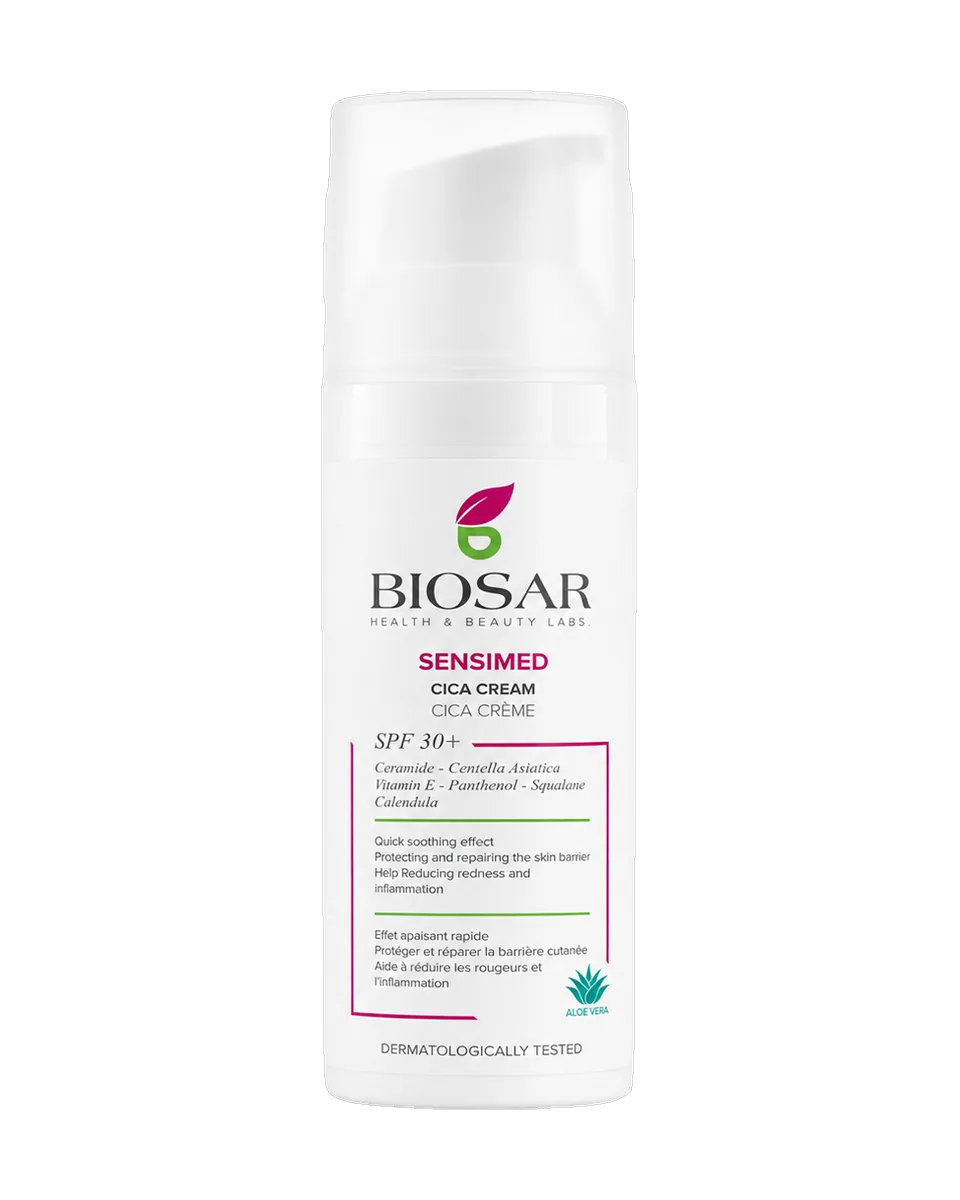
Dermatologists describe this loop as inflammaging — chronic, low-grade inflammation that progressively ages and weakens reactive skin. The clinical correction has three steps. First, remove the input — every irritant in the routine, however mild it seems. Second, restore the barrier with ceramide-rich moisturiser applied twice daily. Third, add redness-soothing actives that calm the cytokine signal — Niacinamide, Panthenol, Madecassoside, and Zinc PCA each have published evidence for reducing redness and easing reactivity over four to twelve weeks. The full Sensimed routine is engineered for exactly this sequence and avoids fragrance, ethanol, essential oils, and high-strength acids that would restart the loop.
Pharmacist's note
Most patients with sensitive skin improve dramatically when they cut their routine to four or five products and stop layering actives. The instinct to add another product to fix the reactivity caused by the last one is the instinct that keeps the barrier broken. Strip the routine, restore the barrier, then reintroduce actives one at a time over twelve weeks.
From the BIOSAR ranges


The science
Sensitive skin is a barrier under strain: a weakened lipid shield lets irritants in and water out, driving stinging, redness, and reactivity. Sensimed works barrier-first — Centella calms inflammation, Panthenol supports lipid repair, Aloe Vera keeps a low-irritant base — rebuilding tolerance before any targeted active follows.
Related conditions
Dryness is a barrier dysfunction in which skin loses water faster than it can retain or replenish it, presenting as flaking, tightness, dull…
Read moreAcross Fitzpatrick III–V skin tones — the majority of darker skin tones — the most common consultation is the same: the patch on the cheekbo…
Read moreSensitivity often follows barrier damage — over-cleansing, active stacking, procedures, or environmental stress. Skin can also become reactive after illness or hormonal shifts. Removing triggers and supporting the barrier typically restores tolerance over weeks.
High-strength acids, fragrance, essential oils, and dyes are the most common triggers. Introduce actives one at a time at low frequency. Patch-test new products on the jawline for three nights before face use.
Dry skin lacks oil and water. Sensitive skin reacts to stimuli with stinging, redness, or tightness. The two often overlap but need different care: dryness needs lipids and humectants; sensitivity needs minimal actives and barrier support.
With a tolerance-first routine (minimal actives, barrier support, no friction), most reactive states calm visibly in two to four weeks. Chronic sensitivity requires ongoing barrier maintenance.
Where to look next