Active ingredient
Ceramide
INCI · Ceramide NP
Ceramides are skin-identical lipids that make up roughly half of the stratum corneum's intercellular matrix, used in skincare to restore a compromised moisture barrier. Topical ceramides (typically NP, AP, and EOP isoforms) supplement the lamellar structure that holds water inside the skin. Pairs broadly with most actives. No major conflicts.
Pregnancy and breastfeeding
No specific caution is known for cosmetic use during pregnancy or breastfeeding. If you are unsure, ask your doctor or pharmacist.
Topical ceramides are considered safe during pregnancy and lactation per Mother to Baby and Trivedi et al. (2017). Ceramides are endogenous skin lipids; topical supplementation does not raise systemic exposure concerns.
Mechanism in detail
What Ceramide does
Skin-identical lipid. Rebuilds the barrier between corneocytes and restores comfort to dry, dehydrated skin.
Evidence
What the research says
- −25%Water loss about 25% lower two hours after one use
One application of a cream with ceramides, cholesterol, fatty acids and other moisturisers lowered water loss from healthy forearm skin by about 25% at 2 hours and 22% up to 24 hours, against baseline (n=10). A pilot by the cream's maker.
Read the studyClin Cosmet Investig Dermatol 2018 (Spada, Barnes, Greive)
Where it helps
Concerns Ceramide addresses
Aging
The first time you notice it is rarely a wrinkle. It is a quality of light — the way your skin catches it differently in a morning mirror, or the photo where you look more tired than you feel. The mechanism is real (collagen synthesis slows; elastin fragments; barrier turnover lengthens), but the felt experience comes first. Serenity Age is the range BIOSAR built for that pivot — Retinol for visible renewal and collagen support, peptides selected for documented signaling activity, and the SPF discipline that protects every other active you apply.
Dryness
Dryness is a barrier dysfunction in which skin loses water faster than it can retain or replenish it, presenting as flaking, tightness, dullness, and roughness. Mild dryness reflects routine over-cleansing or environmental exposure; chronic dryness signals a deeper deficit in skin lipids (ceramides, cholesterol, fatty acids) and humectant content (the natural moisturising factor). Effective treatment hydrates and replenishes the barrier through three layered actions: humectants that draw water in, occlusives that seal it in, and barrier actives that rebuild the lipid mortar. The BIOSAR Hydraderm range delivers this layered hydration and visibly plumps dehydrated skin.
Sensitivity
If you have sensitive skin, you have probably been told it is in your head — by a product that says "gentle" on the label, by a friend whose skin tolerates everything yours cannot, sometimes by a professional who could not find a visible cause for the symptoms. It is not in your head. The mechanisms are measurable, the biology is mapped, and the care that follows from understanding them is what the Sensimed range was built around.
Sun Damage
Sun damage is the cumulative photoaging caused by ultraviolet radiation, presenting as solar lentigines, irregular pigmentation, fine lines, deeper wrinkles, leathery texture, and elevated skin cancer risk. UVA penetrates the dermis and drives collagen breakdown; UVB damages epidermal DNA and triggers melanin overproduction. Extrinsic factors, with UV exposure carrying the largest share, account for an estimated 80% of premature visible skin aging. Daily broad-spectrum SPF, antioxidant serums, and pigmentation correctors reverse early damage and prevent further progression. The BIOSAR Sunprotex range delivers broad-spectrum UVA + UVB protection layered with antioxidants for measurably stronger photoprotection.
From the BIOSAR catalog
Products formulated with Ceramide
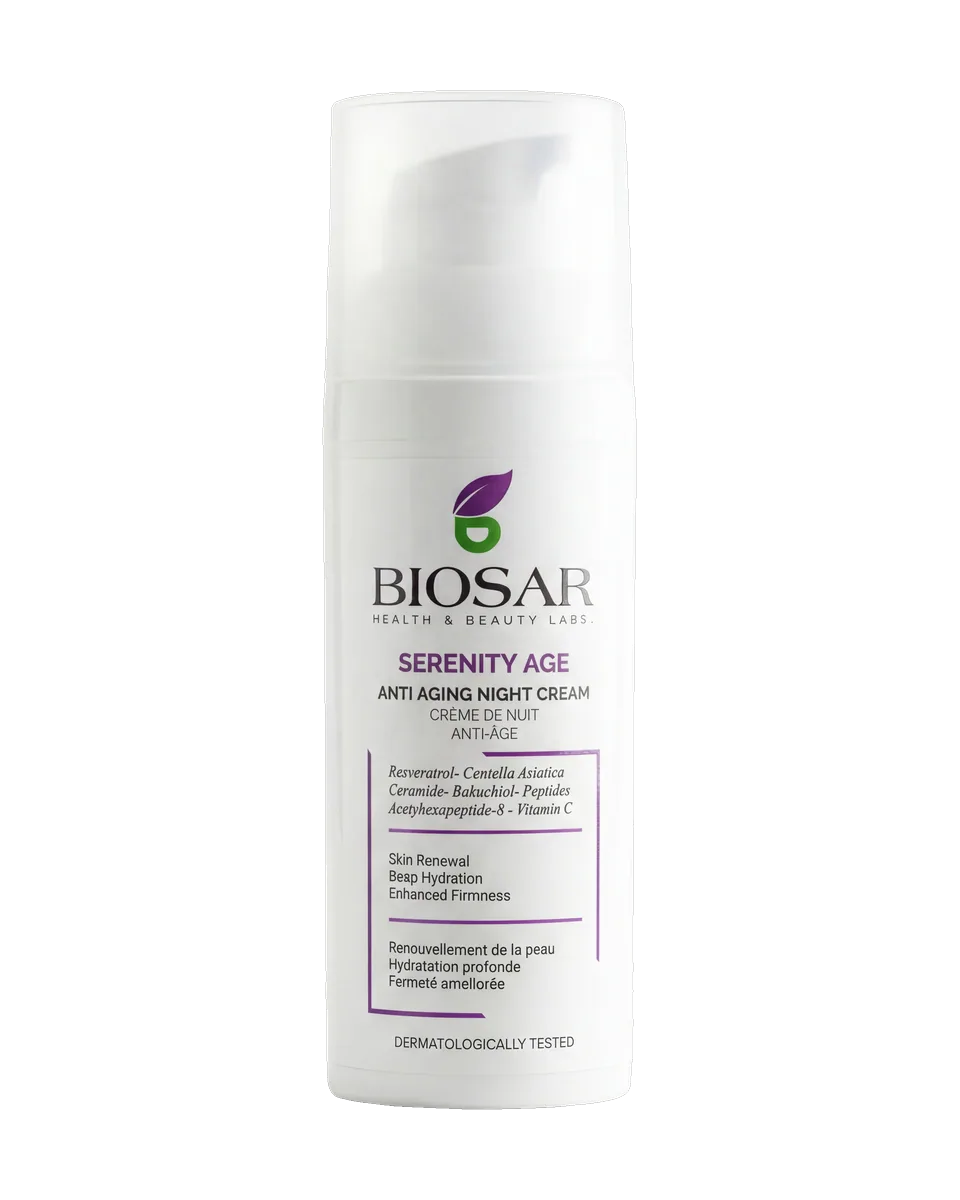
Serenity Age50 ml
Anti-Aging Night Cream
Resveratrol · Centella · Ceramide
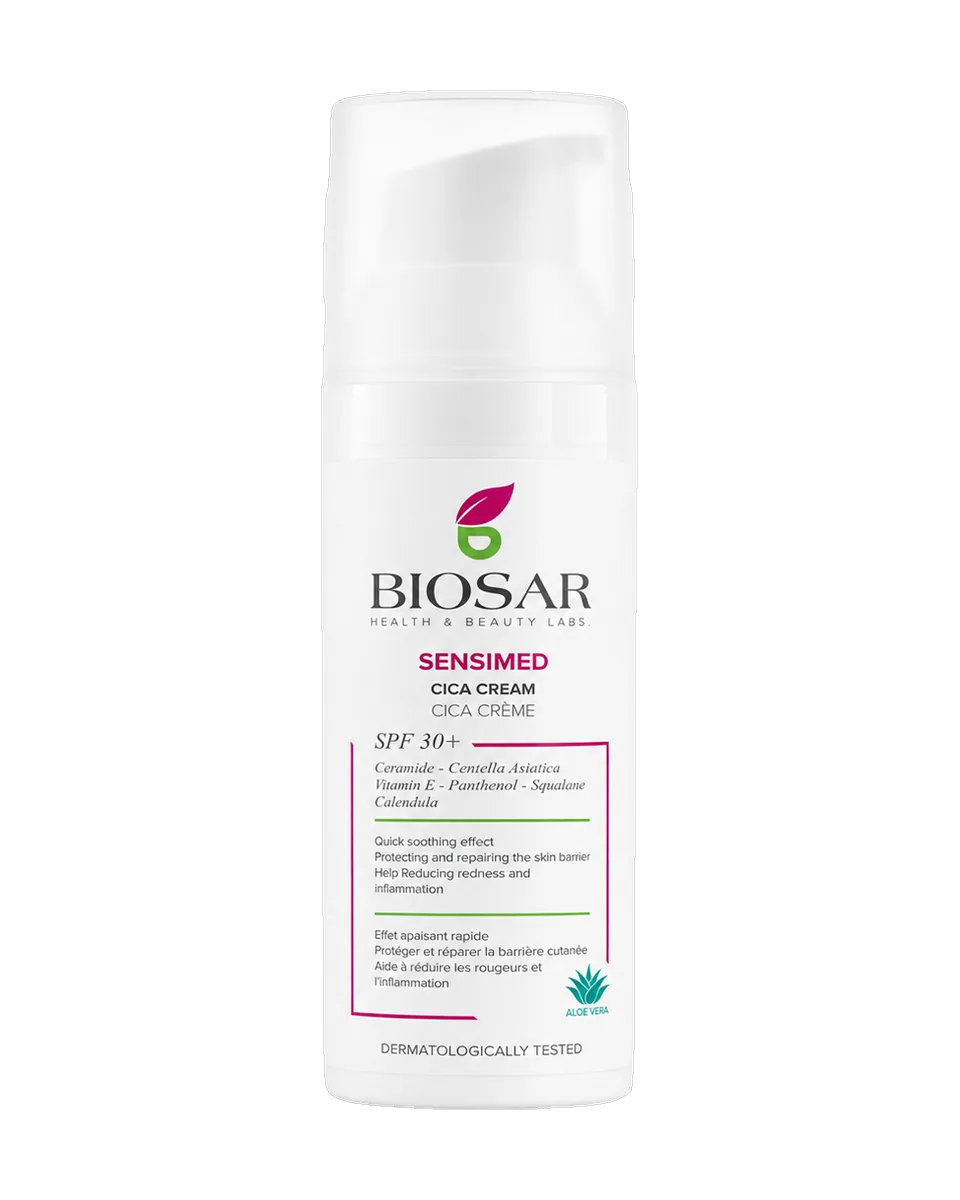
Sensimed50 ml
Cica Cream SPF30
Ceramide · Centella · Panthenol
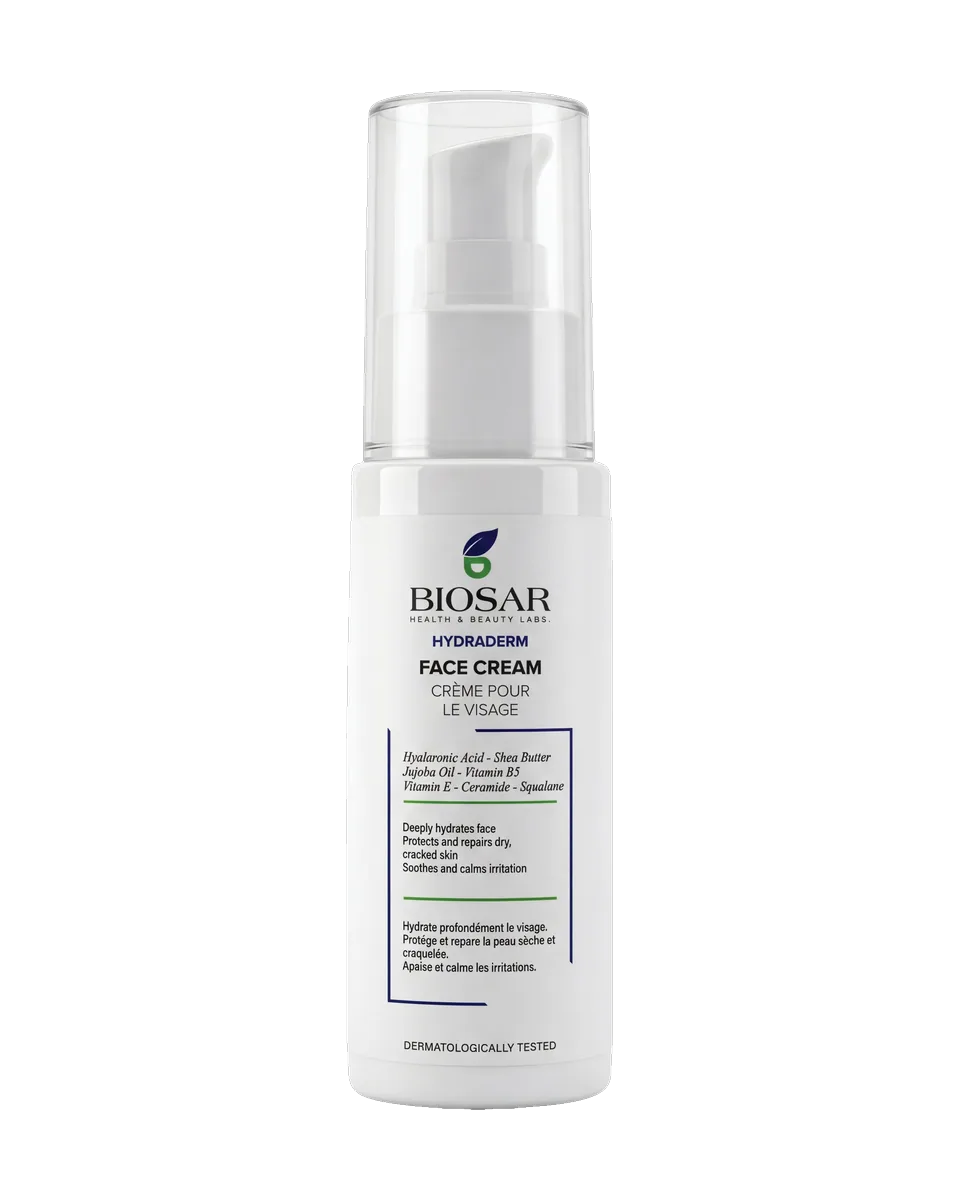
Hydraderm50 ml
Face Cream
Hyaluronic Acid · Ceramide · Shea Butter