Concern
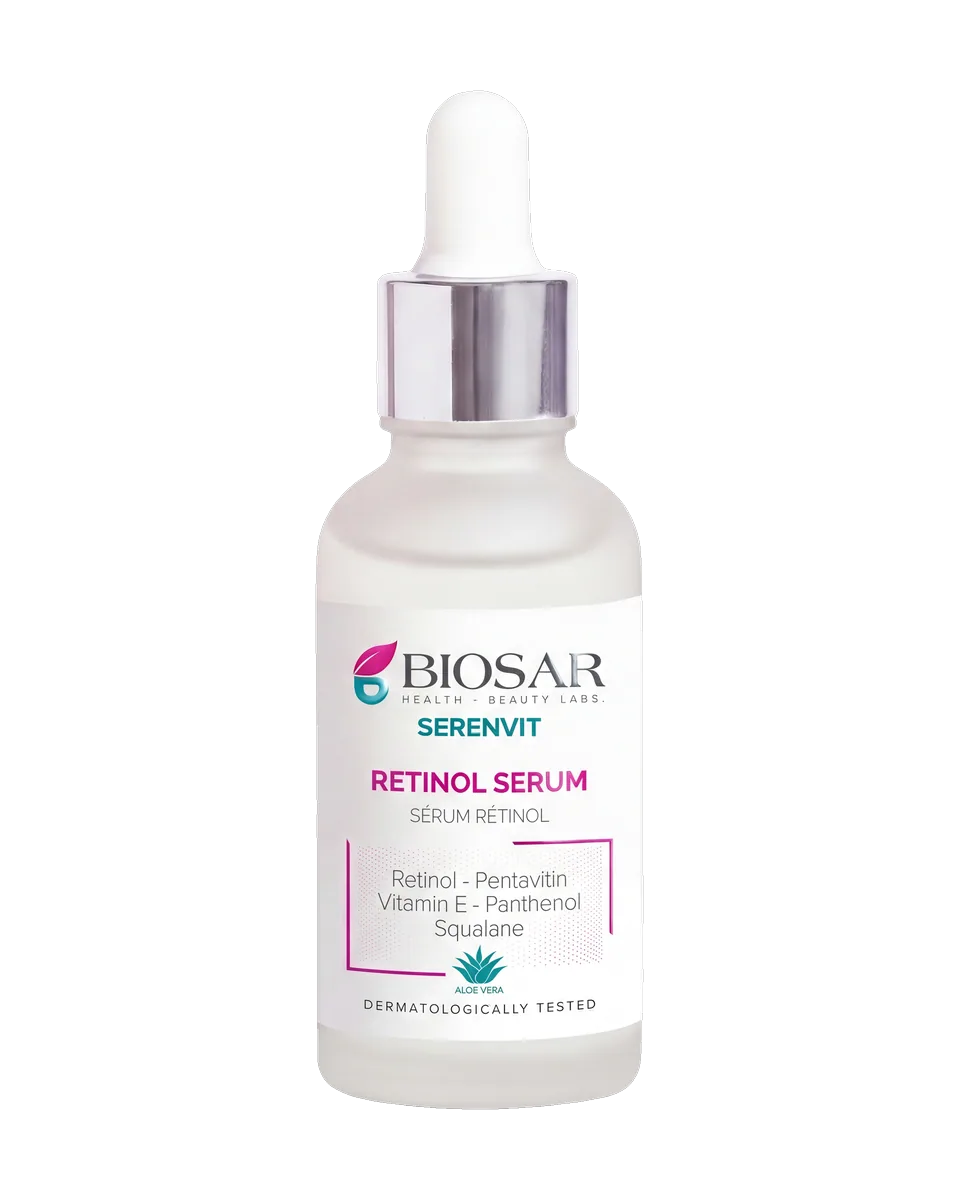
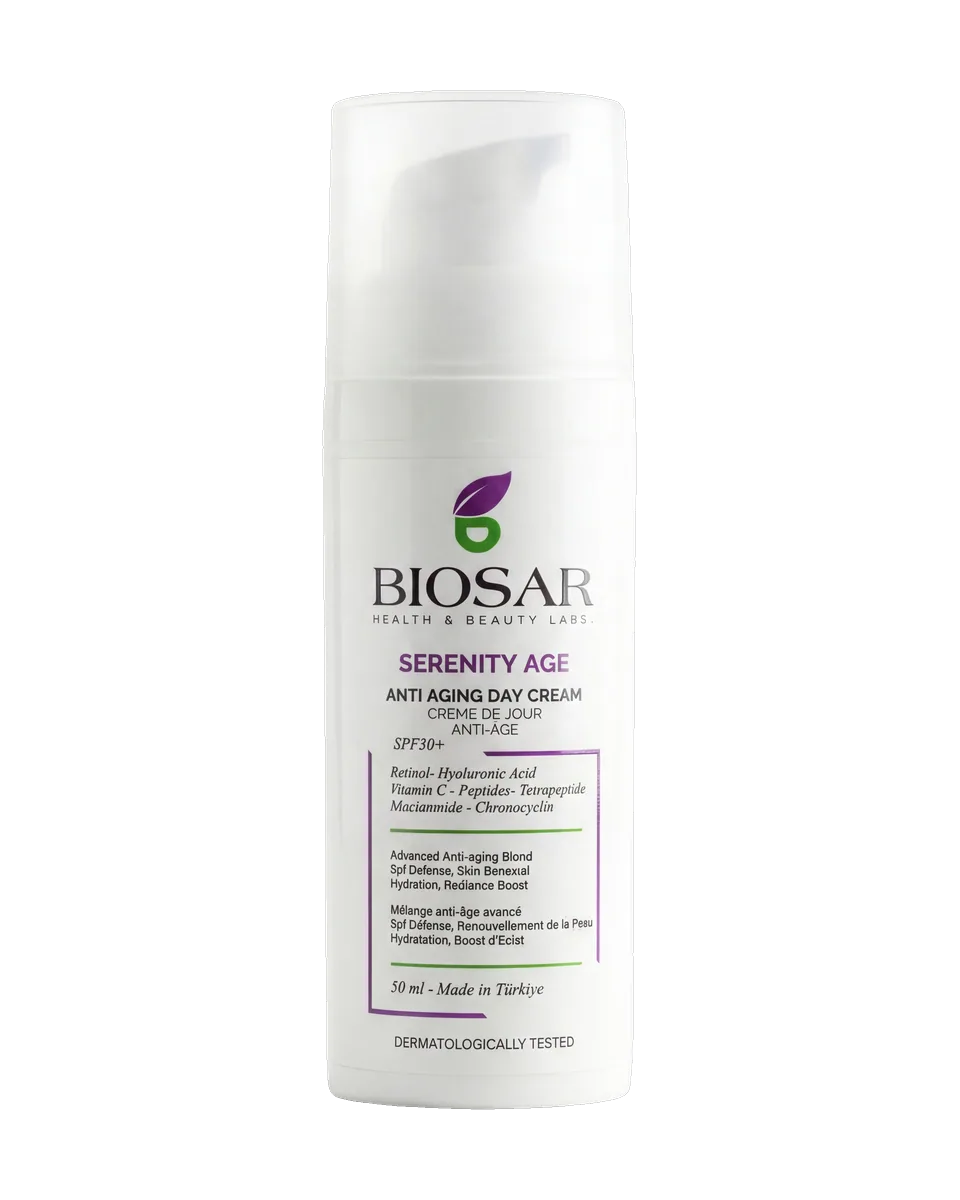
The first time you notice it is rarely a wrinkle. It is a quality of light — the way your skin catches it differently in a morning mirror, or the photo where you look more tired than you feel. The mechanism is real (collagen synthesis slows; elastin fragments; barrier turnover lengthens), but the felt experience comes first. Serenity Age is the range BIOSAR built for that pivot — Retinol for visible renewal and collagen support, peptides selected for documented signaling activity, and the SPF discipline that protects every other active you apply.
Last reviewed by BIOSAR Scientific Team, PharmD, Cosmetic Chemistry, Pharmacy practice on .
Epidemiology
Skin aging is universal but its visible expression is largely driven by environment. The exposome model developed by Krutmann and colleagues attributes approximately 80% of visible facial aging to extrinsic factors — UV radiation, pollution, smoking, and diet — with only 20% reflecting chronological time (Source: Krutmann et al., J Dermatol Sci 2017). Photoaging is the dominant pathway: cumulative UVA exposure activates matrix metalloproteinases that degrade dermal collagen, while UVB damages keratinocyte DNA and depletes antioxidants (Source: Fisher et al., Arch Dermatol 2002). In sun-rich climates, daily ambient UV indices regularly exceed 8 from April through October, compressing the timeline of visible photoaging by an estimated five to ten years compared with northern European populations.
Why it happens
UV radiation drives roughly 80% of visible facial aging. UVA penetrates to the dermis and activates matrix metalloproteinases that cleave collagen. UVB damages keratinocyte DNA and depletes antioxidants. Daily broad-spectrum SPF 30 or higher remains the single highest-leverage anti-aging intervention.
Reactive oxygen species from pollution, smoking, and metabolism damage cellular membranes, proteins, and DNA. Aged skin produces less endogenous antioxidant. Topical vitamin C, vitamin E, and ferulic acid supplement the network and visibly slow oxidative damage in published controlled studies.
Dietary sugar bonds covalently to long-lived collagen and elastin fibres, forming advanced glycation end products. AGEs cross-link collagen, making it brittle and yellow. Niacinamide, carnosine, and vitamin C each interrupt different stages of the glycation cascade and protect dermal architecture.
Tobacco smoke depletes vitamin C, generates reactive oxygen species, and constricts dermal capillaries. Particulate pollution penetrates skin and activates the aryl hydrocarbon receptor, driving inflammation and pigmentation. Visible signature: deeper perioral lines, dull tone, and accelerated wrinkle depth.
Mechanism
Skin ages through three intertwined biological pathways. Each pathway has been mapped at the molecular level over the last two decades, and each one responds to specific topical interventions. Understanding the pathway that dominates your skin — chronological, photoaging, or oxidative — clarifies which actives earn space in a routine.
UV radiation is the largest controllable driver of visible aging. UVA penetrates the dermis and activates matrix metalloproteinases (MMP-1, MMP-3, MMP-9). These enzymes cleave Type I and Type III collagen at specific peptide bonds, dismantling the structural mesh that supports the skin. The damage is cumulative and dose-dependent: ten minutes of unprotected midday sun exposure activates measurable MMP transcription.
UVB strikes the epidermis, damages keratinocyte DNA through pyrimidine dimer formation, and depletes antioxidant reserves. Repeated UVB hits also drive cyclooxygenase-2 expression and chronic low-grade inflammation in the dermis — what dermatologists call inflammaging. The clinical signature of photoaging is sharply defined: deep wrinkles, leathery texture, mottled hyperpigmentation, and visible telangiectasia. Daily broad-spectrum SPF 30 or higher remains the single highest-leverage intervention in any anti-aging routine — published evidence shows it slows visible aging more than any topical active.
Antioxidants in the morning routine extend SPF coverage. Vitamin C at 10–20% L-ascorbic acid concentration, stabilised with vitamin E and ferulic acid, neutralises the reactive oxygen species that UV exposure still generates beneath sunscreen. The Pinnell formulation studies (Duke University, 2005) established that this combination provides eight times the photoprotection of either active alone. Niacinamide adds a third layer by upregulating cellular NAD+ and supporting mitochondrial repair after photo-damage.
Reactive oxygen species are produced continuously by mitochondrial respiration, UV exposure, pollution, and cigarette smoke. They oxidise membrane lipids, denature proteins, and damage DNA. Healthy skin neutralises this load with a layered antioxidant network — vitamin E in the lipid phase, vitamin C and glutathione in the aqueous phase, superoxide dismutase enzymes inside cells. Aged skin produces less of each, so a smaller insult does more damage.
Glycation runs in parallel. Dietary glucose and fructose covalently bond to long-lived dermal proteins — primarily collagen and elastin — forming advanced glycation end products, or AGEs. AGEs cross-link collagen fibres, making them brittle and yellow-tinged, and they recruit inflammatory cells through the RAGE receptor (Source: Gkogkolou & Böhm, Dermatoendocrinol 2012). Topical vitamin C, niacinamide, and carnosine each interrupt different stages of the glycation cascade.
Fibroblasts in aged skin enter a senescent state: they stop dividing but secrete a cocktail of pro-inflammatory cytokines, MMPs, and growth factors known as the senescence-associated secretory phenotype (SASP). SASP signals create a self-perpetuating loop where aged cells age the cells around them. Hormonal decline accelerates the process — oestrogen withdrawal at menopause cuts dermal collagen by approximately 30% in the first five years.
The barrier itself thins. Stratum corneum lipid synthesis falls, intercellular ceramide content drops, and transepidermal water loss rises. The clinical effect is sallow, dehydrated, fragile skin. Retinoids and bakuchiol stimulate collagen synthesis, peptides such as Matrixyl signal fibroblast activity, and ceramides plus cholesterol restore barrier lipids. A modern anti-aging routine layers these — never one active alone — to address mechanism upstream and structural decline downstream.
Realistic timelines matter. Clinical trials of 0.05% retinoic acid show measurable wrinkle reduction at twelve weeks and continued improvement through twenty-four. Peptides act over similar windows. The actives that promise overnight transformation are the actives that have not been measured. Setting patient expectations against published time-to-effect data is a routine pharmacist intervention that improves long-term adherence — and adherence is the variable that separates visible results from abandoned products on the bathroom shelf.
Pharmacist's note
If a patient invests in only one anti-aging step, we recommend daily broad-spectrum SPF. The published evidence for SPF as an anti-aging tool exceeds the evidence for any topical active on the market — including retinoids. The most expensive serum cannot reverse damage that this morning's sun exposure is still doing.
From the BIOSAR ranges
The science
Skin ages on three fronts at once — UV-driven collagen breakdown, oxidative stress, and glycation that stiffens the dermal matrix. BIOSAR answers each with one calibrated routine: daily broad-spectrum protection layered with antioxidants, retinoids, and peptides that firm, smooth, and visibly redensify mature skin.
Related conditions
Daily sun protection is the single most important anti-aging step and should start in adolescence. Active ingredients like Retinol and Peptides become useful from the late twenties onward. Cumulative sun exposure is the largest controllable aging factor.
No. Retinol thickens both the epidermis and the papillary dermis over time by supporting collagen production. The initial purging and peeling phase can give the impression of thinning but is surface-level and temporary.
Where to look next
Oestrogen withdrawal at menopause reduces fibroblast collagen synthesis. The first five postmenopausal years see roughly a 30% drop in dermal collagen, with parallel loss of skin thickness and elasticity. Phytoestrogens, peptides, and topical oestriol (where regulated) are studied as targeted interventions.
Repeated facial expression, sleep position, and aggressive cleansing accelerate visible lines. Sleeping on one side compresses dermal fibres night after night, producing fixed creases over decades. Gentle cleansing, silk pillowcases, and avoiding aggressive rubbing reduce avoidable mechanical damage.
Bakuchiol is a plant-derived compound positioned as a gentler alternative to Retinol. It shows complementary benefits on tone and texture. It is suitable for sensitive skin and pregnancy-aware routines.
The eye area skin is thinner and more prone to fluid collection. Dedicated eye formulas use lower-concentration actives and smaller molecules to minimize irritation. A gentle face moisturizer often works as well for hydration alone.