Tranexamic acid vs alpha-arbutin — choosing your pigment fader

INGREDIENT COMPARISON

Tranexamic acid vs alpha-arbutin — choosing your pigment fader

Tranexamic acid and alpha-arbutin both treat hyperpigmentation, melasma, and post-acne marks, but at different points in the melanin cascade. Tranexamic acid blocks the plasmin pathway and works best for melasma triggered by hormones, sun, or pregnancy. Alpha-arbutin is a glycosylated tyrosinase inhibitor: gentle, well-tolerated, and the everyday brightener. The pharmacist's pick depends on whether melasma is in play.

Last reviewed by BIOSAR Scientific Team, PharmD, Cosmetic Chemistry, Pharmacy practice on .

At-a-glance

How they compare across the routine

Use caseSkin typeTranexamic AcidAlpha-ArbutinPairing rules
Melasma (hormonal pigmentation)All — esp. III to V2% to 5% topicalTwice daily1% to 2% topicalTwice dailyTranexamic acid is the first-line topical for melasma. Layer alpha-arbutin alongside for additive effect.
Post-acne marks (PIH)AllEffective at 3% to 5%Twice dailyEffective at 1% to 2%Twice dailyBoth pair cleanly with niacinamide and vitamin C.
Sun-spots and uneven toneAllEffectiveTwice daily under SPFEffective and gentlerTwice daily under SPFAlways layer broad-spectrum SPF; pigment work without sun protection plateaus.
Sensitive skinReactiveTolerated topicallyTwice dailyVery well toleratedTwice dailyAlpha-arbutin is the gentler entry; tranexamic acid layers in once tolerance is established.
Pregnancy and breastfeedingAllTopical use considered acceptable; oral form requires medical supervisionDiscuss with your clinicianConsidered acceptable per Mother to BabyDailyDuring pregnancy default to alpha-arbutin + niacinamide. Add tranexamic acid only on a clinician's advice.
Pharmacist's pick

Choose Tranexamic Acid when

Choose tranexamic acid when melasma is the diagnosis or hormonal pigmentation dominates. It blocks the plasmin pathway, dampening the inflammation-driven melanin overproduction that fuels melasma. Topical 2% to 5% twice daily, over 8 to 12 weeks, with broad-spectrum SPF, is the standard plan. Pair with vitamin C in the morning and niacinamide twice daily for a layered protocol.

Pharmacist's pick

Choose Alpha-Arbutin when

Choose alpha-arbutin for everyday tone-evening, post-acne marks, and sun-spots in any skin type. It is the gentler tyrosinase inhibitor, well-tolerated even on reactive skin. Use 1% to 2% twice daily for at least 8 weeks before judging the result. Stack with niacinamide and vitamin C; add tranexamic acid only when stubborn melasma resists the simpler protocol.

Mechanism contrast

Tranexamic acid is a synthetic derivative of lysine. Topically, it inhibits the plasminogen-plasmin pathway in keratinocytes and reduces melanocyte activation in response to UV and inflammation. This is the only major topical that targets the inflammation-pigment axis directly, which is why it dominates the modern melasma protocol.

Alpha-arbutin is a glycosylated form of hydroquinone. The glucose protects the molecule and slows its hydrolysis, so the parent compound never reaches a cytotoxic dose. It binds tyrosinase reversibly, blocking the rate-limiting step of new melanin production at the source.

Evidence summary

Kim et al. (Acta Derm Venereol 2017) showed 5% topical tranexamic acid matched 4% hydroquinone in a 12-week melasma trial, with fewer adverse events. Polnikorn (J Cosmet Laser Ther 2010) reported visible lightening of melasma after 12 weeks of 1% alpha-arbutin. The two studies underpin the modern combination protocol: pair tranexamic acid for the hormonal-melasma cascade with alpha-arbutin for everyday tyrosinase suppression.

BIOSAR products that contain each

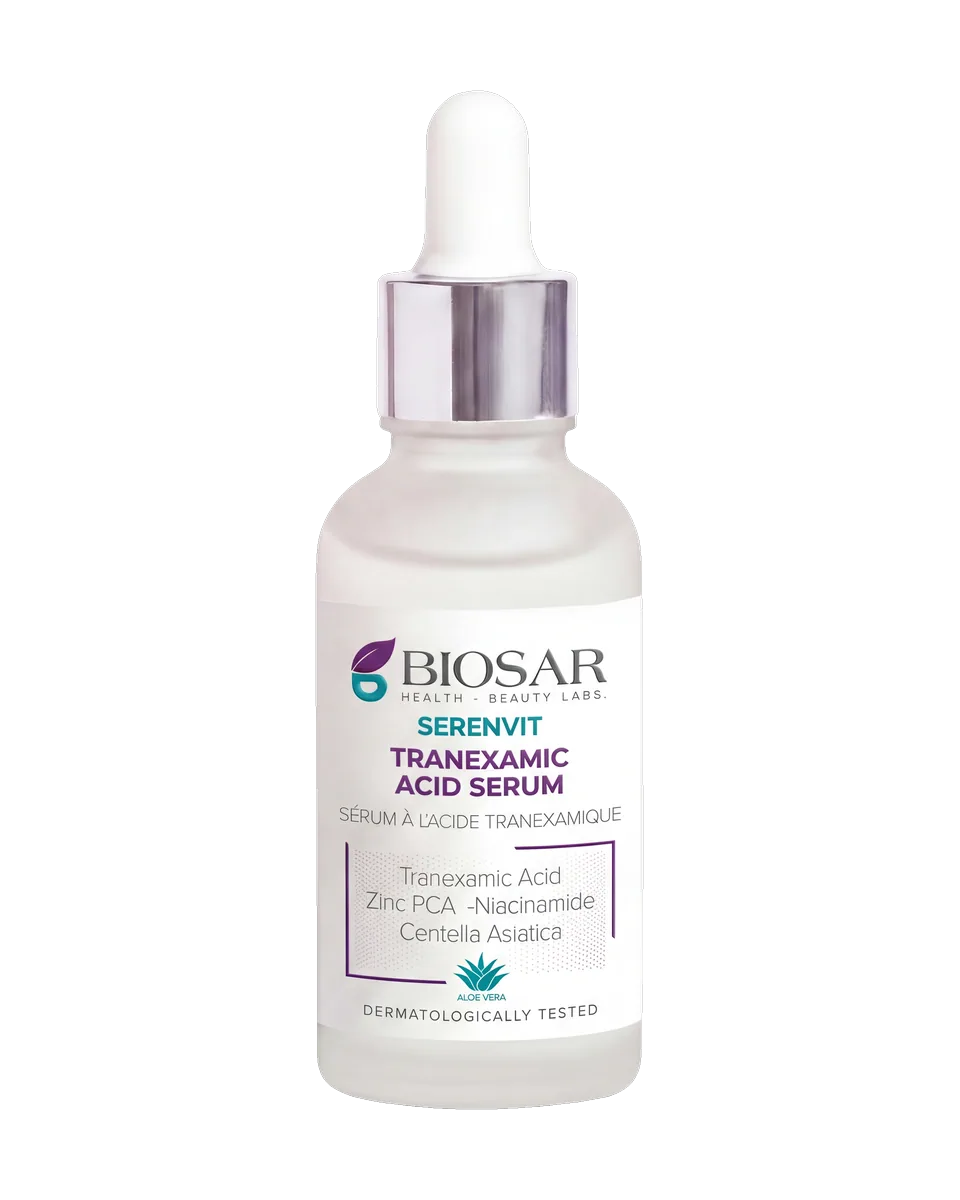
Tranexamic acid is the lead active in the Serenvit Tranexamic Acid Serum. It pairs in the routine with niacinamide AM/PM and vitamin C in the morning.

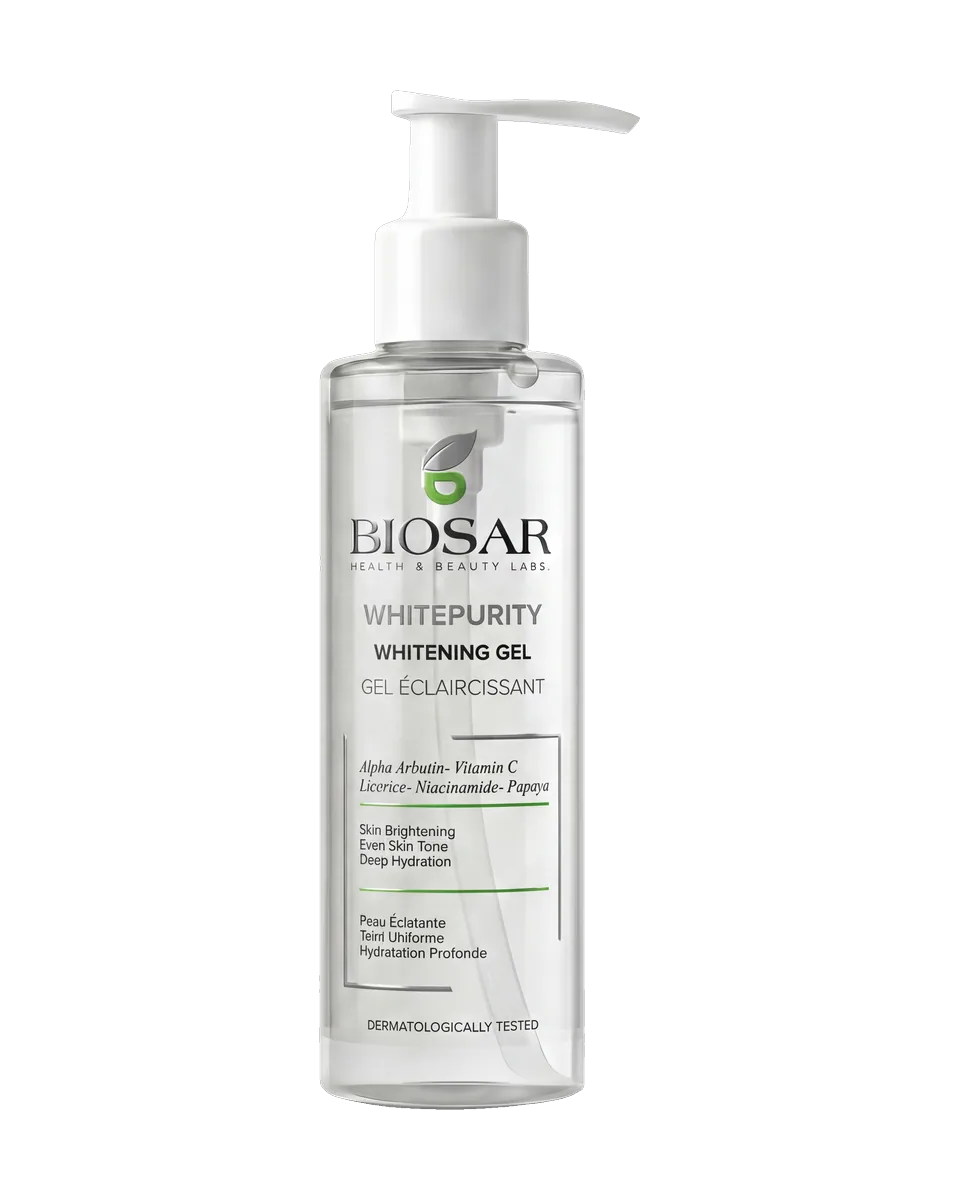
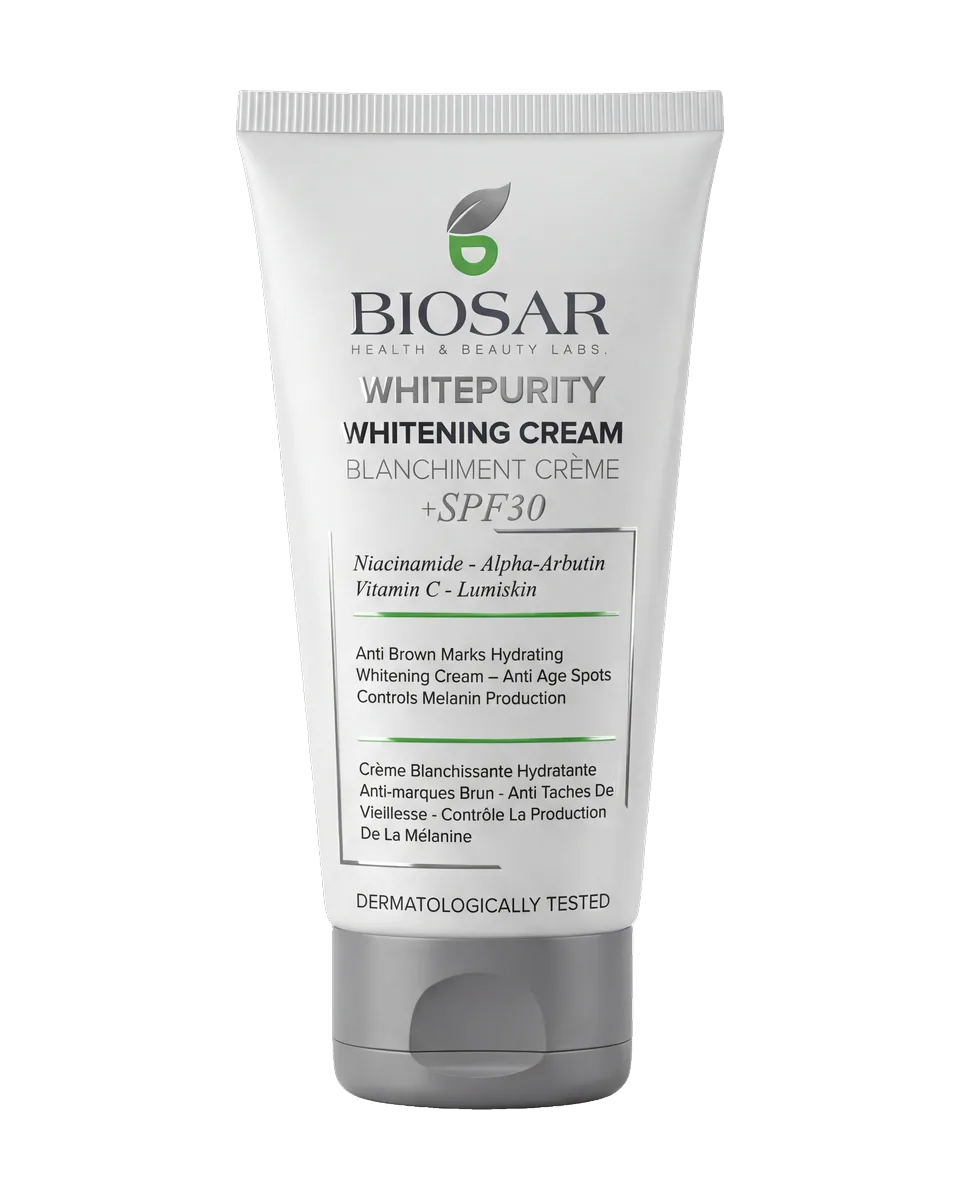
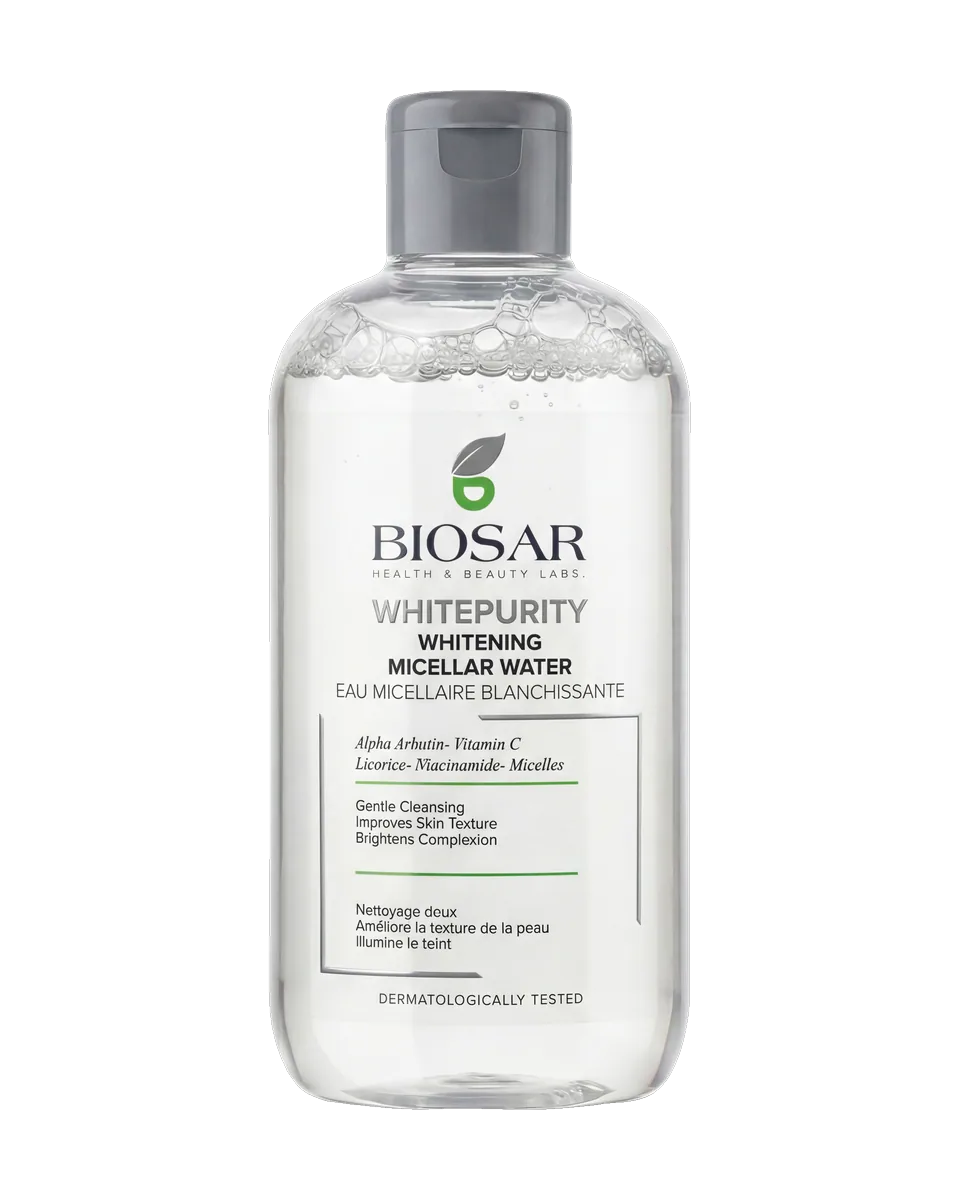
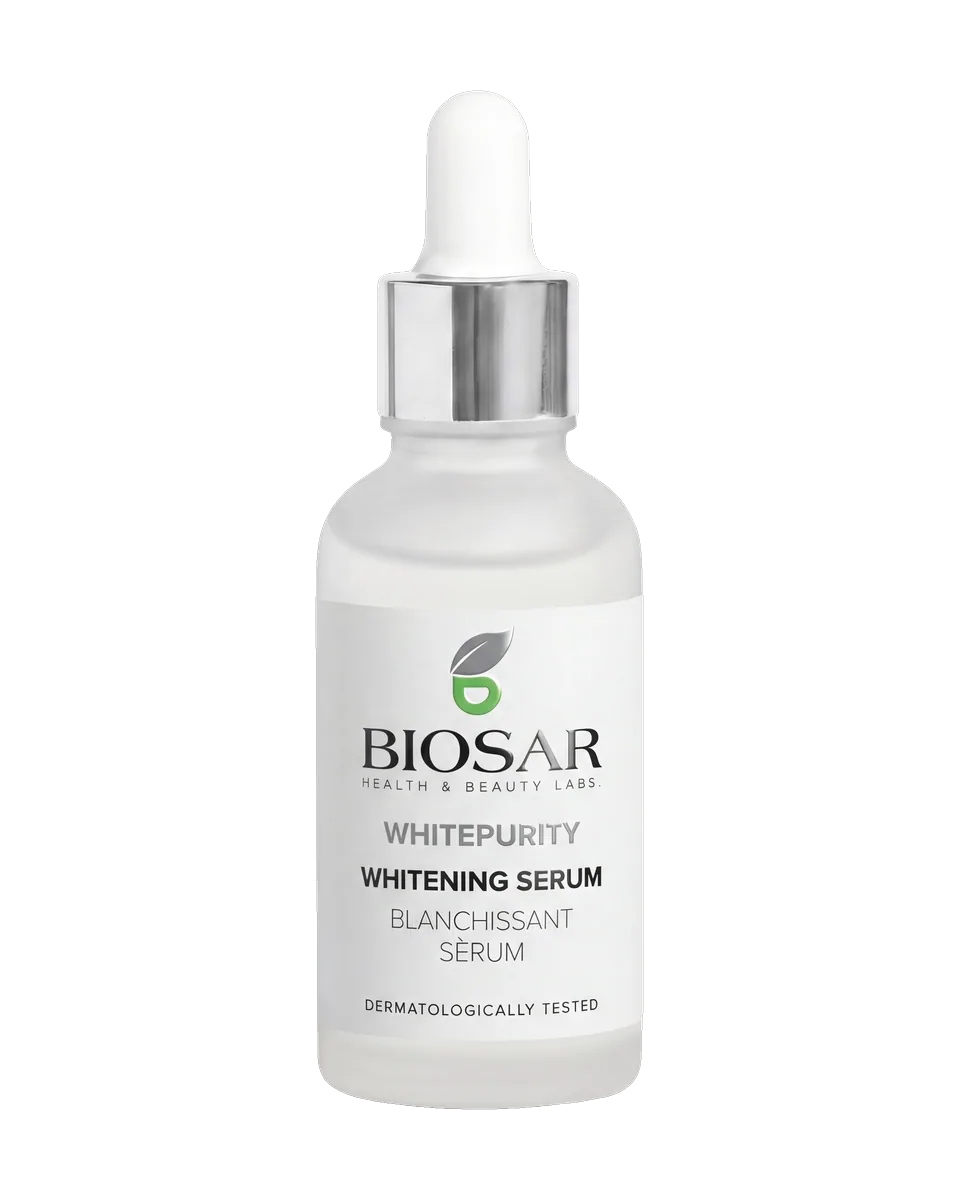
Alpha-arbutin sits inside the Whitepurity Serum and the Serenvit Vitamin Complex Serum. It is the brightening base for everyday tone-evening, while the Serenvit tranexamic acid serum is reserved for stubborn melasma.

Closing recommendation

Treat tranexamic acid as the targeted melasma player. Treat alpha-arbutin as the everyday brightener that fits any routine. The most stubborn pigmentation cases use both, ideally with niacinamide as the base and vitamin C in the morning. Sunscreen is non-negotiable for any pigment-fading protocol; without it the result plateaus.