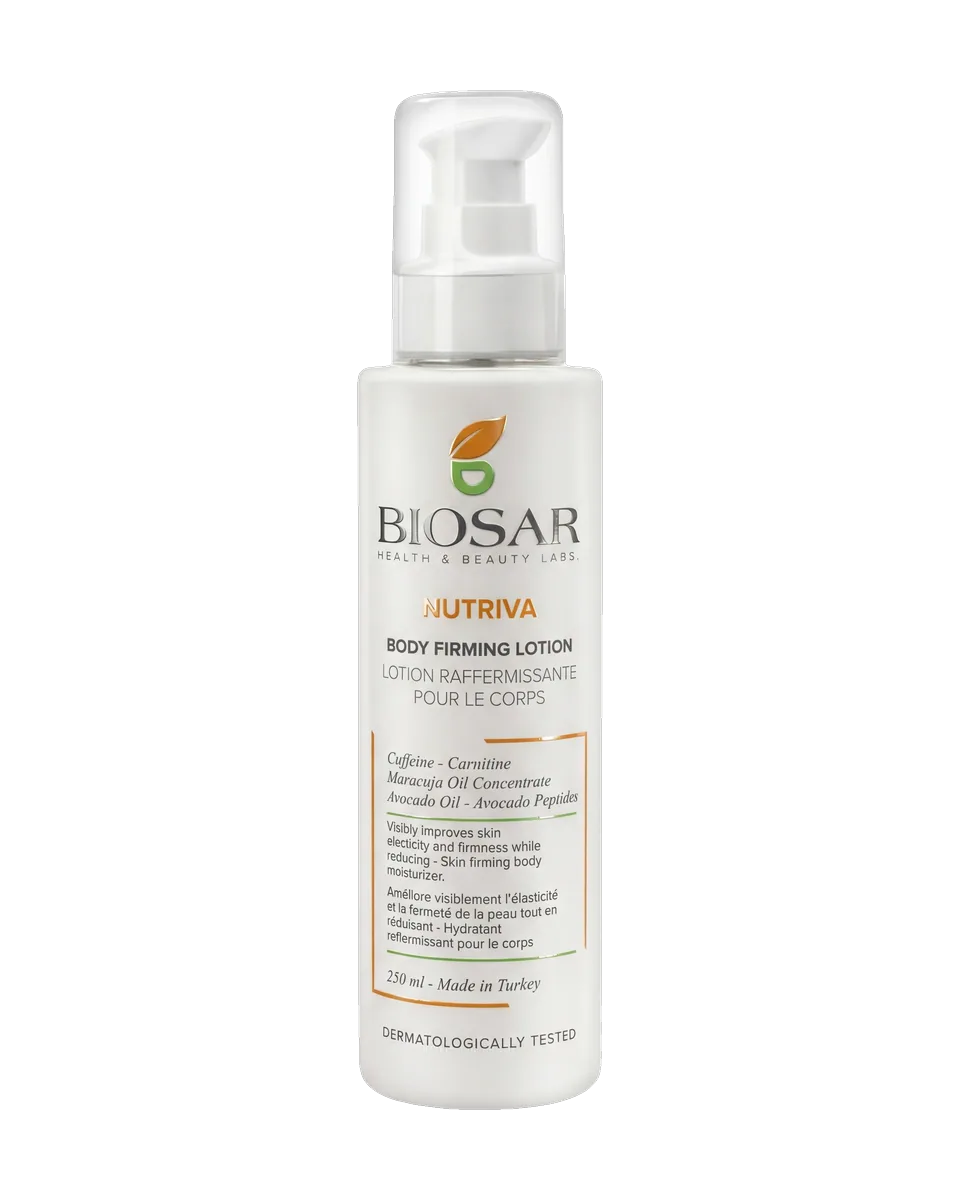
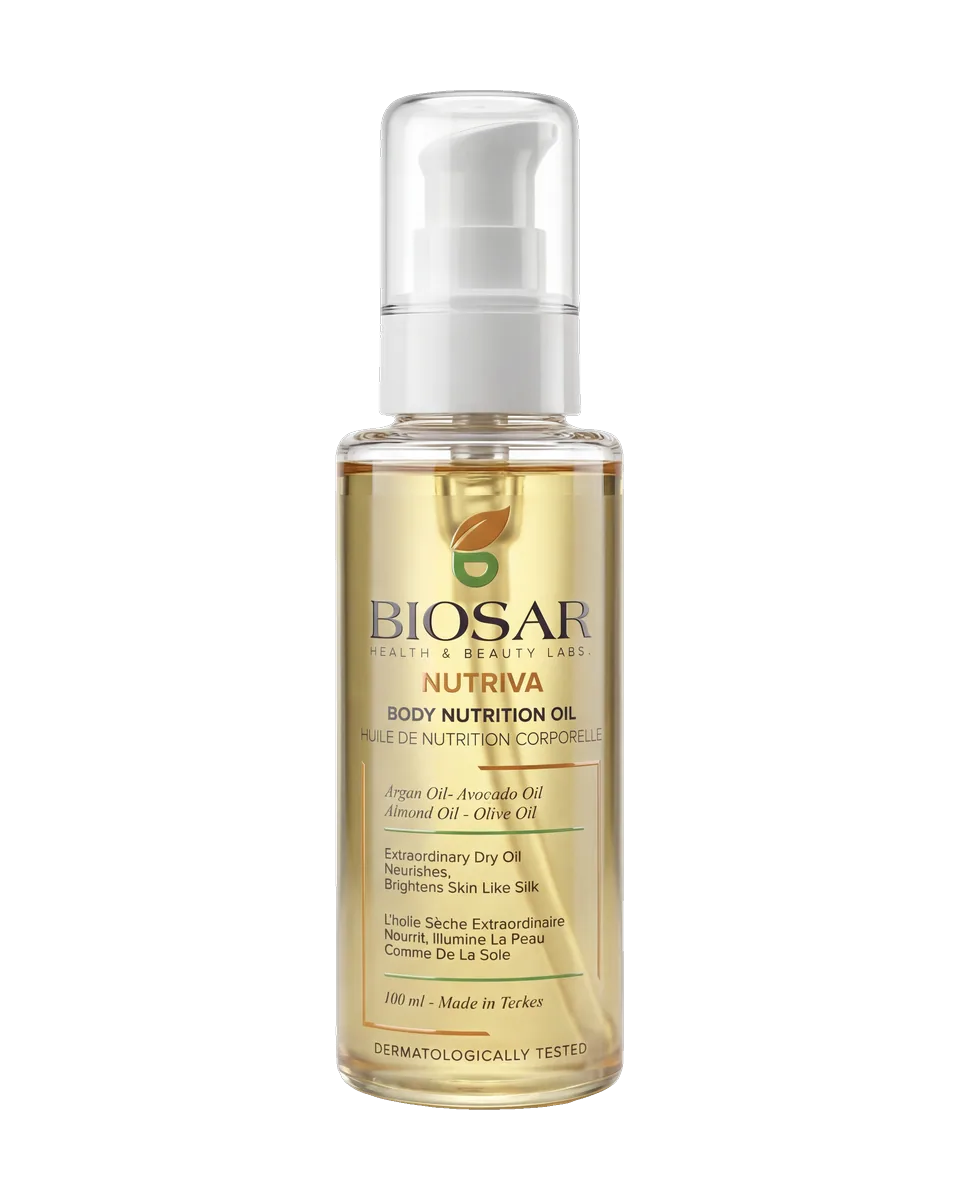
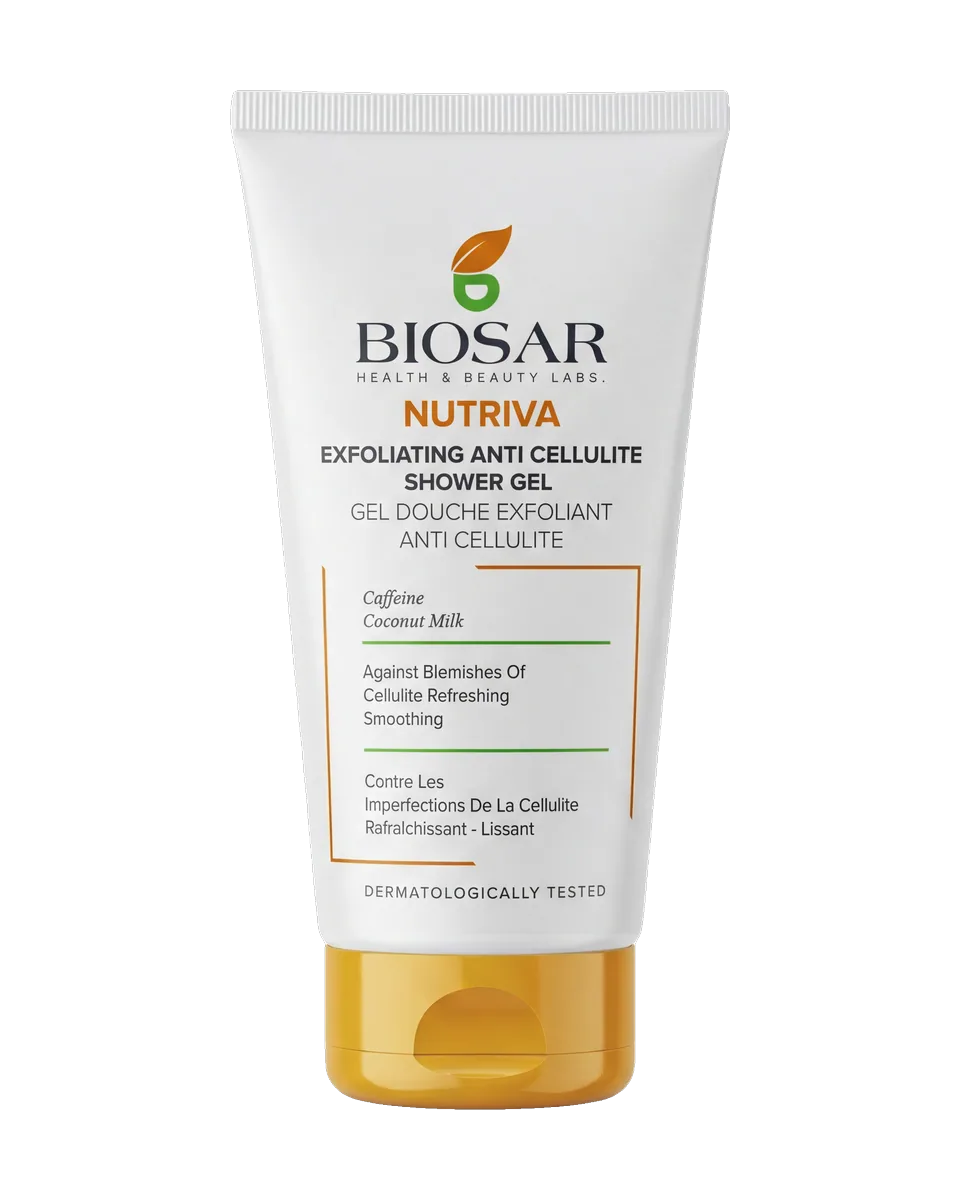
Body firmness is the structural integrity of skin tissue under gravitational and dynamic load. It depends on three architectural components working together: a dense dermal collagen-elastin matrix that resists stretch and snaps back after deformation, a well-anchored fascial network that distributes mechanical forces, and a uniform subcutaneous adipose layer that supports the overlying skin. When any of these components weakens (through aging, hormone shifts, weight cycling, or sedentary behaviour), visible firmness loss follows. The mechanisms below are the architectural targets that effective dermocosmetic care addresses.
Collagen and elastin in body skin
Body skin is structurally distinct from facial skin. The dermis is thicker and tougher in most body zones, but it carries a higher proportion of type I collagen relative to type III, which makes it stronger but less pliant. Fibroblast density per square centimetre is lower than on the face, and the rate of matrix turnover is correspondingly slower. This is why body skin remodels more slowly under topical care: the cellular machinery that produces new collagen and elastin operates on a longer timeline than the equivalent process on the face, and the full firming effect of a body cream typically requires 8 to 12 weeks of consistent twice-daily application.
From the early thirties, fibroblast activity declines steadily and matrix metalloproteinase activity rises. The result is a slow net loss of dermal collagen, measured at roughly 1% per year in adult skin and accelerating sharply around menopause. Elastin is more vulnerable still: elastin fibres do not regenerate appreciably in adulthood, and damage accumulates across decades. Topical retinoids (retinol, retinaldehyde, retinyl propionate) increase fibroblast collagen production and improve dermal density with measurable thickening on ultrasound after twelve weeks. Peptide complexes (Matrixyl, Argireline, and copper peptides) signal fibroblast activity through different upstream pathways and stack well with retinoids in a layered routine. Vitamin C at 10–15% supports collagen cross-linking and is the single most effective stand-alone active for daytime firming on body skin.
Cellulite — the fascia and adipocyte interface
Cellulite is a structural feature of subcutaneous tissue architecture, not a weight problem. It occurs in lean and overweight bodies alike. The mechanism is well-mapped: in female-pattern adipose architecture, fibrous fascial septa run perpendicular to the skin surface and divide the subcutaneous fat into vertically oriented chambers. As the chambers fill with adipocyte volume, the septa stay fixed and pull downward on the dermis at their attachment points. The visible result is the characteristic dimpled, mattress-like surface, present in 80–90% of post-pubertal women regardless of body mass index (Source: Querleux et al., Skin Res Technol 2002).
Male-pattern adipose architecture differs: fibrous septa run in a crisscross network rather than perpendicular to the surface, which distributes mechanical forces across the tissue and limits the dimpling that occurs in vertical chamber architecture. This is why cellulite is overwhelmingly a female phenotype regardless of body fat percentage. Topical Caffeine, L-Carnitine, and Forskolin act on this layer through different mechanisms: Caffeine is a phosphodiesterase inhibitor that supports lipolysis in adipocytes and improves local microcirculation, L-Carnitine shuttles fatty acids into mitochondria for oxidation, and Forskolin upregulates cyclic AMP signalling that supports lipolysis. The visible improvement these actives produce is real but modest, and is amplified by manual massage during application. Vigorous circular motion temporarily reduces dermal oedema and improves the subcutaneous architecture's apparent uniformity.
Hormonal and lifestyle drivers
Hormonal shifts and lifestyle factors compound the structural mechanisms above. Oestrogen supports fibroblast activity and dermal water retention through hyaluronic acid synthesis. As oestrogen declines across perimenopause and menopause, fibroblast collagen production drops, dermal water content falls, and skin thickness measurably decreases. The most cited figure, a 30% loss of dermal collagen in the first five postmenopausal years, comes from Brincat's seminal 1987 cohort and remains the reference point in the menopause-and-skin literature.
Weight cycling is the second major driver. Repeated cycles of weight gain and loss stretch the dermis during gain and leave it loose during loss; the elastin matrix does not fully recover. Pregnancy produces a one-time version of the same pattern, with the abdominal skin stretched across nine months and then deflated rapidly postpartum. Stretch marks (striae distensae) are a separate but related phenomenon: they are dermal scars formed when the elastin and collagen matrix tears under rapid stretch. Sedentary lifestyle is the third driver, and operates through a different pathway: low muscle tone reduces the mechanical scaffold under the skin, and decreased lymphatic drainage allows interstitial fluid to accumulate, exaggerating both dimpling and crepiness. Hydration is the final, often overlooked factor. Dermal water content is a structural component of skin firmness, and chronic dehydration produces measurable losses in skin elasticity that no topical can fully compensate for.